
Stress is an oft-misunderstood concept, but harnessing the potential of these trackers can be life-changing
An afterthought by many brands over the last decade, accurate stress-tracking wearables with useful features and insights are finally here.
Household-name smartwatches and fitness trackers aren’t the only devices with helpful stress management features, either. Top smart rings, such as those from Oura, and versatile wearables like the Whoop 5.0/MG are leading the way in tracking body responses.
Yet, this remains a slightly murky area of tracking. With no definitive metric for stress, each brand presents it in a slightly different way. By testing stress trackers since 2015, we’ve found the best can identify triggers, prompt breathing exercises when needed, and affirm subjective interpretations.
Like activity trackers, stress monitors don’t do the work for you. However, they can be a powerful tool for gaining a better understanding of your body.
Below, we’ll detail the best stress trackers and features we’ve tried. You’ll also find tips on getting the most out of features and insight into stress management score calculations.
Quick view: The best stress trackers in this guide
- Oura Ring Gen 4
- Whoop 5.0/MG
- Google (via Fitbit)
- Garmin
- Apple Watch
- Samsung Galaxy Watch
Oura Ring
How Oura stress tracking works
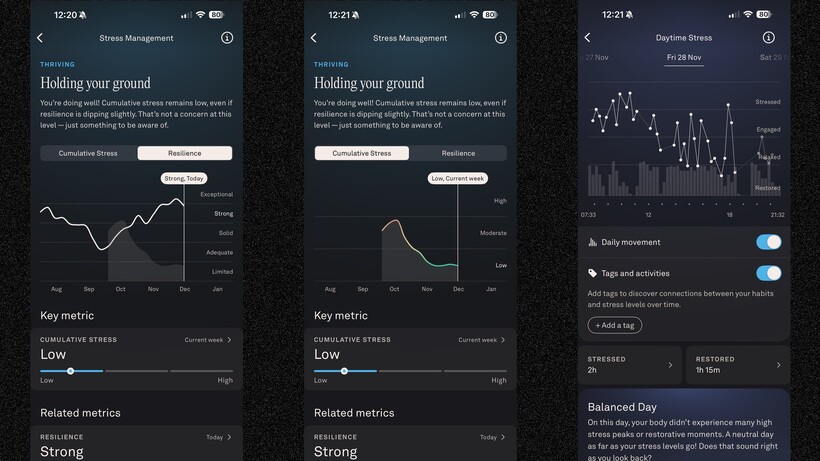
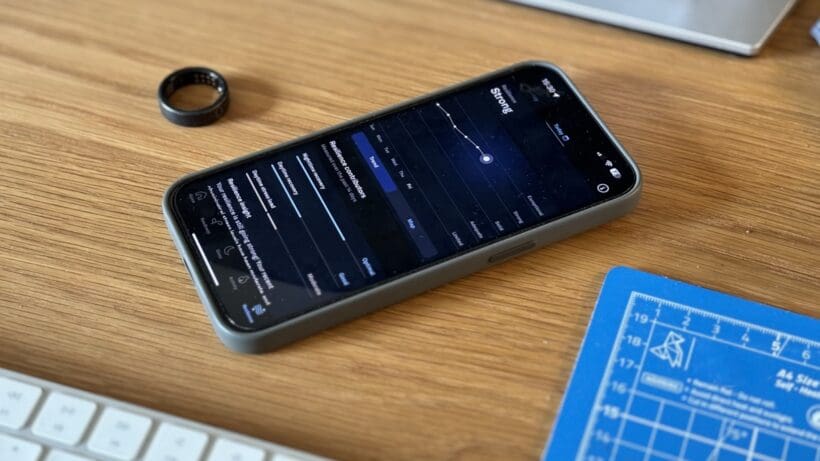
Oura has three core, interconnected stress-tracking features: Daytime Stress, Resilience, and the new Cumulative Stress. In tandem, these features make it our top recommendation for stress tracking.
Daytime Stress is the real-time, minute-by-minute feature. It uses heart rate variability (HRV), motion, and body temperature to plot points throughout the day on a graph, interpreting the user’s balance between periods of stress and restoration. The algorithm learns your baselines, and we’ve found it to be consistently on the money compared to our subjective feelings. It’s transformed our understanding of what triggers physiological stress responses, and it remains an Oura feature we check in on daily.
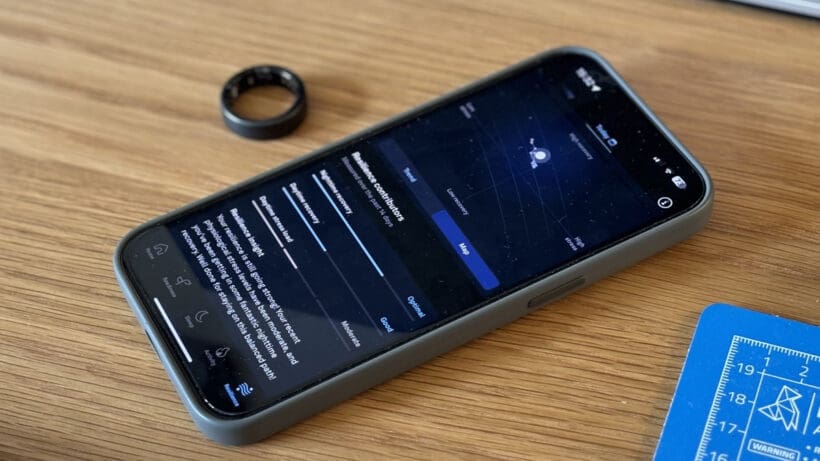
If your focus is more long-term, Resilience is the feature for you. This analyzes the balance between daily stress and overnight recovery over the last two weeks, providing a grading scale from Limited to Exceptional. This is less useful for understanding acute triggers, but we’ve found it especially useful for spotting when recovery (usually sleep quality, in our case) has slipped. Alternatively, we sometimes notice a change following a period of mental strain.
Oura stays ahead with major app revamp
The October 2025 app revamp consolidated all of these into a unified Stress Management dashboard, adding the Cumulative Stress metric.
This new feature provides a longitudinal, weekly-updated view of physiological strain accumulated over the last month (31 days). It reveals the hidden toll of chronic stress by analyzing five contributors, including the heart’s stress response and sleep continuity.
The Oura app then provides contextual interpretations of this overview—for example, my guidance for one week, as shown above, was: “Holding your ground; your cumulative stress is low, even if resilience is dipping slightly. That’s not a concern at this stage, just something to be aware of.”
Nobody explains what it’s tracking better than Oura, and that deep-dive interpretation keeps it well ahead of the chasing pack as the best overall stress tracker.
The best Oura Ring for stress tracking
The Oura Ring 4 replaced the Gen 3 in 2024, but both can deliver the stress-tracking features noted above. That means you can’t go wrong if your priority is this area.
Yet, there are differences in other areas, which we’ve highlighted in this Oura Ring 4 vs. Oura Ring 3 guide. We recommend checking them out before settling either way.
In short, the Gen 4 ring features a lighter design and better accuracy for workouts and overnight blood oxygen readings. Considering the price difference and the required Oura subscription, we think plenty are better off with a Gen 3 ring.
Whoop
How Whoop stress tracking works
Whoop isn’t quite as comprehensive as Oura, yet it can deliver solid actionable stress-tracking data. As such, it gets our approval ahead of other alternatives.
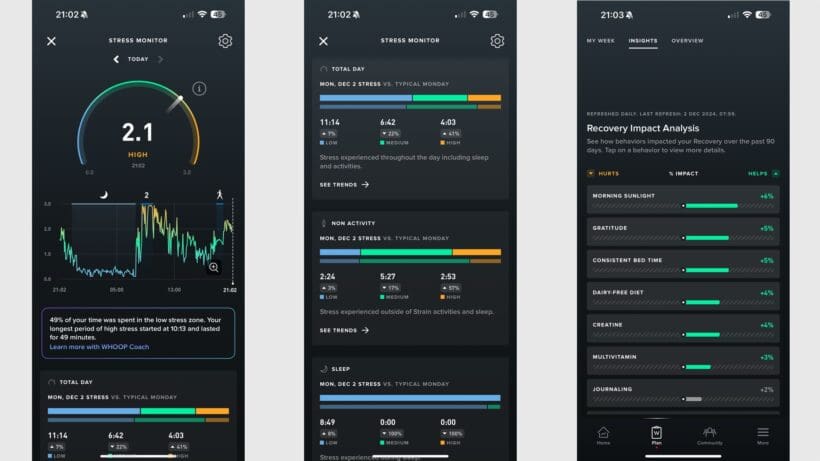
The experience centers around a Stress Monitor score (0-1 = low, 1-2 = medium, and 2-3 = high). This assesses your body’s responses by calculating your real-time HRV and heart rate. The calculation also considers the user’s HRV baseline from the last two weeks and the typical resting heart rate.
It’s a 24/7 feature, but it does take out workouts to differentiate body stress caused by physical activity. Given stress remains high post-exercise anyway, we’re not sure why Whoop bothers to take this period out. Still, the important thing here is that the 0-3 ratings can provide an accurate representation of daily stress. When you check in throughout the day, they feel true to life.
Though more basic than Oura’s, we also appreciate the comparisons made with the same day of the week. If you live on a tight routine, it’s a good way to help pinpoint triggers and trends.
We should also reference the Whoop Journal. It can take a while to finesse the prompts, but it’s an effective tool for linking behavior to recovery.
In short, don’t give yourself a barrage of questions to sift through first thing in the morning.
The best Whoop for tracking stress
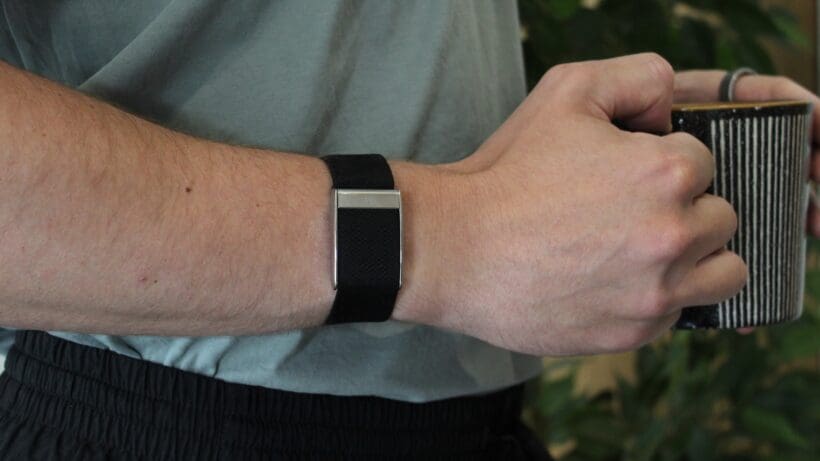
Whoop didn’t change any of the stress-related features when it introduced its latest generation devices in May. That means you can technically still use the 4.0 tracker and gain access to the insights explained above.
However, one thing that changed with the May 2025 update was the Whoop membership tiers, and this means stress insights are only available with a Peak or Life membership. If you’re on Whoop One, you’re limited to insights on strain, sleep, and recovery, though you still have access to the Journal.
In reality, this doesn’t change much if your key focus is on gaining stress insights from Whoop, since the cheapest membership that allows them (Whoop Peak) is nearly the same price as before.
We have comprehensive guides on choosing between Whoop 5.0 and Whoop MG, as well as determining which Whoop tier to select if you’re new or upgrading. For most people, though, the Whoop 5.0 hardware and a Peak membership are the right fit.
Google and Fitbit
How Google Fitbit stress tracking works
Fitbit – nowadays owned by Google – has always been at the forefront of holistic, mindful tracking. And its range of wearables does a solid job of tiering these features.
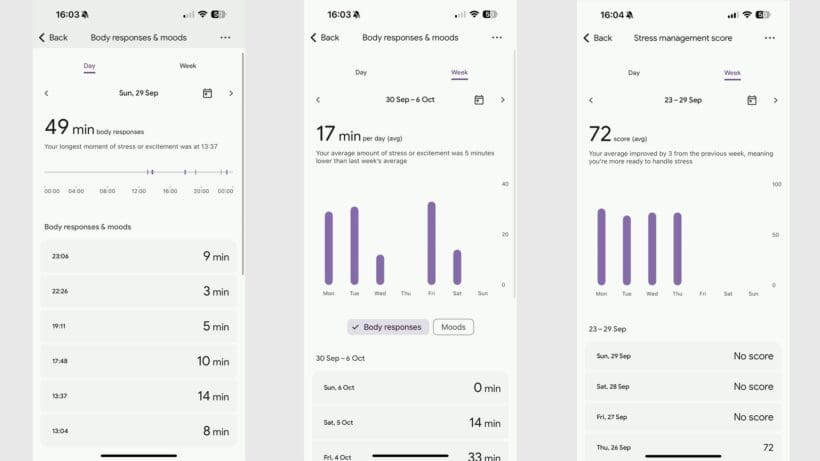
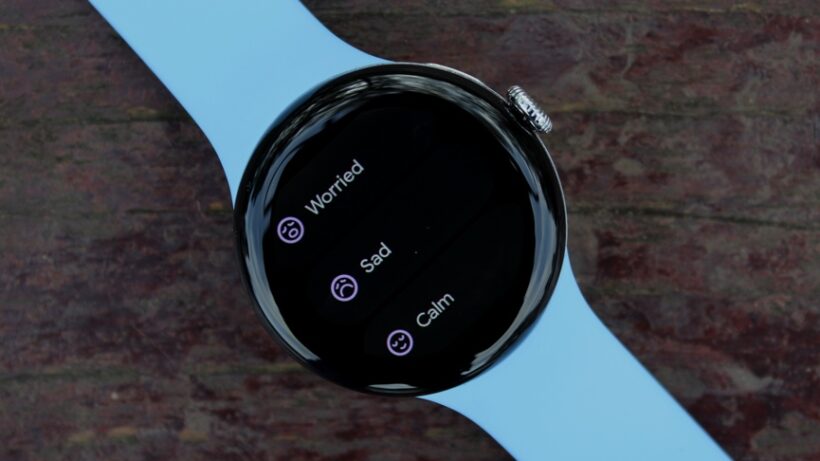
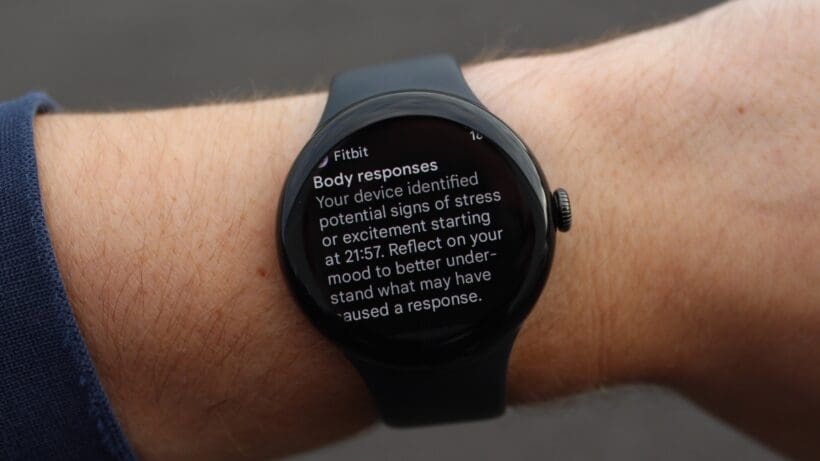
The most advanced of these are Body Responses. When electrical changes on the skin occur during sweat secretion, the Google Pixel Watch’s cEDA (continuous electrodermal activity sensor) activates. If it detects a spike, it will notify you and ask you to log your feelings.
You can then view and track these events in the Fitbit app, using them to understand what affects body stress. In testing, we’ve found it a bit of a hit-and-miss system. Occasionally, it pops up accurately 10 minutes after a stressful event or change of social setting. But it’s a lot of work to go through and make the links yourself by looking at tags.
It’s unlike Oura’s Daytime Stress, which is passive. And, ultimately, logging your mood around the same time as a body response change is also often inconvenient.
All Google/Fitbit devices can access the Stress Management Score. While the cEDA sensor measures responses, the stress score uses estimates from heart rate and sleep data. It uses a 0-100 measurement, and low scores can highlight the need to pay attention to your body.
We’ve not found this overly engaging, with scores remaining similar even with big changes to sleeping routines or daytime stress. However, it’s a handy feature to check in on if you want a big-picture view of your stress.
The best Google and Fitbit devices for tracking stress
To get the most out of Fitbit’s stress-tracking, you must use a device with an EDA sensor. However, this limits you to the Pixel Watch 1-4, Fitbit Sense 2, or Fitbit Charge 6.
We recommend Google’s Pixel Watch line (particularly the 45mm models) ahead of that pair of Fitbit models. It can tap into the army of third-party stress and wellness apps available on Wear OS. However, this does come at a higher price than Fitbit’s trackers.
Just be aware that Google has previously said it won’t produce any more Fitbit-branded smartwatches, so future support would seem fraught. Plus, a Charge 7 may land in 2026.
The rest of the range also offers stress-tracking features for those who don’t care about the body response check-ins. Devices like the Inspire 3, Versa 4, and Luxe all have the Stress Management Score, for example.
Garmin
How Garmin stress tracking works
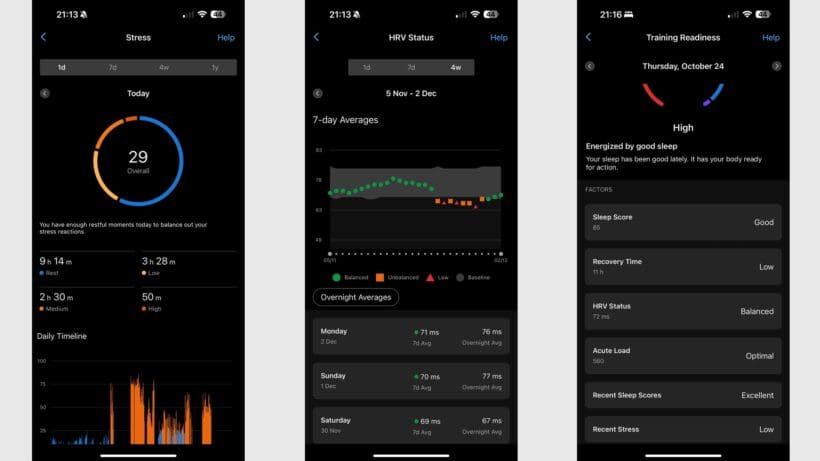
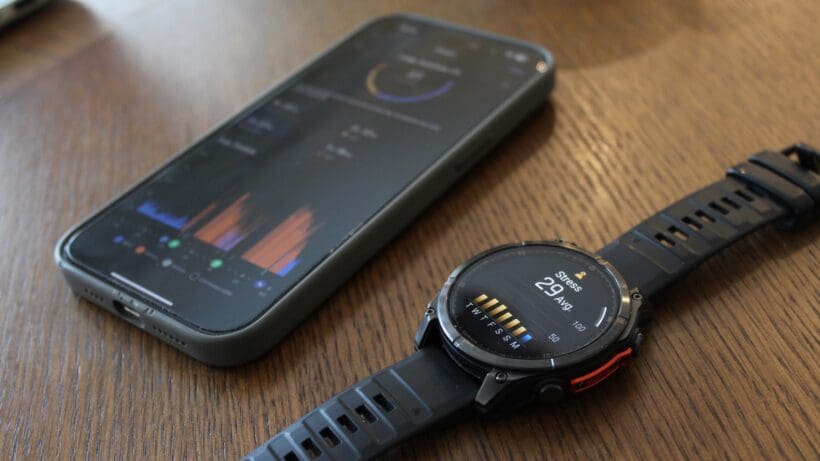
Garmin’s core stress tracking is much more basic than its sports tracking and training features. It uses 24/7 HRV measurements to break down stress into rest, low, medium, or high zones, offering a 0-100 figure to summarize your day.
Although there aren’t insights into this stress monitoring, encouragements to log mood, trends, or any guidance, it does help to see how your body reacts to different situations. Really, the strength of Garmin’s stress tracking is away from this score and in the Body Battery feature.
This isn’t strictly a stress-only feature, as sleep and activity also factor in. Yet, receiving an accurate representation of remaining energy is the HRV measurement’s most useful application.
Garmin’s stress tracking/HRV measurements also feed into Training Readiness, which uses tracked stress history as part of its score, the Performance Condition scale that pops up at the beginning of outdoor workouts, and the Recovery Hours (which will suffer if your body experiences high stress).
HRV Status is also a medium-term assessment of the balance of this recovery insight. Though, again, not strictly a stress-only feature, it’s still a clever and personalized way of assessing the balance of your training or spotting signs of illness/stress.
On the more holistic end, guided breathing exercises are available on some Garmin watches.
However, Garmin is generally consistent with its approach. The brand views stress through the prism of training and conditioning, meaning much of the stress data requires self-interpretation.
The best Garmin for tracking stress
Almost all modern Garmin watches are compatible with the 0-100 stress tracking and Body Battery features. As noted above, these are accurate and solid enough tools if your bigger priority is training and you want some stress tracking on the side to feed into this.
However, the training-focused stress metrics—HRV Status, Training Readiness, Recovery Hours, and Performance Condition—are more scattered across the seemingly endless number of Garmin watches we’ve tested.
If you don’t want to plump for a hardened, classic Garmin sports watch, the Garmin Venu 4 offers the best blend of all these features. Yet, if the price is too high, you can consider the Garmin Vivoactive 6—it omits only Training Readiness from a stress perspective compared to the latest Venu.
Samsung
How Samsung stress tracking works
As with some of its rivals, Samsung uses a combination of HRV and HR measurements to generate stress-tracking insights. This includes spot readings, 24/7 summaries, breathing exercises, and access to the Google Play Store’s apps.
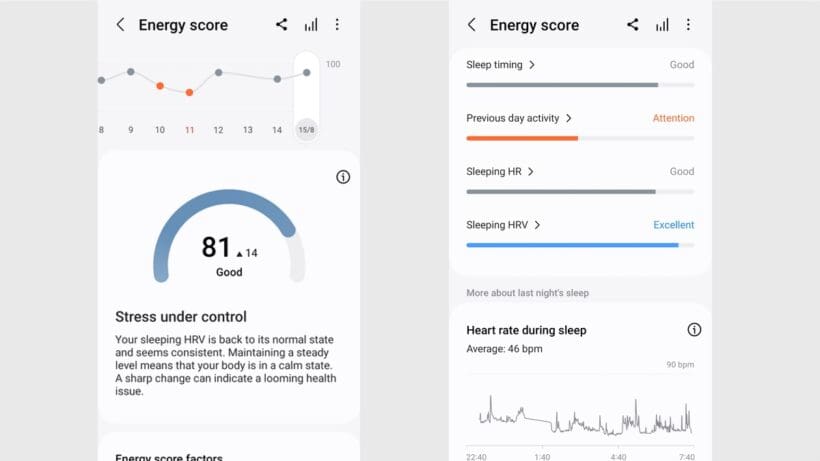
With the brand’s latest Wear OS skin (One UI Watch 6), users can also access the Energy Score. This is also accessible via the brand’s debut ring, the Samsung Galaxy Ring.
For us, the daily stress overviews didn’t particularly cut through when testing any of Samsung’s latest wearables. They’re presented similarly to Garmin’s low-to-high graphs. However, the Energy Score is an effective related feature.
It calculates this using HRV and HR, activity levels, and sleep hours data – all adjacent to body stress. Plus, the Galaxy AI summaries in the Samsung Health app often feature holistic and personalized advice on your body’s needs.
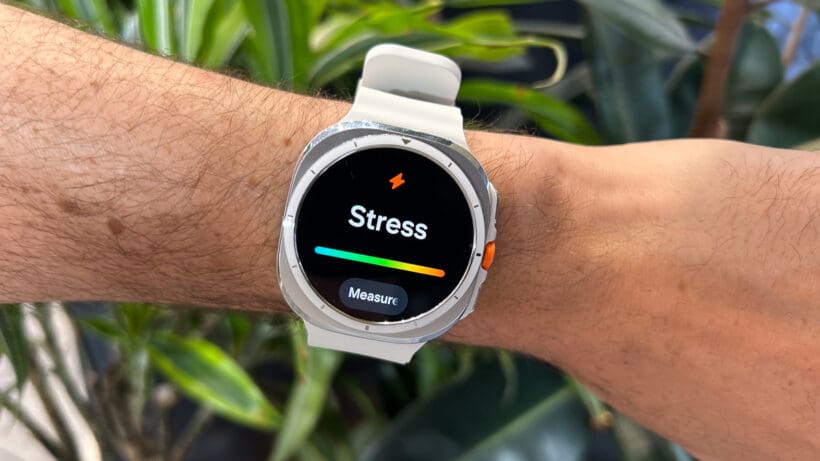
The best Samsung wearable for tracking stress
Samsung is far from a leader in stress tracking. However, its watches offer a broad app selection, and a smart ring is also available. This makes the brand a viable option for those who want to add stress insights to their wider tracking.
The Samsung Galaxy Watch Ultra (above) is comfortably the best smartwatch for doing so. However, it’s also the most expensive and not the friendliest design for women or those with smaller wrists.
The Galaxy Ring is the best alternative, coming in cheaper and with much better battery life.
Apple Watch
How Apple Watch stress tracking works
The latest Apple smartwatches still don’t have a stress monitor feature built in, although there are third-party Apple Watch apps that will do the trick.
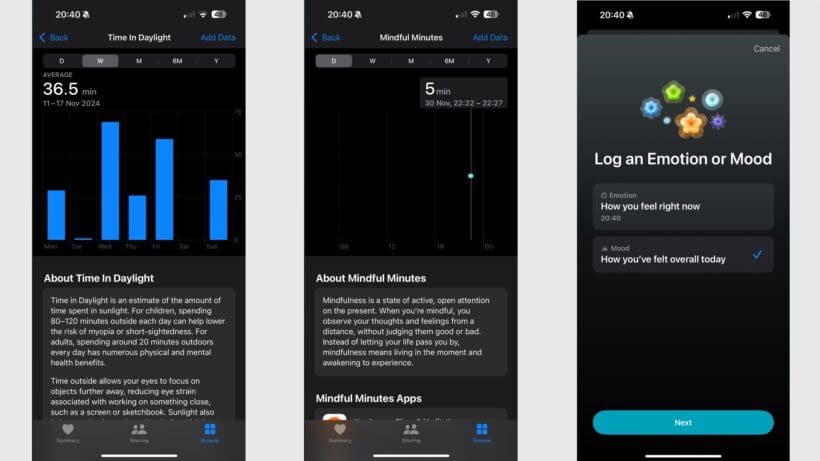
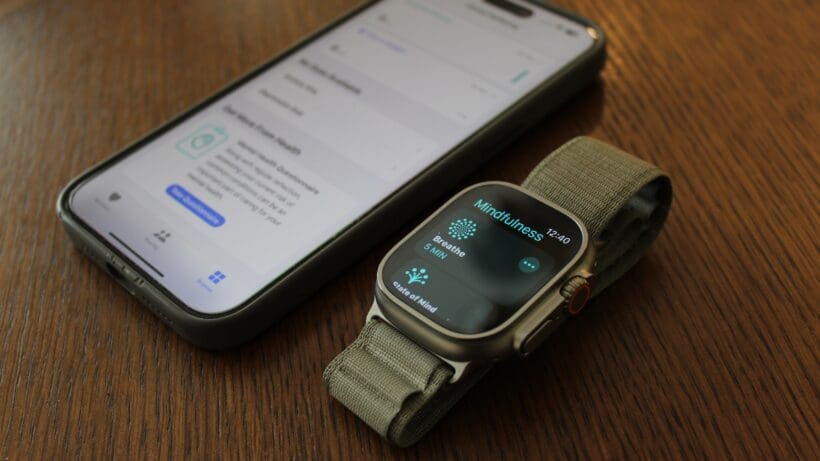
Instead, and in the typical Apple fashion of deviating from convention, the Mindfulness app is where users are sent to tackle stressful feelings. Overhauled in watchOS 8 in 2021, the app comprises three key parts: Breathe, State of Mind, and Reflect.
They’re all pretty self-explanatory. The Breathe section has actually been around since watchOS 3 and essentially guides you through in-out breathing sessions of 1-5 minutes. You can receive prompts throughout the day for these quick breathers, too.
Meanwhile, State of Mind is a a sort-of digital journal where you can chart your feelings throughout the day to build up a broader picture. And Reflect are essentially positive affirmation prompts – a fortune cookie designed to promote gratitude and perspective.
Not the most engaging of experiences
All of this data is stored in the Apple Health app for you to look back on, though we wouldn’t say they’re the most engaging set of features, or ones that help you pinpoint behaviours or track stress passively. The data is there, but you have to make the links yourself.
Apple also takes heart rate variability measurements when using its Workout app for exercise. This can be tricky to find in the Health app, but it is one way for you to dig into workouts and identify trends in your body’s stress levels.
As we say, though, there are also third-party apps (like EliteHRV) that take that heart rate data to help track recovery and stress levels related to exercise.
The best Apple Watch for tracking stress
All Apple Watch devices that support watchOS 26 are the ones we currently recommend for stress tracking, as they give you access to the latest version of Mindfulness. This also ensures you can play around with the many options on the App Store.
The Apple Watch Ultra 3 offers the best overall experience, thanks to its improved battery life, display, and durability. However, the Series 11 and SE 3 are still highly recommended.
Check out our guide to choosing an Apple Watch for more info.
How wearables measure stress
At the heart of how the majority of wearables monitor stress is, well, your heart. Devices like the Apple Watch, Samsung Galaxy Watch, and many of Fitbit’s trackers use heart rate monitors, which offer 24/7 feedback on our bpms (beats per minute).
In more recent years, wearable makers have developed other types of heart rate activity measurement that can unlock additional health and fitness insights. The one most relevant to this rise in stress monitoring is called heart rate variability.
Heart rate variability (HRV) relates to the measurement of the time interval between heartbeats. Unlike measuring heart rate, which relates to an average number of heartbeats per minute, these heart rate variability readings are more focused on the small fluctuations of the heart.
The key thing here is what can cause those fluctuations. These include age, body position, time of day, and your current health status, but crucially, emotional, physical, and mental experiences can impact heart rate variability.
If your heart rate variability is above its typical range, that’s commonly considered a good thing. A HRV reading lower than your recent baseline can be a sign of stress on your body. The likes of diabetes, heart disease, and cholesterol are medical issues commonly associated with some having a consistently low heart rate variability.
However, that measurement alone isn’t enough to tell you whether you’re stressed or not.
“It takes a lot of specialized expertise in mathematics, signal processing, pattern recognition, and programming to get to the point where you are providing useful information to people,” says Garmin’s Herman Bonner.
Why guided breathing exercises work
There are two main ways that heart rate variability measurements are being used to measure or track stress. The first is related to offering insight into people’s mental well-being. So, this is the kind of stress you experience when you’ve maybe got a lot on your mind.
Many wearables will use this HRV data to produce a ‘stress score’ from 0-100 which gives you a clear idea if you are experiencing a stressful moment in your day.
We have also seen the use of guided breathing exercises that lean on onboard heart rate monitors and HRV to help indicate when you’ve returned to a calmer state.
“Mindful breathing lets users take control of how they handle stress,” says Han Paik, a senior product manager at Garmin.
“When we breathe in a controlled, thoughtful manner we gradually lower our heart rate and increase the beat-to-beat variability. When this happens, the brain gets a signal from the heart that is saying ‘Relax, things are okay! No need to worry.'”
“When our breathing is rapid and shallow, our heart rate gets fast, and more inflexible. That’s when the brain and the body get the opposite message which makes us stressed.”
Playing your part: Understanding body stress
The other big area of stress tracking and wearables relates to fitness and exercise. So, this is the concept of using the same heart rate variability measurements to help indicate the strain and stresses put on the body after a workout and what it can mean from your recovery.
Companies like Whoop, Oura, and Garmin use those heart rate variability measurements to offer insights into how ready your body is to perform.
The value lies in using those measurements to understand trends that can help you see when you are at your optimum to tackle a workout.
A high HRV may indicate that the body is in good shape, while a low HRV during activity could indicate a person is fatigued, dehydrated, stressed, or even unwell.
“A lot of the value people get from tracking their stress comes from looking back over their days and weeks,” says Bonner.
“This is a hugely different perspective from what you get from sitting down and firing up a stress test, seeing the results, and moving on to the next thing.
“At any given moment, you tend to have a pretty good sense of whether you are stressed or not. Catching trends and ups and downs when you aren’t even thinking about it can be truly eye-opening.“
Are stress trackers accurate?
Stress monitoring can only be effective if the technology it relies on to provide insights is reliable. Optical heart rate monitors are the key source, but their accuracy and reliability have been questioned over the last decade.
If your wearable’s heart rate sensor cannot accurately measure your heart rate, you may question its reliability in indicating your physical or mental stress levels.
When we spoke with Dr. Steven LeBoeuf from biometrics experts Valencell, a company that provides optical heart rate sensors for big-name brands, they gave us their thoughts on measuring HRV, which underpins the current way of measuring stress on wearables:
“It’s really difficult to deliver heart rate variability from the wrist when you have so much movement of the wrist. Our technology works best when people are not moving,” said Dr. LeBoeuf.
It also told us of the value of moving heart rate tracking to other parts of the body (like the ear) and areas that are closer to the heart (like the chest) to improve the accuracy and reliability of the data.
The reliability of wearables in tracking stress could improve by examining other bodily data. One area being explored is sweat, with the composition of perspiration providing insights into stress hormones and offering a glimpse into emotional stress.
The future of stress-tracking wearables
Sensors that already provide these stress measurements right now will continue to improve in terms of providing more accurate data and also helping users act on it. That challenge that comes from how people make sense of that says – something Bonner believes will improve.
“Your watch can recognize that you are experiencing an elevated state, but it doesn’t necessarily know why that is the case,” he tells us. “The individual user still needs to bridge that gap, using their awareness of how potential stressors might affect them.
“The next stage is going to be taking the stress and recovery data that wearables collect and putting it to use,” adds Bonner.
You will start to see stress tracking insights used to ground and tune personalized lifestyle and training tips,” says Bonner. “Obvious opportunities exist for tuning the scheduling and strenuousness of your workouts based on things like daily stress and sleep quality.”
Stress and wearables are still in their early days, and what they could look like in just a few years is an exciting prospect.