

The undisputed smartwatch champion
The Series 11 represents another assured iteration from Apple, solidifying its position as the best smartwatch for most iPhone users. While not a revolutionary leap, it delivers meaningful improvements: a more durable display, a beautifully fluid software experience in watchOS 26, and powerful new health insights like hypertension notifications. Core performance in heart rate and GPS accuracy also remains deceptively excellent. The familiar battery life performance might not tempt recent upgraders, but, for anyone with a Series 8 or older, this is a superb and polished upgrade.
Pros
- More scratch-resistant display
- Excellent GPS and HR accuracy
- watchOS 26 is polished and seamless
Cons
- Still not true multi-day battery life
- Lacks dual-frequency GNSS
- No reason to upgrade for recent buyers
For over a decade, Apple has delivered the latest Series smartwatch with a metronomic rhythm. It is, and remains, the undisputed champion of the watch world; the default choice for any iPhone user. And the Apple Watch Series 11 is the latest and most polished expression of that quiet dominance.
It remains the quintessential ‘middle child’ release. Following the significant design overhaul of the Series 10, this year’s update is one of targeted refinement rather than revolution. The biggest changes are found in the software, with watchOS 26 delivering a beautiful design refresh and deeper integration with Apple Intelligence. Hardware upgrades are minimal and subtle, taking the form of a more durable display and an updated battery life claim (that warrants a closer look).
The conclusion, much like the release cycle itself, feels familiar: this is still the best all-round smartwatch you can buy.
For those upgrading from older models, the cumulative improvements will feel significant. For owners of recent models, the case for upgrading is less clear-cut. However, even in a market where rivals such as Google, Garmin, and Huawei are more competitive than ever, Apple’s unshakeable formula of steady, thoughtful improvement proves once again to be a winning one. Below is our extensive review.
Price and competition
The Apple Watch Series 11 launches at the same starting price as its predecessor, at $399 in the US. In some regions, such as the UK, it has seen a slight price reduction—it starts at £369, compared to the Series 10’s original launch price of £399.
Meanwhile, the competitive landscape for an iPhone user remains largely internal. The decision is less about Apple vs. the world, and more about which Apple Watch is right for you. The key considerations are the budget-friendly Apple Watch SE 3 at one end, and the rugged, multi-day Apple Watch Ultra 3 at the other.
External competition does exist, primarily from Garmin and Huawei, who are both shipping an enormous volume of wearables globally. Devices like the Garmin Venu 4, Venu X1, and Huawei’s excellent GT 6 series offer incredible battery life and deep fitness tracking.
However, they can’t compete with the Apple Watch on the metric that matters most to many: seamless, deep-level integration with the iPhone. They’re superb fitness trackers, but they aren’t true smartwatches in the same vein.
Design and display
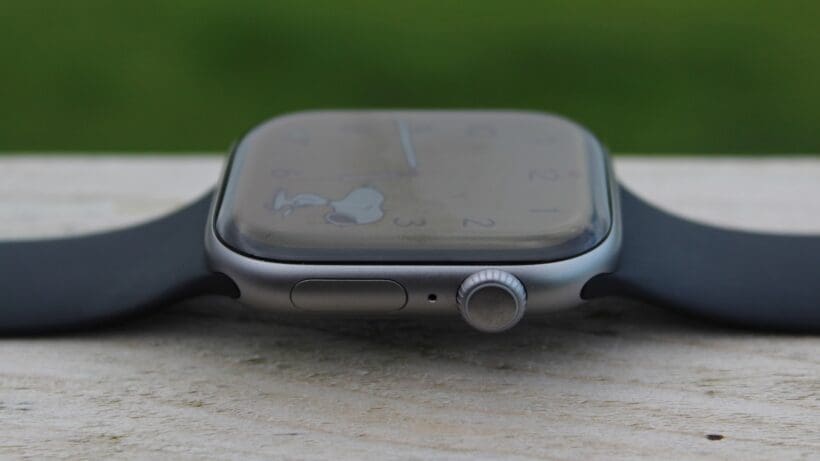
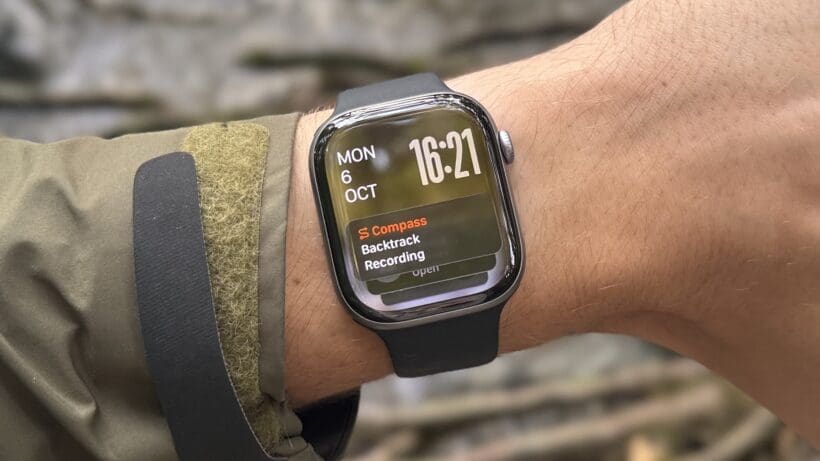
Unsurprisingly, Apple has opted against reinventing the wheel with the Series 11’s design. But that’s a good thing. The thinner, larger-screen chassis introduced with the Series 10 is a winning one, and criticizing Apple for not changing it would be missing the point.
The role of the Series line is to be the archetypal Apple Watch, and this is the most refined version of that vision yet.
The 42mm and 46mm case sizes introduced last year remain. When this refresh debuted last year, we questioned whether these sizes might prove too large for smaller wrists (or those who simply don’t want an increasing screen size on the wrist). However, it’s also true that the slim profile (still under 10mm) makes it feel less obtrusive than even some older, smaller cases.
The edge-to-edge display creates an illusion of a smaller device by eliminating dead space. In our testing of the 46mm model, it felt perfectly balanced and comfortable for 24/7 wear.
A winning formula, now more durable
The most significant physical upgrade is the new Ion-X glass on the aluminum models, which Apple claims is twice as scratch-resistant as the previous edition. The sapphire crystal upgrade remains for the flashier titanium models.
We subjected our review unit to a month of fairly brutal, real-world testing—jumbled in backpacks with keys, chargers, and other watches, worn during gym sessions, and scraped against other wearables during sleep.
The result? Not a single perceptible scratch. While not a rugged watch by any means, this added durability is a tangible and welcome improvement for daily life.
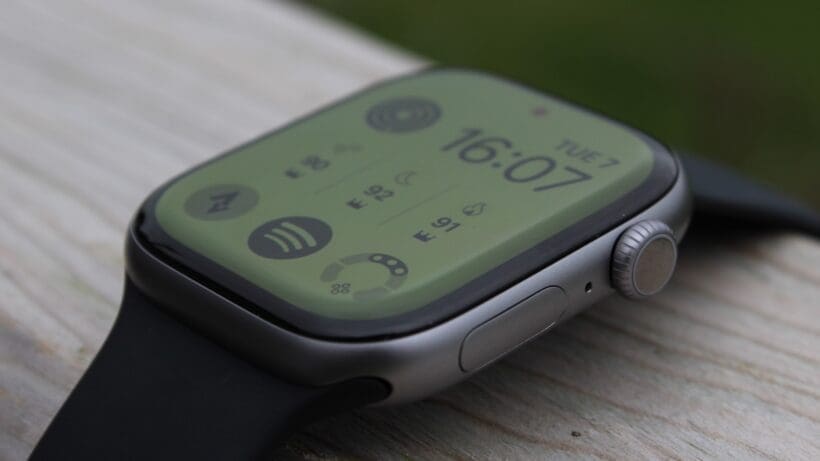
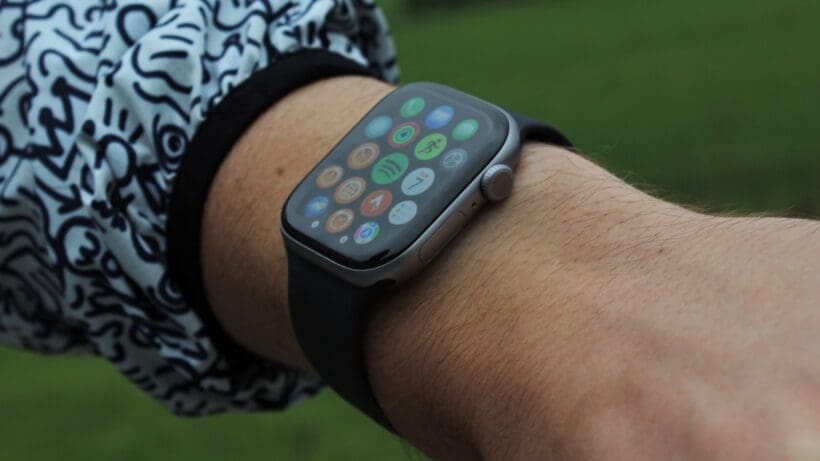
We tested the new Space Gray aluminum model, a returning colorway that feels like a nod to the early editions of the smartwatch. It’s understated, clean, and versatile, pairing well with almost any band or occasion.
Other than that, the core control scheme is unchanged, with the responsive Digital Crown and side button providing all the necessary physical interaction.
While future iterations will undoubtedly see fractions of millimeters shaved off the bezel and case thickness—and perhaps focus more on repairability, as Google has with the Pixel Watch 4—the current design remains very friendly and usable.
Software and watchOS 26
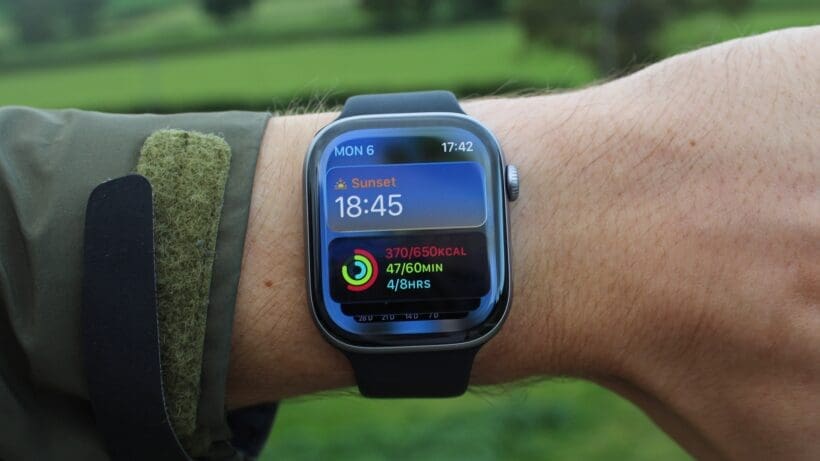
While the hardware is a story of minor refinement, the software is where the Series 11 feels genuinely new and alive. The seamless integration with the iPhone has always been Apple’s trump card, and watchOS 26 elevates this relationship to new heights.
It’s the small, frictionless details—maps on your iPhone seamlessly pinging directions to your wrist without latency, or Sleep Mode on your phone automatically mirroring on your watch—that competitors still struggle to replicate. This deep-level connection is the primary reason the Apple Watch experience remains unparalleled.
A fluid new look
This year, that experience is wrapped in the new ‘Liquid Glass’ design language, a significant aesthetic overhaul that unifies the look and feel across all of Apple’s platforms. On the watch, this new design is most noticeable in the refreshed icons and refractive animations.
It’s a clean, cohesive, and beautiful interface that makes the entire experience, from scrolling through notifications to launching apps, feel more fluid.
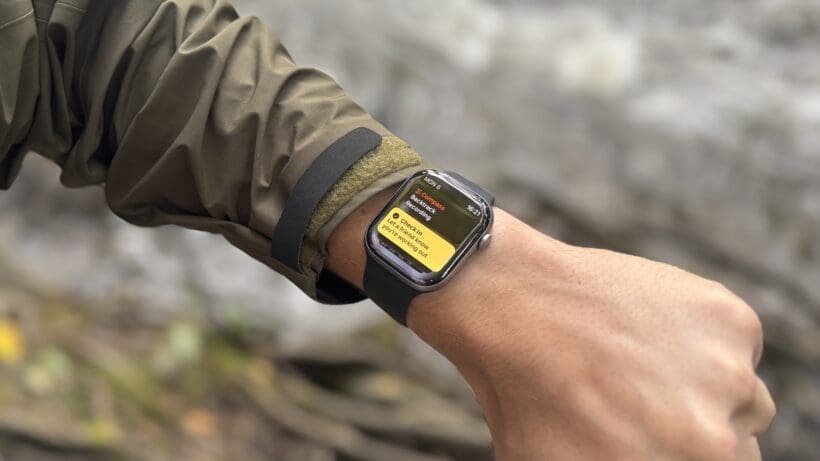
Apple has also leaned further into proactive, intelligent software. The Smart Stack is now more context-aware, thanks to Apple Intelligence, surfacing relevant widgets at the right time. You’ll now see the camera control at the top when you open the Camera app on your iPhone, or it will notify you that Backtrack has been automatically activated when it senses you’re on a hike.
Again—it’s these small, intuitive touches that reinforce the Apple Watch’s role as a seamless extension of your phone. As Apple continues to develop its ambient computing platform and Vision Pro family, the latest Apple Watch software provides early hints at the role it will surely play as the central controller in the new world.
In considerably less big-picture terms, there have been a few noticeable tweaks to watch faces, as well. Along with an update to the popular Photos option, Flow and Exactograph are excellent new showcases of the glassy and fluid design language.
A subtle but welcome update now also allows over 20 faces to display a ticking second. This is a small but surprisingly effective change to the always-on display; it makes it feel much more alive and dynamic, blurring the line between its active and resting states.
Health features and sleep tracking
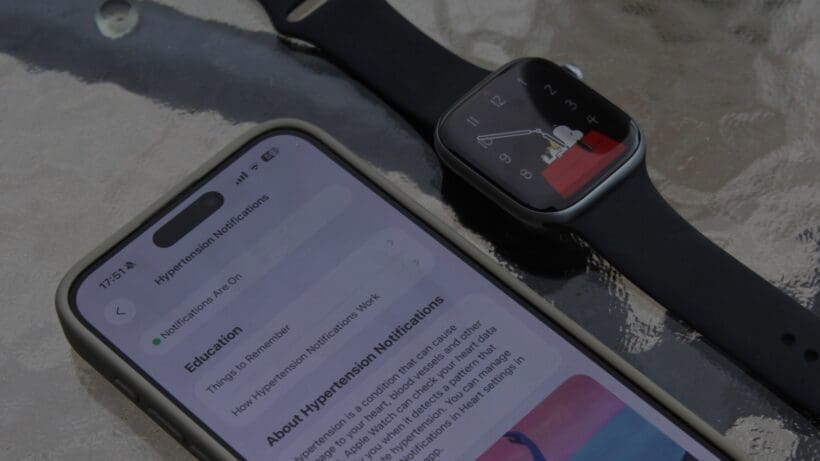
The Apple Watch’s evolution into an indispensable, all-day health monitor continues with two significant software-powered additions, both of which will also roll back to the Series 9 and 10 models.
These new features build upon an already formidable suite of health tools, including the ECG app for AFib assessment, blood oxygen monitoring, cycle tracking, Fall Detection, and alerts for sleep apnea, all working silently to create a powerful safety net on your wrist.
The headline feature is passive hypertension monitoring. Using the optical heart sensor, the watch analyzes blood vessel responses to detect consistent signs of chronic high blood pressure. Much like those sleep apnea alerts, it’s a ‘set and forget’ feature that works in the background—and has the potential to be a genuinely life-saving tool for millions of users.
Apple is by no means the first to market with an interpretation of blood pressure tracking, to be clear. However, like virtually all of its features, the sheer reach of its ecosystem means it has a much greater chance of making a difference. I can already picture a case study-focused promo being used as an intro in next year’s Apple Watch keynote.
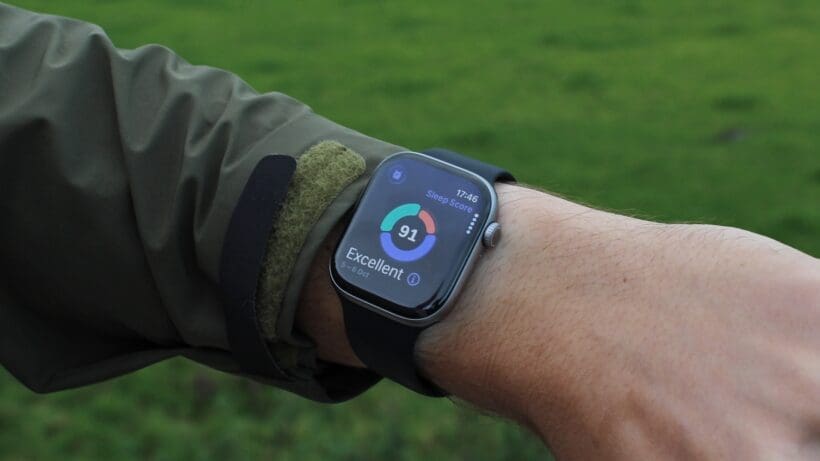
The brand has also finally introduced a Sleep Score. However, true to form, it’s zigged where others have zagged. Again, that’s not necessarily a bad thing—let me explain.
Keeping it simple
Virtually every other competitor’s scores are heavily weighted by sleep stage analysis (a feature with notoriously limited levels of accuracy on consumer wearables, let alone the gold-standard ‘sleep lab’ polysomography) and heart-based metrics such as heart rate variability (HRV) or resting heart rate (RHR).
Instead, Apple’s score is based on three more robustly trackable components: total duration (out of 50), bedtime consistency (out of 30), and interruptions (out of 20).
It’s a clever approach that prioritizes actionable, reliable data over speculative analysis—not unlike the Vitals app (which deviates from many similar health dashboards and recovery scores) or the Training Load feature.
It’s a softer and simpler approach than that offered by other brands; Garmin and Whoop, for better or worse, are nowhere near as cautious about telling you that your recovery or sleep is garbage. And while I personally crave more depth and nuance in these areas, it’s also likely true that the average Apple Watch Series owner probably doesn’t.
Sports tracking performance
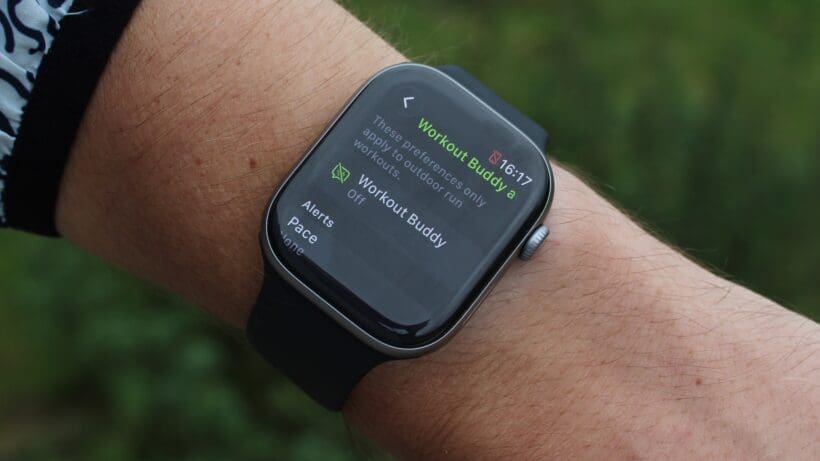
There’s been no exclusive, major new sports features added for the Series 11. Outside of watchOS 26’s Workout Buddy—the Apple Intelligence-powered summaries of things like your last mile or Activity Rings status that sound during workouts—and the redesigned Workout app, the core tracking experience remains the same.
In the case of GPS, that’s a bit of a shame. In an era where even budget-friendly smartwatches (like Nothing’s $99 CMF Watch Pro 3) and rivals like the Pixel Watch 4 are adopting dual-frequency technology, its absence here is a notable omission on the spec sheet.
As ever, though, there are also a couple of caveats to consider here. One is that dual-band GPS doesn’t automatically equal superior performance; I’ve tested countless watches with the technology over the last two years that couldn’t hold a candle to Apple’s single-band tracking.
The other—with the context that Apple is no doubt acutely aware that its single-band tech is more than sufficient for a Series user (as I’ll demonstrate below)—is that it’s likely being cautious about not cannibalizing an exclusive feature of the Ultra line.
GPS tracking analysis
In practice, then, the performance is typically excellent. Across our test runs, the Series 11 consistently tracked slightly shorter distances than our Garmin Fenix 8 Pro (on its Multi-Band setting). For example, on a 9.12-mile Garmin-tracked run, the Apple Watch logged 8.89 miles. Another was 6.12 miles on the Series 11 vs. Garmin’s 6.24 miles.
But a closer look at the GPS tracks shows that it’s not necessarily an open-and-shut case of underreporting. As shown on the out-and-back route above (which you can view in its entirety here via DCR Analyzer), the Apple Watch often plots a tighter, cleaner line, suggesting it may be less prone to drift than its rivals.
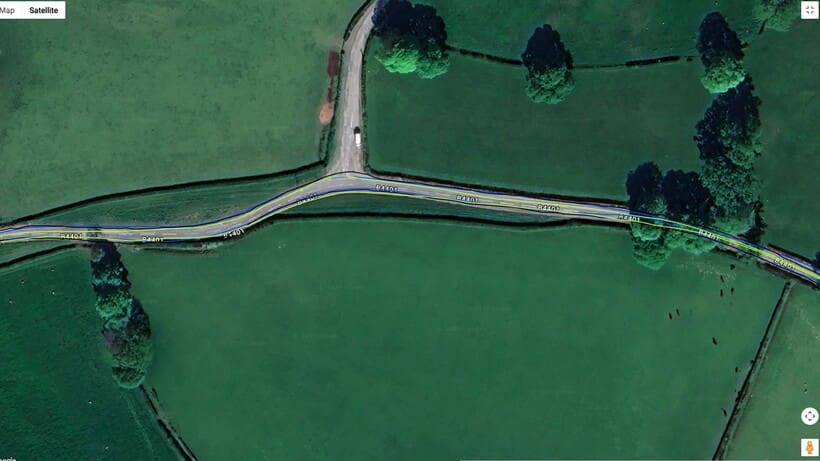
In another test (which, again, you can view in full here), the Samsung Galaxy Watch 8 Classic showed a frankly laughable amount of deviation while the Apple Watch track was crisp and accurate to the path.
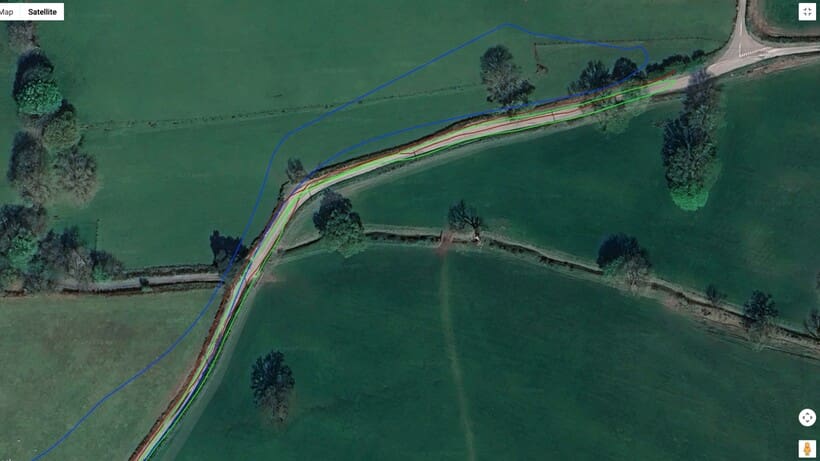
The takeaway, similar to what we’ve always said of the Series devices: despite the spec sheet disadvantage, its real-world GPS is more than sufficient for most outdoor exercisers.
It would likely have a harder time in a city environment, for example, where the benefits of dual-frequency are well-documented. Yet, even then, our experience with previous versions of the Series line tells us that it’s also no slouch in more challenging conditions, too.
Heart rate tracking analysis
Like GPS, heart rate accuracy remains an area where the Series 11 excels.
In steady-state runs, it tracked as expected when compared with the HRM 600 chest strap. Session averages were consistently within a single beat per minute (BPM), and they rarely deviated (as seen in the two tests highlighted above) from the general picture presented by Garmin.
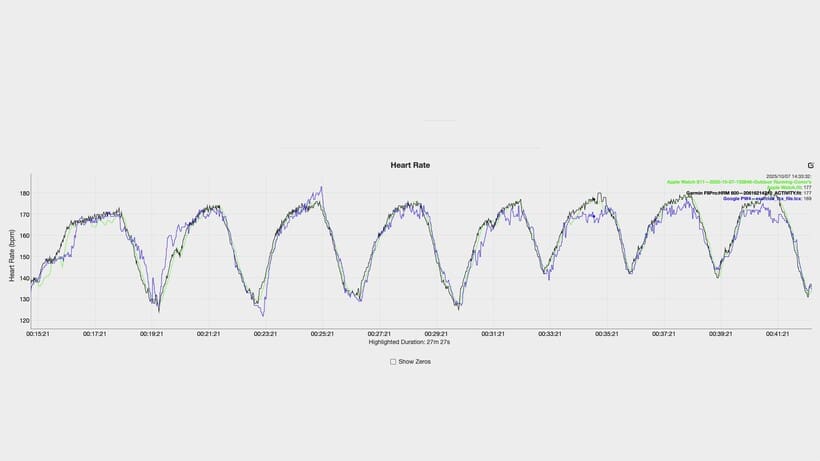
The more challenging test, however, is tracking live performance during high-intensity intervals—where the latency of a wrist-based device can lag behind that of a chest strap. There’s also excessive wrist movement, which typically means more signal interference for the sensor.
During an eight-session effort, however, which you can view in full here, the Series 11’s optical sensor did a remarkable job of keeping pace with the chest strap. Like, really good.
— (Image credit: Wareable)
It captured the sharp peaks and recovery troughs with minimal latency, a feat that other watches, like the Pixel Watch 4 in this particular example, have struggled to achieve.
The Series 11’s heart rate tracking isn’t perfect—we still sometimes experience the odd warm-up drop-out at the start of sessions, but you’ll be hard-pressed to find a more accurate wrist-based heart rate monitor at this price point (or any price point, actually).
Battery life and charging
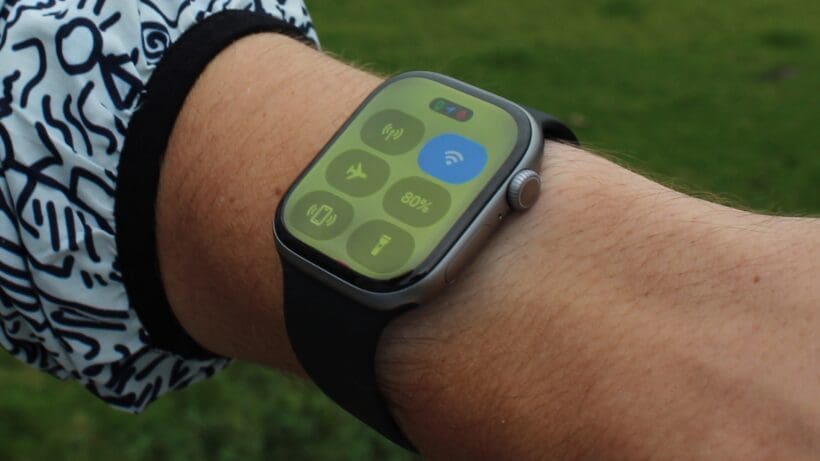
For years, the Apple Watch’s official 18-hour battery life estimate has been an understatement of its real-world performance. With the Series 11, Apple has finally updated this figure to a more realistic 24 hours. Yet, it’s not necessarily straightforward, and the change requires some deconstruction.
The key difference is that Apple’s new testing protocol now includes six hours of sleep tracking, a power-efficient state that previous tests didn’t account for. This means that while the on-paper gain is six hours, you shouldn’t expect a full six extra hours of active, daytime use.
Breaking down the new battery claim
So, what does it mean in reality? Our testing indicates that the battery life feels slightly better, but not to a very noticeable or game-changing level.
The Series 11 is still fundamentally a device that you’ll need to charge every day, or every other day if you really squeeze out the power-saving mode and nerf the experience by turning off sensors and the AOD (which, for us, feels like it defeats the point of having the device to begin with).
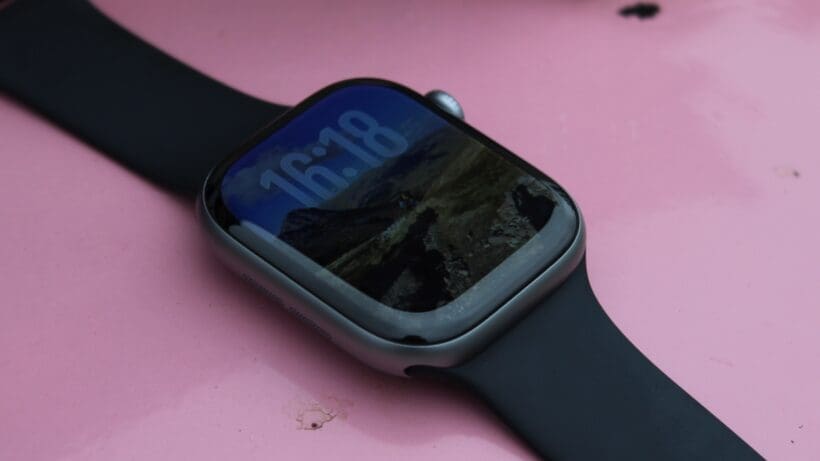
With the always-on display active, notifications, and an hour-long GPS workout (which consumes about 10-15% of the battery), you can comfortably get through a full day and a night of sleep tracking (which also consumes 10-15%). However, you won’t make it through a second night without a top-up. That was true before, and it’s still true now.
What the Apple Watch does exceptionally well is deliver consistent battery drain. Unlike some watches that can experience significant fluctuations in overnight battery sapping, the Series 11 is more predictable.
However, the dream of a true multi-day standard Apple Watch remains just that—a dream. For that, you still need to look at the Ultra watches. So, despite some initial optimism, longevity remains the Series’ biggest Achilles’ heel and the primary reason it falls just short of a perfect score.