
The annual trend report also reveals the brands challenging for Apple's crown
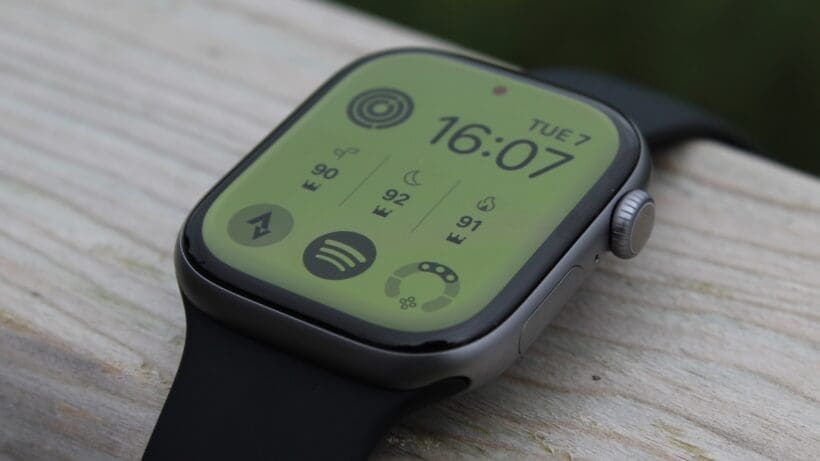
The Apple Watch remains the most popular wearable to track exercise on Strava, the platform’s 12th annual ‘Year in Sport: Trend Report’ has revealed.
As we saw in last year’s edition of the brand’s Spotify Wrapped equivalent, which is gleaned from the activity logging data of its 180 million global users, the brand’s Apple Health platform was also the most popular proxy platform for uploads.
In 2025, women were also 70% more likely than men to record an activity via their Apple Watch.
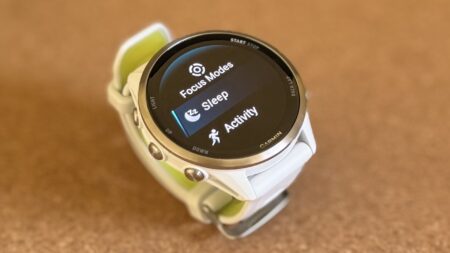
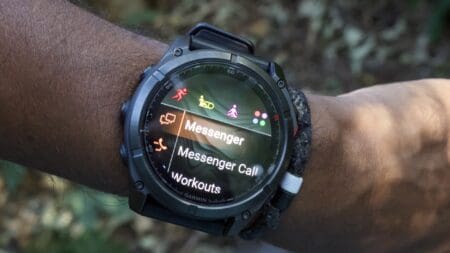
However, while Apple’s line of smartwatches remains the most used dedicated trackers, the Strava app on iOS and Android remains, somehow, overwhelmingly the device of choice for those tracking workouts. Behind that, Garmin ranked second in usage across all device types.
Coros and and non-watch trackers on the rise
While Apple and Garmin hold significant spots for Strava users, challengers are also on the rise.
Coros emerged as the fastest-growing brand year over year, signaling a strong push into the competitive multisport and endurance running segments with devices like the Apex 2 and Nomad joining staples like the Pace 4.
The report also notes that non-watch wearables such as Oura Ring 4 and Whoop 5.0 are also growing fast, reflecting a broader trend among Strava users to prioritize holistic health metrics, including recovery and sleep.
This investment is most pronounced among the younger demographic, too, with 63% more Gen Z than Gen X citing wearables as their most significant fitness investment in 2025.
This aligns directly with the rise in AI coaching we’ve seen via wearables platforms and dedicated plan hubs like Runna over the last couple of years. The report found that 46% of Gen Z users would use AI as a smart coach for sports, taking on board algorithm-backed insights more than any other generation.
This trend is reflected in the platform itself, with a Strava Smart Route (which harnesses AI to create personalized recommendations based on community data) being generated every 19 seconds.
The Wareable take
This year’s report confirms a key trend we first saw emerging in 2024: the active user is prioritizing specific, structured progress over generic exercise. And the number of dedicated trackers continues to rise.
And the rapid growth of Coros, whose core strengths are battery life and outdoor features at a (relative) budget price, suggests it’s successfully chipping away at Garmin’s dominance in the endurance space.
The rise of discreet, non-watch wearables is also a fascinating trend to watch into 2026.
These recovery-focused devices indicate that Strava users are moving toward a holistic view of training where sleep and stress are equally as important as activity time.
When PULSE by Wareable spoke to Strava’s CTO Matt Salazar last summer during the brand’s big leadership team overhaul, we suggested this would become increasingly important for the brand over the coming half-decade. And though adoption among those users has increased, the question remains how Strava capitalizes on that growth with more rounded trackers.
For now, though, it’s time to raise a glass (or protein shaker) and celebrate the year that was.