
Big on stamina, short on style
The Amazfit Active Max is a functional powerhouse for those who value battery life and screen brightness above all else. With a massive 10-day heavy-use battery and some display specs that rival the most expensive flagships, it’s a compelling tool for the price. However, its generic, chunky design won't win any beauty pageants, and the single-band GNSS lacks the accuracy of Amazfit's more premium models. It’s a solid, budget-friendly fitness companion, provided you can live with its basic smart features and uninspiring aesthetics.
Pros
- Rich fitness tracking features
- Plenty of heavy-use battery life
- Super-bright display
Cons
- Generic, chunky design lacks personality
- No dual-band GNSS
- Zepp app remains cluttered and unintuitive
Even after a bumper year of smartwatch releases, Zepp Health decided to sneak in one final announcement—the Amazfit Active Max—during the last few days of 2025.
As the name suggests, fitness tracking remains at the forefront of this all-new, budget-friendly watch. Yet, this isn’t just a slightly retooled Active 2; the Max separates itself from other Amazfit fitness watches by having more storage, massive battery life, and a chunkier aluminum design.
As we’ve come to expect from these trackers, the accuracy and fitness features offer excellent value for money. But there are still key compromises you’ll have to make if you’re going to be friends with the Active Max.
Price and competition
Price remains a key factor when choosing Amazfit smartwatches over competitors like Apple, Google, and Samsung. That doesn’t change with the Active Max.
Priced at $169, this smartwatch is on the pricier end of the entry-level category, which we typically define as anything under $150.
This is still affordable compared to the industry’s best mid-range smartwatches—like the Apple Watch Series 11 (from $399) or Pixel Watch 4 (from $349)—but it’s not actually that much cheaper than much ‘smarter’ smartwatches, like the Apple Watch SE 3 (from $249).
But given that the Active Max can’t compete with the smart features offered by any of those devices, it’s more useful to compare it to other ‘fitness trackers in smartwatch bodies’.
In this niche, we regard the Huawei Watch Fit 4 (roughly $120) as the best option, but, at least in the US, it isn’t as readily available as watches like the Garmin Forerunner 165 ($249) and the Coros Pace 3 ($199).
Design and display
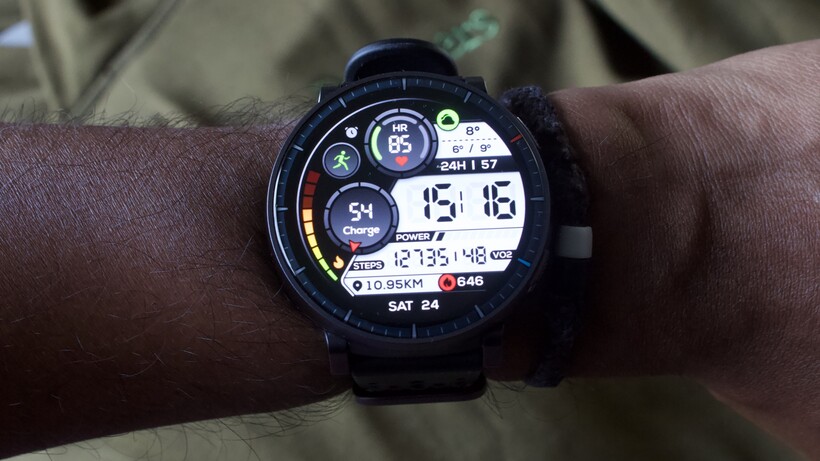
Zepp Health frequently experiments with the design of its smartwatches, often resulting in a variety of styles that don’t always follow a uniform appearance. Case in point: the Active Max looks quite different from the round version of the Active 2.
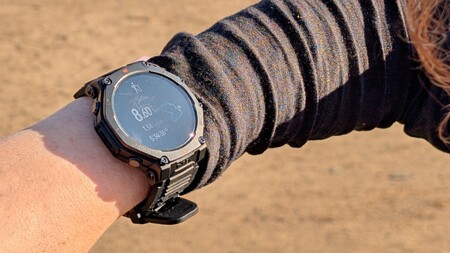
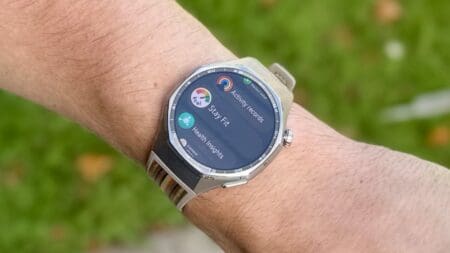
There’s no showy bezel, and, at 12.2mm thick, it’s quite a bit chunkier than the Active 2 (9.9mm). In our view, it’s not a very delicate or particularly memorable design. So, while the combination of polymer and aluminium gives it a subtle appearance—and that may work for some—it’s not one we’ve been excited to look down at on our wrist.
Still, the 22mm silicone strap pairs well with the quite large 48.5mm case. Even though the large case may not be ideal for those with smaller wrists, we found it very comfortable. The band features a simple pin buckle and a ventilated design to help keep it breathable when it gets a bit sweaty under your wrist.
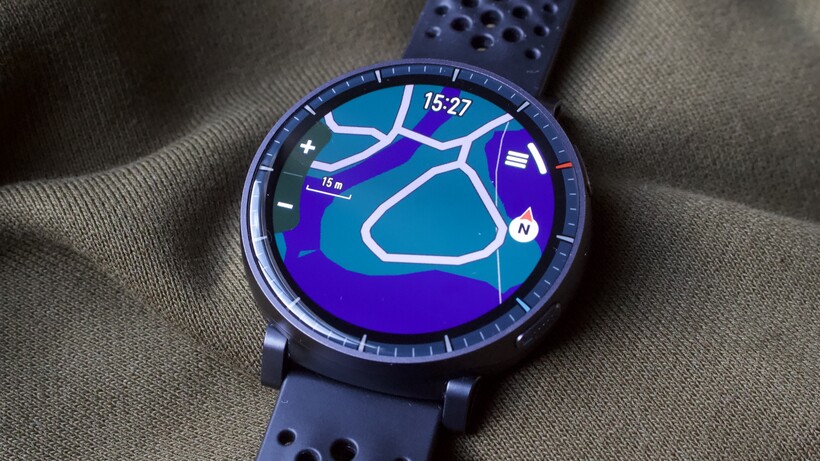
The screen is a 1.5-inch AMOLED display with a 480×480 resolution, which is pleasingly vibrant and bright, with a maximum brightness of 3,000 nits. That’s the same peak brightness as the $799 Apple Watch Ultra 3, for reference.
Failing to stand out
There’s nothing necessarily wrong with the screen, and it handles taps and swipes without issue. However, the colors are a bit oversaturated, and you do have quite a large dead spot and indices on the bezel that eat into the actual panel. We’ve seen better-quality screens available at around the same price as the Max—even ones from within the Amazfit range.
Besides the touchscreen controls, you have two textured physical buttons on one side of the watch case. Pressing the top one wakes the watch screen and takes you to the main menu. The bottom button gives you faster access to workout tracking.
All in all, there’s nothing inherently wrong with Active Max’s design. It doesn’t feel overly cheap on the wrist, can be used for showering and swimming (up to 50 meters deep), and has been comfortable to wear both day and night. It just doesn’t particularly stand out in any notable way.
Battery life
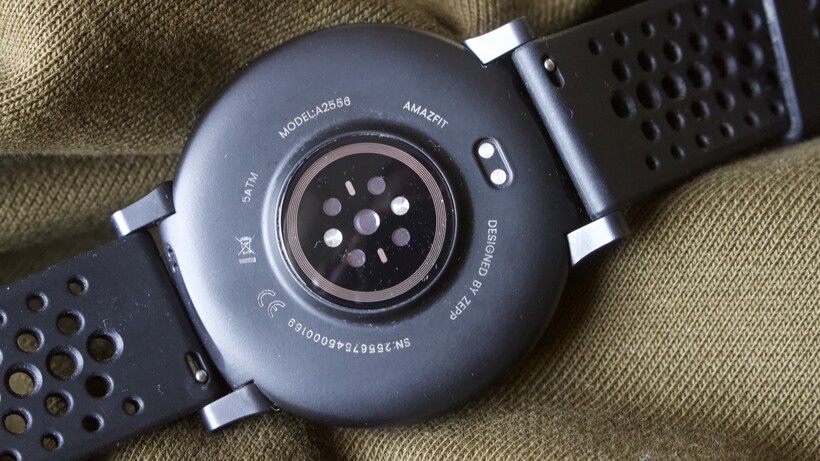
Unlike more power-hungry operating systems from Apple and Google, Zepp Health keeps its software business in-house. As a result, it can push further on a single charge than the likes of the Apple Watch or Samsung Galaxy Watch.
That 48mm case on the Max makes room for a 658mAh battery, with promised battery life ranging from 10 days with the always-on display (AOD) enabled, or 25 days under ‘typical’ usage (meaning AOD, among other features, is disabled).
We’ve tested the Active Max with the AOD enabled throughout, and Amazfit’s claims mostly check out. Even with GPS tracking daily, keeping the screen brightness high, and utilizing all monitoring features, it typically lasted 7-10 days. That’s pretty good going.
Not matching up
Zepp Health also touts battery life when continuous GPS is in use, suggesting you can expect up to 64 hours of GPS battery life (dropping to around 22 hours if you’re also streaming music).
We found that an hour of GPS use reduced the battery by 4-5%, though, which doesn’t necessarily align with the big estimates being quoted (even though it’s still more than respectable.
Meanwhile, the charging rate on the Active Max seems equally solid. You do have to use a proprietary charging dock (and provide the USB-C cable) to do it, but a 30-minute charge will add 30% of battery. As with all smartwatches, going from flat to full will take much longer—and it’s just under two hours for the Active Max.
Sports tracking
Let’s dive into the headline sports-tracking stats. With the Max, there are over 170 sports modes, built-in GPS, and the ability to pair with external heart rate, running, and cycling sensors.
You’ve also got free offline maps and support for sharing data with Strava, TrainingPeaks, and both Apple and Google Health. In other words, a sports-tracking experience that’s good enough for most users.
However, this isn’t a premium tracking experience, which is to be expected for the price. That’s mainly down to the GPS architecture, which isn’t the most advanced available from Amazfit. The Max still offers mapping support (which requires initial download and sync via the Zepp app), but it lacks the dual-frequency GNSS of more premium devices.
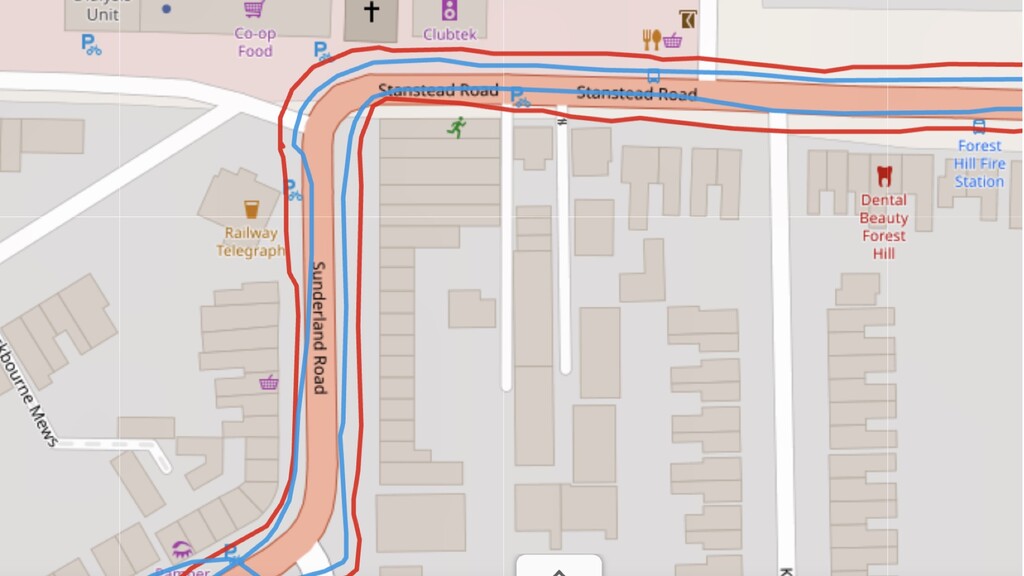
As a result, the GPS tracking performance was typical but not exceptional. When comparing its GPS tracks with those of a dual-band GPS watch, it quite consistently showed deviations from roads and pavements. It’s sometimes not enough to drastically alter session figures, but it does ensure that the Max typically overestimates distance covered.

Handy indoor workout features
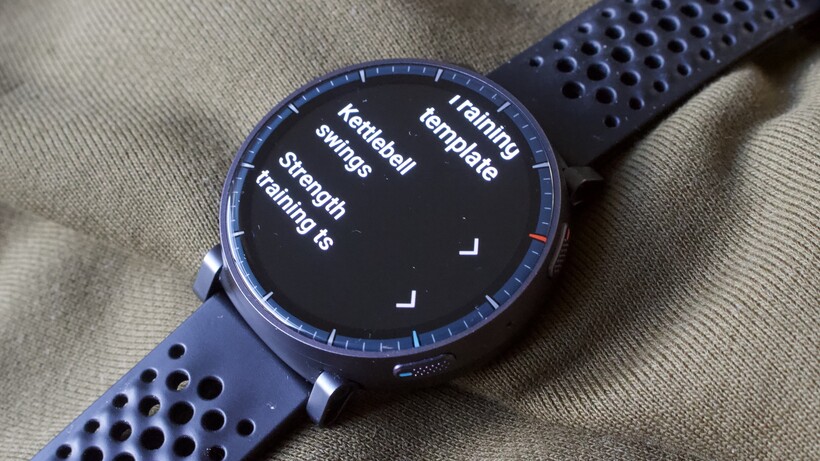
If you plan to do your training indoors, there’s solid support for that. The app offers profiles for activities such as stair stepping, elliptical use, and rowing, and includes specific strength-training features, as shown below.
Zepp Health employs recognition technology that can identify up to 25 movements, including barbell squats, burpees, deadlifts, pull-ups, and Russian twists.
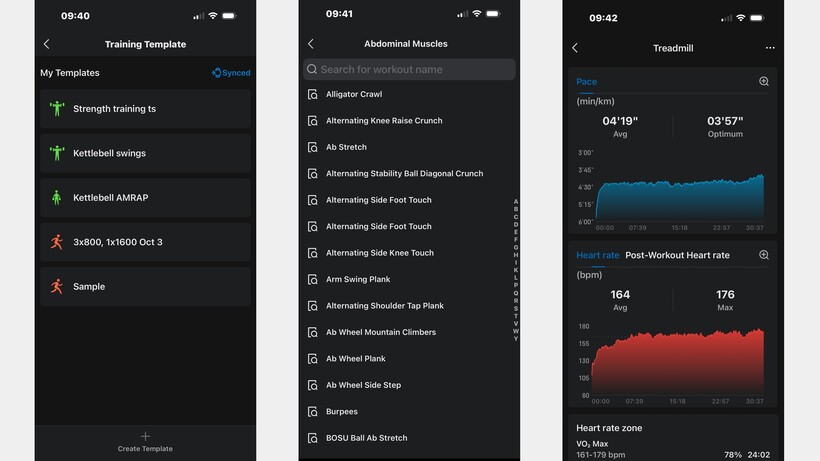
How effective is it? Well, you’ll have to ensure you’ve created a training plan in the app and selected movements that support workout recognition. Without this setup, the system will only indicate the body areas you targeted during the session. We aimed for 100 kettlebell swings per day, and after setting up the plan, the Max device counted our reps.
Business as usual when tracking heart rate
For those who care about heart rate, there’s a BioTracker PPG sensor on the rear of the watch to capture continuous and exercise heart rate readings. In general, the heart rate sensor has performed well, capturing average and maximum heart rate readings that are similar.
As we’ve noted in other Amazfit reviews with this sensor, it’s more than good enough for the price; those getting started with workout HR tracking will consistently get data in the right ballpark. Like all wrist-based trackers, though, a chest strap is always going to be better from a latency standpoint—which is why it’s good that Amazfit lets Max users connect an external HRM.
Training features and insights
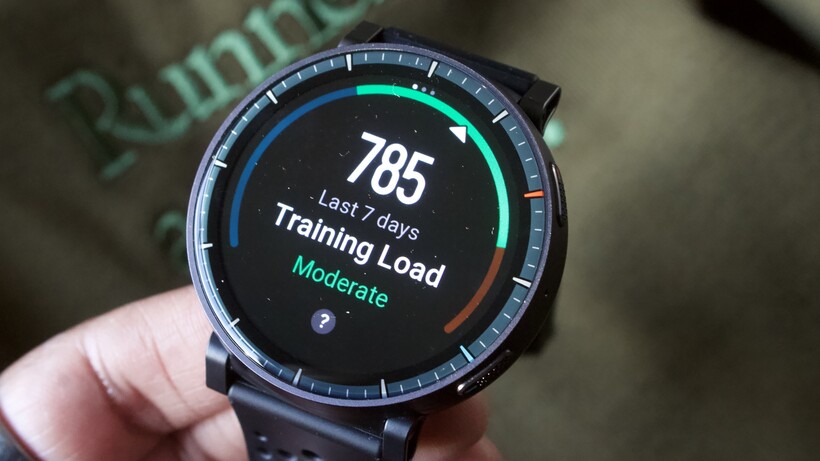
As mentioned, Zepp Health has seized the opportunity to go big on the fitness features you’d typically have to pay more for. You’re not getting everything Amazfit smartwatches offer on that front with the Max, but most of it does make the cut.
For example, it can track detailed data for Hyrox training and racing—and also allows you to create and sync workouts, including strength routines, using a library of popular movements and exercises.
You can quickly create interval workouts on the watch, follow training plans, and use Zepp Coach. The Coach recommends workouts similar to Garmin or Polar’s daily suggestions, based on your workout history and intensity.
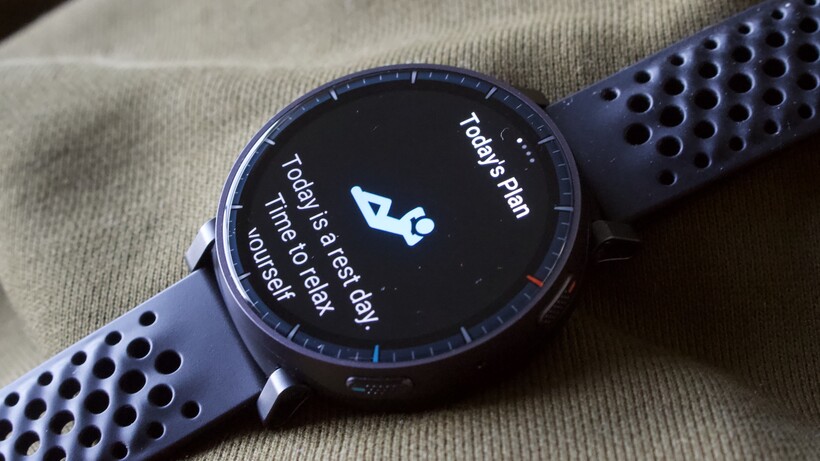
On a day when we had a tough run scheduled and had experienced poor sleep, the Coach advised taking a rest day or lowering workout intensity if needed. Now, this isn’t anything groundbreaking—it’s a feature that’s now common in sports watches—but it still felt well-adapted to our workout history.
If you delve into the workout status screen on the watch, you’ll find standard sports watch insights like training load, VO2 max estimates, and suggested recovery time.
Interacting with these metrics and features on the watch feels much more seamless than doing so through the Zepp app, which remains a busy and somewhat unintuitive platform for understanding the Max’s training capabilities.
Health and sleep tracking
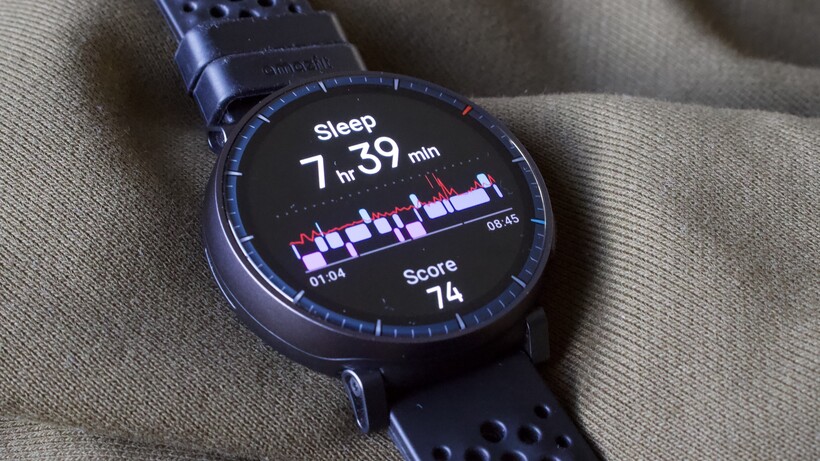
The Max can monitor various metrics and data such as resting heart rate, skin temperature, stress levels, and sleep.
Resting heart rate and skin temperature closely align with other smartwatches we trust for these insights. Zepp Health’s Biocharge scores resemble similar metrics used by other brands, including Garmin’s Body Battery system, which we compared it to.
Both watches provided comparable data and insights during intense days and more rested periods. There’s also a convenient widget on the watch to display these scores.
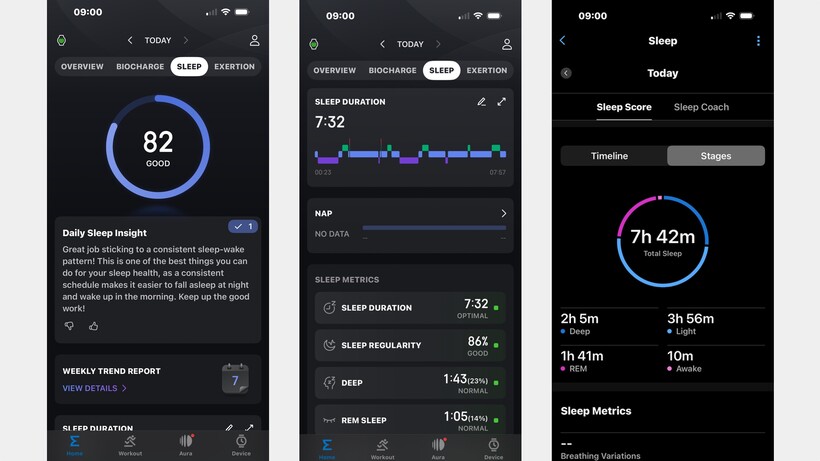
Regarding sleep tracking, we’ve been using the Max together with an Oura Ring 4 and a Garmin watch.
The main sleep data from the Max has been quite reliable, especially for tracking sleep duration (including when we fall asleep and wake up). It also performs well on other metrics, such as sleep heart rate and respiratory rate.
There are also sleep insights that offer a summary of your rest, focusing on consistency and the time you go to sleep, and reminding you to stick to a schedule. Crucially, the sleep data provided on the watch is enough to give you a sense of how good or bad it’s been.
However, if you want more data, then it’s over to the app. Here, there are graphs of your sleep regularity, duration, and more—though, like with fitness insights, it’s not our favorite platform for analyzing data.
Smartwatch features
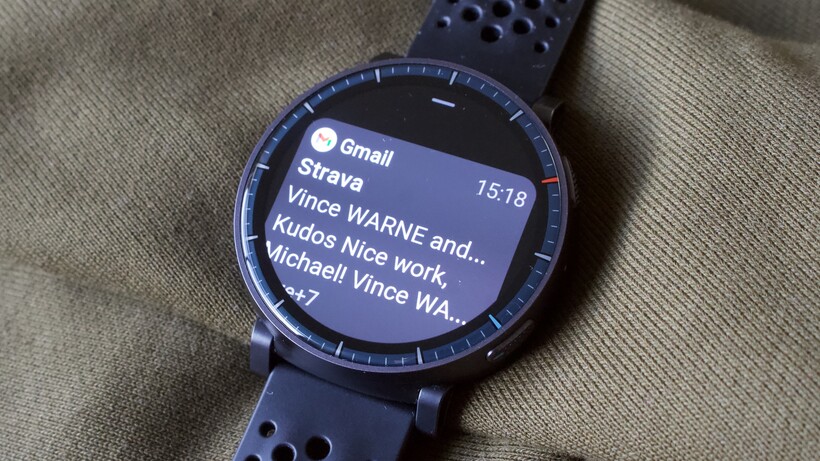
While the Max provides solid fitness features, you might have to accept some limitations in its other functions beyond exercise and vital tracking.
This is technically a smartwatch, but only in a very basic sense. The Max, like other Amazfit watches, can display phone notifications, control music playback, use Zepp Flow’s voice assistant, make contactless payments, and record voice notes.
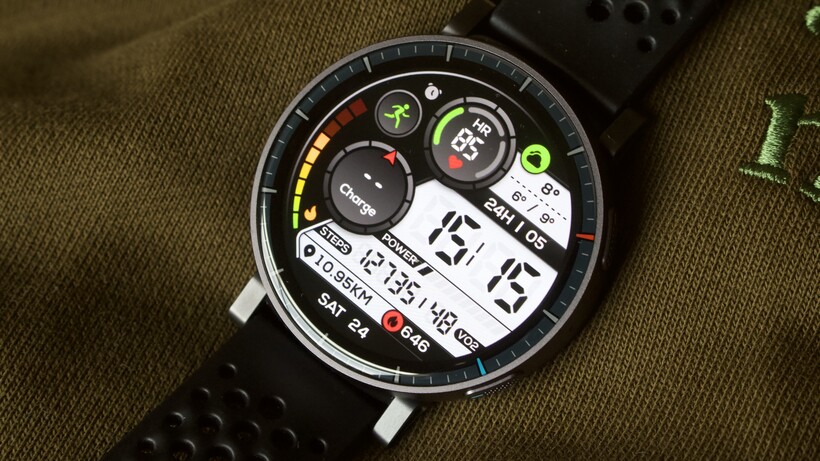
Zepp Health offers further support via its app and watch face storefronts. Yet, while there’s a nice mix of native watch faces, you’ll have to pay extra for most of them. Meanwhile, though the app store includes some useful extras and extensions, it lacks big-name apps and integrations that you’ll find on Google and Apple’s smartwatch platforms.
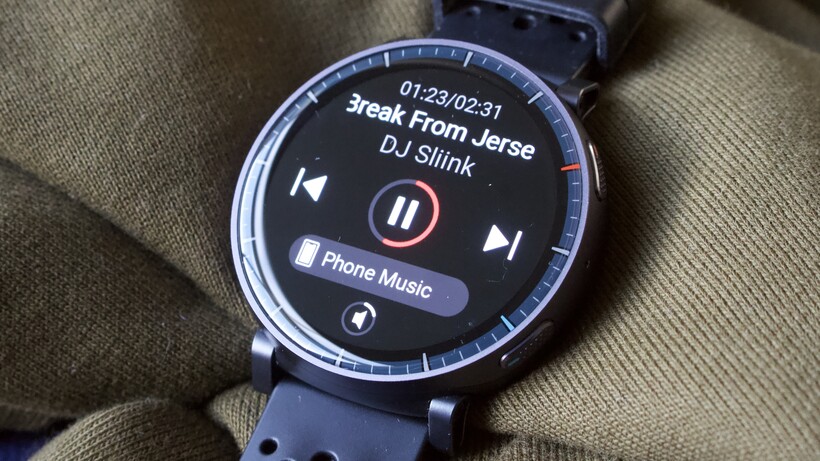
Again, this is the key compromise—and anyone considering the Max (or any Amazfit watch) will have to come to terms with the fact that it can’t rival a ‘true’ smartwatch in this area.
Our overall impression of the ZeppOS operating system is that it could benefit from greater polish and a more sophisticated appearance. Now that its feature set and spec sheet (mostly) are in place, the natural next step for the brand would be to improve its app platform.