
The 'JETS' AI model was developed using 3 million days of smartwatch and fitness tracker data
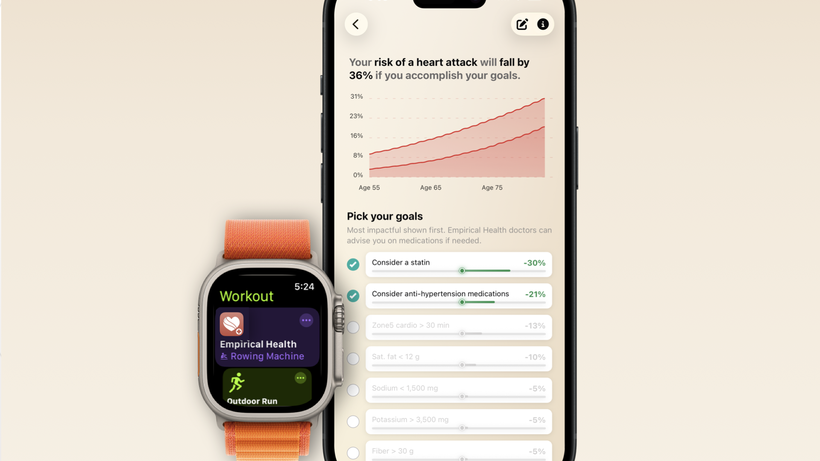
Researchers have successfully trained a new AI foundation model capable of predicting medical conditions using Apple Watch data, achieving high accuracy even when that data is incomplete or irregular.
The study, conducted by researchers from MIT and the health startup Empirical Health, was recently accepted for presentation at a NeurIPS workshop, a leading AI research conference.
The team utilized a massive dataset comprising approximately 3 million person-days of Apple Watch, Fitbit/Pixel Watch, and Samsung data from over 16,000 individuals to build the model, named ‘JETS’ (Joint-Embedding Time Series).
Solving the ‘real world’ data problem
The primary breakthrough of JETS is its ability to handle the messy reality of consumer wearable data. Unlike in clinical trials, where devices are worn strictly according to protocol, real-world users often remove their watches. This creates gaps in heart rate, sleep, and activity data.
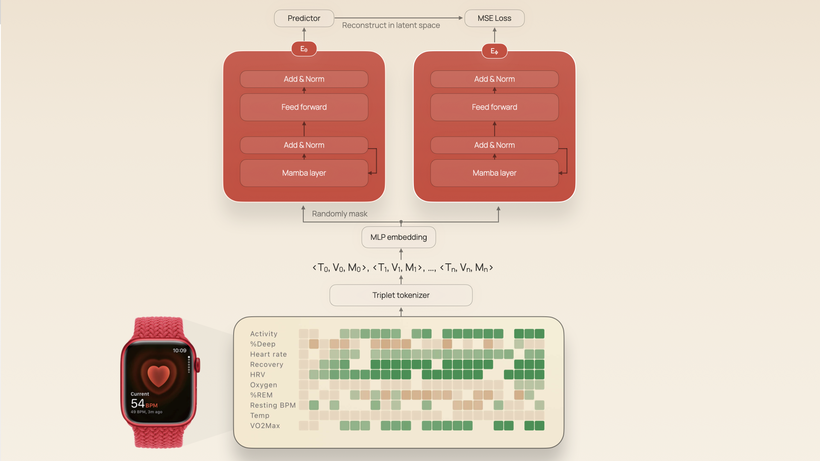
To solve this, the researchers adapted a concept known as Joint-Embedding Predictive Architecture (JEPA), originally proposed by AI pioneer Yann LeCun. Instead of artificially reconstructing or ‘guessing’ the missing data points—which can introduce errors—the model learns to infer the context of the missing information from surrounding data.
The model leverages 63 daily health metrics, ranging from sleep stages to oxygen saturation, despite only 15% of participants having labeled medical histories.
Promising results for preventative health
When evaluated, the JETS model demonstrated impressive predictive capabilities. It achieved an AUROC of 86.8% for detecting high blood pressure, 70.5% for atrial flutter, and 81% for chronic fatigue syndrome.
It also outperformed existing baseline models in predicting biomarkers like HbA1c and glucose levels. While these scores represent risk prediction rather than a definitive clinical diagnosis, the study is a significant milestone.
It suggests that consumer devices like the Apple Watch can function as effective long-term health monitoring tools without requiring perfect, 24/7 adherence from users.
It also shows that smaller labs—such as Empirical Health, a small startup—can compete with tech giants in developing sophisticated health AI.
And it comes off the back of a busy year for the platform, with it launching an all-in-one ‘Radar’ health score based on 40 advanced biomarkers earlier in 2025. Watch this space in 2026—we’re sure there’ll be even more promising, cutting-edge health tracking advancements in the pipeline.