
Leave your smartphone at home and take control of your tunes with these tried and tested picks
Plenty of running watches and smartwatches offer built-in music playback, meaning you’re spoilt for choice if you’re looking to enjoy phone-free workouts with tunes.
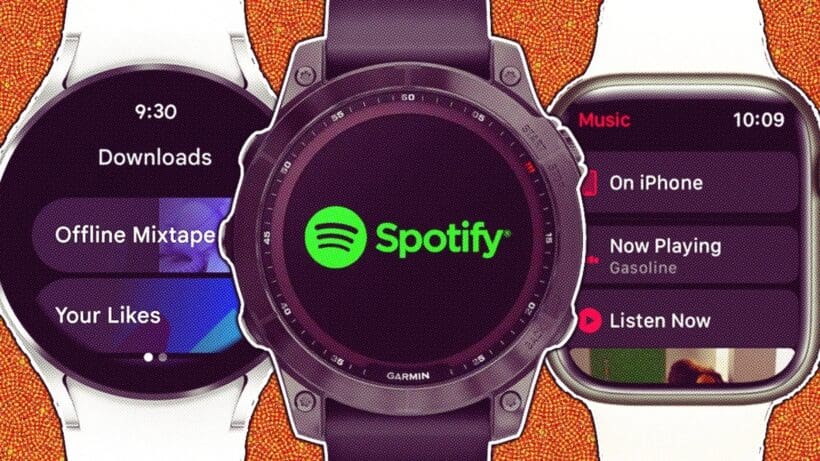
With the rise of fitness-focused smartwatches from Apple, Google, and Samsung, many mainstream smartwatches now offer dedicated apps for core music services like Spotify, Apple Music, YouTube Music, Amazon Music, and Deezer.
Most Garmin watches offer extensive support, although it’s worth noting that other major sports watch brands often lack partnerships for music integration.
Another point to understand from the beginning is that music support can vary between brands. Some that promise music playback actually require manual MP3s to be added, while others can only provide music playback control when the watch is connected to a phone.
Read below for our picks of top running watches that are as good for training as they are belting out tunes.
- Looking for a running watch? Check out our GPS running watch guide
- Learn how to use Spotify on your Garmin watch
- How to pair Bluetooth headphones with the Apple Watch
Key considerations
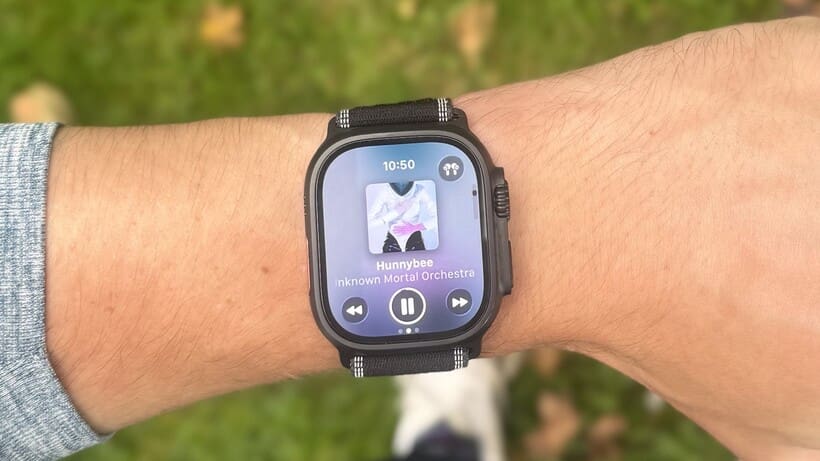
Does it work with Spotify?
Spotify has apps or integrations with most major running watch and smartwatch brands, meaning you can download playlists or individual tracks to listen to offline.
However, you’ll need to be a Spotify Premium subscriber to offline sync to Garmin, Samsung Galaxy Watch, Google Pixel Watch, and Apple Watch devices.
We’ve highlighted all the watches on this list that work with Spotify.
Does it work with Apple Music?
The other major music platform, Apple Music, is far more exclusive than Spotify. If you’re a subscriber looking for a way to play your Apple Music library without your phone present, the only option is to own an Apple Watch.
As we point out in our recommendations below, the current Apple Watch generation offers the best mix of features for runners and overall design. However, the music features—and even the battery life estimates—don’t vary much across the generations, so consider a recent old-gen model if you’re looking to save some cash.
Music controls or music player?
Almost all running watches with music features allow users to control what’s playing on a phone, but that doesn’t mean they can play music natively.
For the latter, you’ll need a music player (containing downloaded MP3 tracks to the watch’s internal storage) or third-party apps like YouTube Music and Spotify.
You’ll also need to connect Bluetooth headphones to stream music from the watch unless it has built-in speaker support (like the Apple Watch Series 11 or Garmin Fenix 8).
How to add music
If you’re using MP3s, the method of getting tunes onto your watch will vary. Some require plugging the watch into a computer and dragging and dropping your audio files to a folder on the watch. And limitations exist on file formats and types.
Other watches will only allow you to sync music via the companion app, which means making sure that audio is stored on your phone. Alternatively, if your audio lives on your computer, you may need to sync it to your phone from here first.
Does music control work with my phone?
It sounds like an obvious one. However, while many watches advertise having built-in music players, that doesn’t mean they necessarily offer the ability to use that feature with your phone.
It can sometimes be that watches with music players are built to work for Android phones and not for iPhones—despite being able to connect and use the other watch features on Apple’s smartphone.
Huawei’s watches, for instance, do not offer those music player features for iPhone users.
Battery life impacts
Streaming music from a watch will have a big impact on battery life.
If you’re planning to stream music while tracking runs, that’s going to hit the battery the hardest, so pay attention to the battery numbers quoted when those two things are done together.
To help with this, we’ve highlighted the GPS tracking battery life with music for each section.
Garmin Forerunner 165 Music
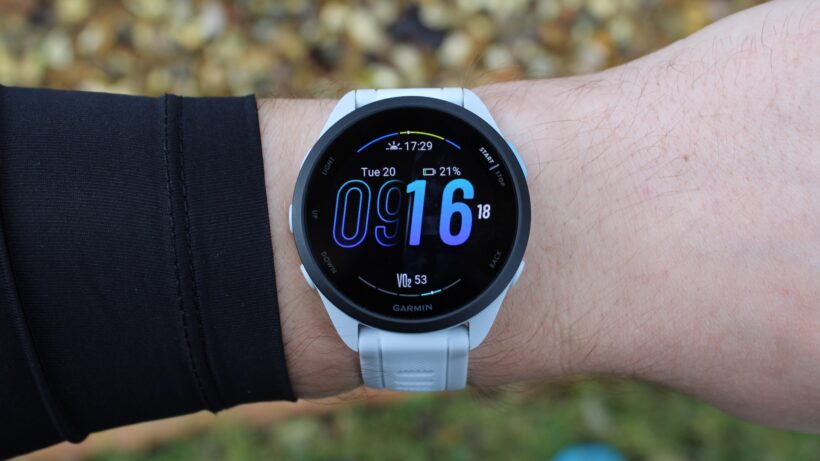
Garmin Forerunner 165 Music key features
- Storage: 4GB (enough for ~500 songs)
- App support: Spotify, YouTube Music, Amazon Music, Deezer (all require Premium)
- GPS with music battery life: Up to 7 hours
After including music as standard on some previous models, Garmin has reverted to a separate ‘Music’ model for its entry-level AMOLED Forerunner.
This costs an extra $50/£40, which feels a bit cheeky, but it makes the Forerunner 165 Music the cheapest and best way to get a modern running watch with both a beautiful AMOLED screen and full offline music support. The 4GB of storage is half that of its bigger siblings but still more than enough for a few core running playlists.
The Garmin music experience can be clunky compared to an Apple Watch—you’ll need to use the Garmin Express app on a computer or the Connect IQ app on your phone to sync playlists over Wi-Fi, and it’s not the speediest process. However, once your music is on the watch, it works well with any Bluetooth headphones.
As a running watch, it’s a fantastic performer for its price. It has accurate GPS (though not dual-frequency), Garmin’s excellent PacePro and Coach features, and a battery that, while rated for 7 hours of GPS + music, will last all week in smartwatch mode. It’s the perfect all-rounder for the beginner-to-intermediate runner who wants to leave their phone at home.
- Check out our full Garmin Forerunner 165 review
Apple Watch (Series 11, Ultra 3 & SE 3)
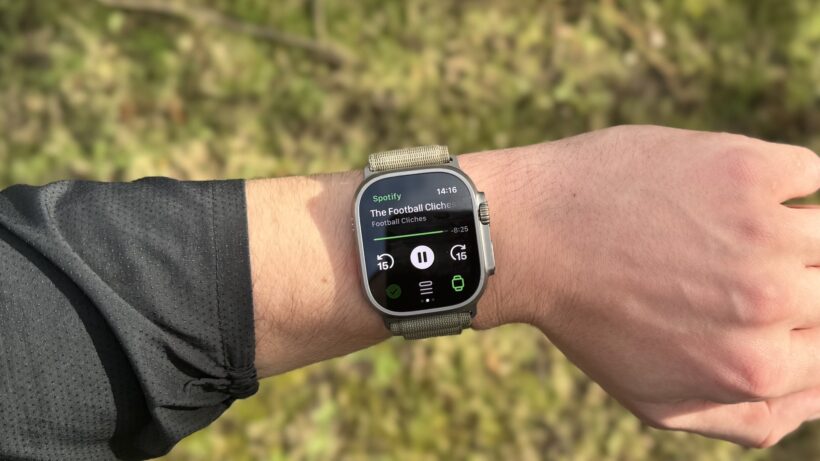
Apple Watch’s key music features
- Storage: 64GB (Series 11 & Ultra 3); 32GB (SE 3)
- App support: Apple Music, Spotify, YouTube Music, Deezer, Pandora, Podcasts
- GPS with music battery life: ~7-8 hours (Series 11/SE 3); 12+ hours (Ultra 3)
The Apple Watch provides, without question, the most seamless and powerful music experience for any runner. Its biggest strength is its native, exclusive integration with Apple Music and Apple Podcasts, which sync effortlessly in the background.
If you have a cellular plan set up, you can even stream your entire library on the go. The Spotify app is also excellent, allowing Premium users to easily download playlists and podcasts for offline use, something that feels much slicker than on Garmin. With 32GB or 64GB of storage, you’ll never have to worry about space.
This top-tier music experience is paired with exceptional running-watch features. The heart rate accuracy is best-in-class, and the Workout app is packed with advanced metrics (or you can choose an alternative, like Runna).
Aside from the obvious design points, the key difference between the models is the battery life. The Series 11 and SE 3 offer around 7-8 hours of GPS + music, which is more than enough for a marathon. The Ultra 3 is in another league, offering 12+ hours of dual-frequency GPS and music, making it the top choice for those who never want to worry about running out of power.
Again, though, like with Garmin’s previous generations, the music experience is often the same in older models. So, if you want to save a little money, consider an Apple Watch Series 10, Series 9, or Ultra 2, since the key features are all virtually identical.
- Check out our full Apple Watch Series 11 / Ultra 3 reviews
Garmin Forerunner 970
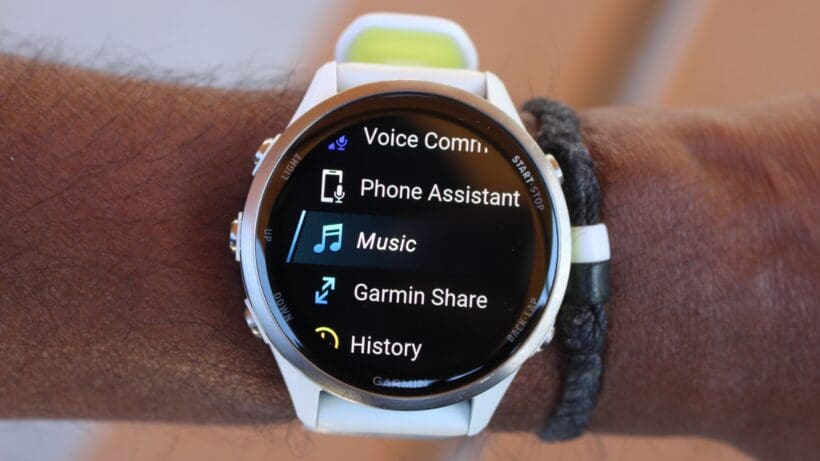
Garmin Forerunner 970’s key music features
- Storage: 32GB (enough for ~2,000 songs)
- App support: Spotify, YouTube Music, Amazon Music, Deezer (all require Premium)
- GPS with music battery life: Up to 8.5 hours (All-Systems + Music)
Garmin’s flagship running watch, the Forerunner 970, is a music powerhouse built for serious athletes. It features a massive 32GB of storage, giving you eight times the space of the Forerunner 165 and matching the Fenix 8.
This is ideal for runners who want to load up their entire music library or dozens of long playlists and podcasts for endless training miles. It supports offline syncing from all the major services, including Spotify, Amazon Music, and YouTube Music.
While the sync process is still clunkier than Apple’s, the platform is stable. The real reason you buy the 970 is to pair this mass storage with elite-level running features.
You get Garmin’s best-in-class dual-frequency GPS, full-color topographic mapping, and the most advanced training analytics (like ‘Training Readiness’ and ‘Running Tolerance’) on the market. Its 8.5-hour ‘GPS + Music’ battery (using the most accurate “All Systems” mode) is rock-solid and will see you through any marathon with ease.
The downside is that it is very, very expensive. So, consider the last-gen Forerunner 965 if you want an identical music experience (32GB storage, same app support). It remains a phenomenal, top-tier running watch, and if you can find it on sale, it’s an excellent high-end alternative.
- Check out our full Garmin Forerunner 970 review
Samsung Galaxy Watch 8 series & Galaxy Watch Ultra
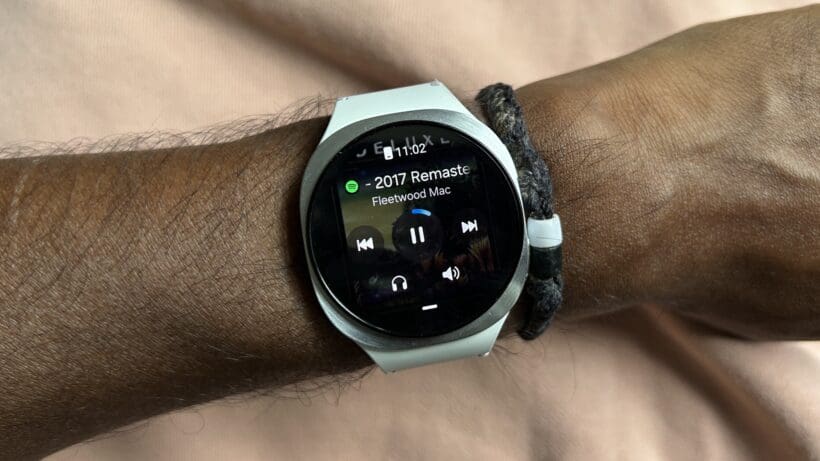
Samsung Galaxy Watch’s key music features
- Storage: 32GB
- App support: Spotify, YouTube Music, Amazon Music
- GPS with music battery life: ~5-6 hours (Watch 8); 10+ hours (Watch Ultra)
For the millions of Android users with a Samsung phone, the Galaxy Watch is the default choice, and it’s a fantastic music player for your runs. As a Wear OS device, it has full access to the Google Play Store, including native, offline-syncing apps for Spotify, YouTube Music, and more.
With 32GB of storage as standard, you’ll have no problem loading it up with tunes. And both the Watch 8 series and Ultra are solid running partners with good GPS and heart rate tracking (for the most part).
The key difference for runners is the battery. The standard Galaxy Watch 8 (44mm) offers a respectable 5-6 hours of GPS + music tracking, making it a great all-rounder. However, the Galaxy Watch Ultra is the true endurance model. Its massive battery delivers 10+ hours of continuous music and GPS, putting it in direct competition with Garmin and the Apple Watch Ultra as a genuine option for ultra-endurance efforts.
If you only need a standard experience, though, consider the Galaxy Watch 7 and Galaxy Watch 6—the music features (32GB storage, Wear OS apps) are identical. You can even try to save a bit of cash with the original Galaxy Watch Ultra, though note that this model has less storage than the 2025 re-release.
- Check out our full Samsung Galaxy Watch 8 / Galaxy Watch Ultra reviews
Garmin Fenix 8 (AMOLED)
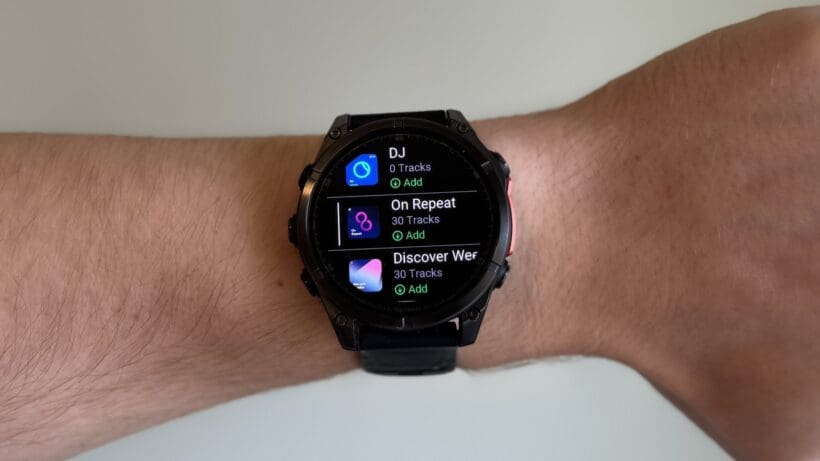
Garmin Fenix 8 key music features
- Storage: 32GB (enough for ~2,000 songs)
- App support: Spotify, YouTube Music, Amazon Music, Deezer (all require Premium)
- GPS with music battery life: Up to 18 hours (All-Systems GNSS + Music)
The Garmin Fenix 8 is the ultimate endurance machine for runners who refuse to compromise.
From a music perspective, it’s identical to the Forerunner 970, offering a massive 32GB of storage and full offline app support for Spotify, Amazon Music, and YouTube Music. The Garmin sync process remains a bit clunky, but it’s relatively reliable once set up.
The reason you buy a Fenix over any other watch on this list is its indestructible build and otherworldly battery life. It can track with its most accurate ‘All Systems’ GPS mode and play music for up to 18 hours straight.
That’s more than double what an Apple Watch Series 11 or Pixel Watch can do, and it makes the Fenix 8 the undisputed king for ultramarathoners, multi-day aseries 1dventurers, or anyone who wants a soundtrack for their entire weekend without ever looking at a charger. It’s the definition of overkill, and for endurance athletes, it’s perfect.
- Check out our full Garmin Fenix 8 review
Google Pixel Watch 4
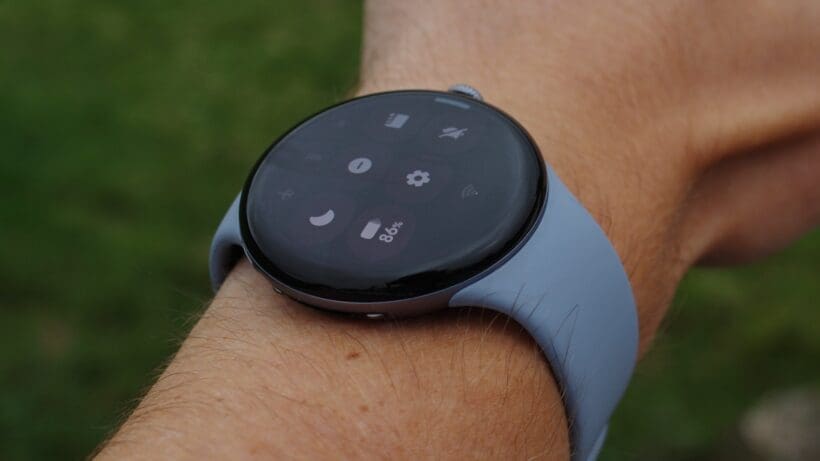
Google Pixel Watch 4 key music features
- Storage: 32GB
- App support: YouTube Music, Spotify, Amazon Music
- GPS with music battery life: ~4-5 hours (45mm model)
The Google Pixel Watch 4 remains the definitive alternative to the Apple Watch for Android users, and is an even better running companion in this latest edition.
Its music strength comes from being a Wear OS smartwatch, meaning you get the native, deeply integrated YouTube Music app, as well as a full-featured Spotify app. Both allow for easy offline playlist downloads directly on the watch. And with 32GB of storage, you have plenty of room for all your running playlists and podcasts.
We particularly rate the larger, 45mm model. Its larger battery delivers a viable GPS + music battery life, which we clocked at around 4-5 hours when streaming downloads. This is more than enough for most long runs and many marathons.
This is paired with the new dual-frequency GPS and Google’s excellent, Fitbit-powered heart rate sensor, making it a genuinely credible running watch. It’s the perfect blend of a premium music player and a serious tracker for any Android user.
You can also consider the Pixel Watch 3, since the music experience will be the same. However, the dual-frequency upgrade packed inside the Pixel Watch 4 is hard to argue with—and, in our testing, it performed very well (even if still it’s not quite up to the same mark as Garmin and Apple in this regard).
- Check out our full Google Pixel Watch 4 review
Garmin Venu 4
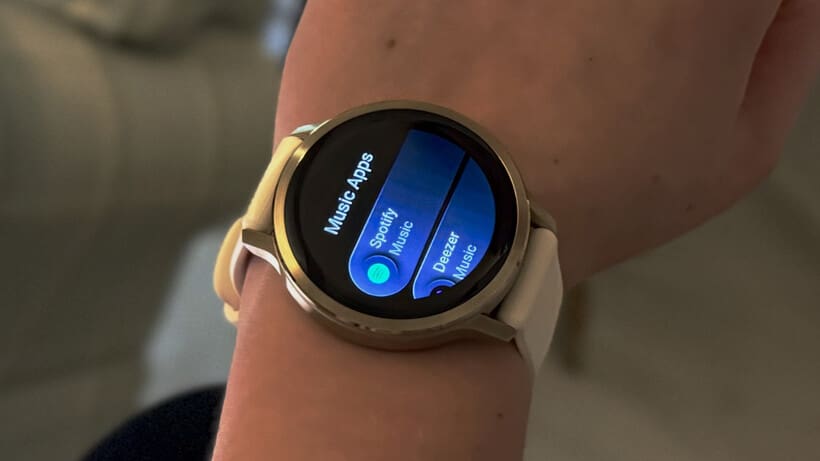
Garmin Venu 4 key music features
- Storage: 8GB (enough for ~1,000 songs)
- App support: Spotify, YouTube Music, Amazon Music, Deezer (all require Premium)
- GPS with music battery life: Up to 6 hours (41mm); 9 hours (45mm)
The Garmin Venu 4 is a great middle-ground watch. It has the sleek, premium look of an Apple Watch, yet comes packed with Garmin’s signature battery life and most essential features for tracking runs, such as dual-frequency GPS.
For music, it has 8GB of storage (an upgrade on the 165’s 4GB) and supports offline syncing for Spotify, YouTube Music, and Amazon Music.
Its running features are more generic than the dedicated Forerunner line—ultimately, this is still more focused on all-around wellness and fitness—but it’s definitely more than enough for the average runner.
The battery performance is also solid when tracking in All Systems GPS with music; the 41mm model is rated for six hours, and the 45mm edition for nine hours.
That comfortably beats the Pixel Watch 4 and Apple Watch Series 11. As such, it’s the ideal choice for someone who wants a sleek-looking, everyday smartwatch that can easily handle a marathon with music.
Coros Pace 4
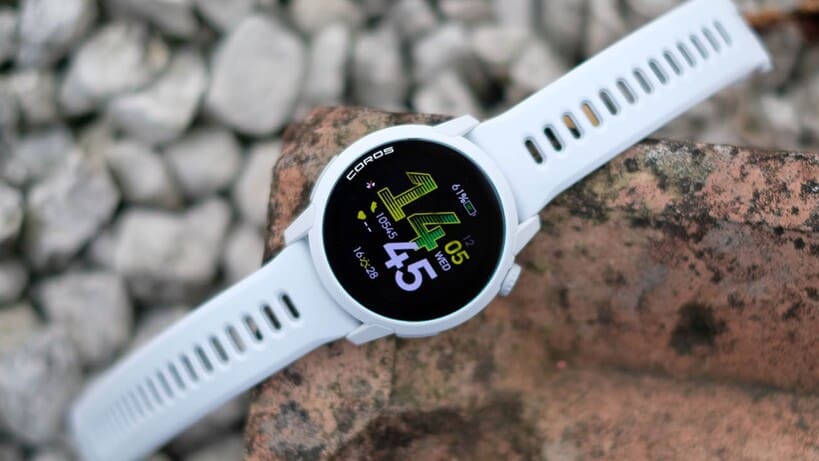
Coros Pace 4 key music features:
- Storage: 4GB
- App support: MP3 only (no streaming services)
The Coros Pace 4 is an excellent running watch for its budget price, but it is a very basic music watch that requires a few compromises.
Unlike the rest of the options on this list, it doesn’t support Spotify, Apple Music, or any other streaming service. It functions only as an old-school MP3 player: you must own the audio files and manually drag and drop them onto the watch from a computer.
The 4GB of total storage also leaves less than 2GB for your actual music, which is only enough for a single long-run playlist.
If you still have a beloved MP3 library and don’t mind the hassle, it works. But, for everyone else, this watch should be considered a pure running tool that just happens to have a basic music player as a small bonus.
You buy it for its amazing price, AMOLED screen, dual-frequency GPS, and massive battery life—not for its music features. But, it’s still an option if the others on this list are too costly.
- Check out our full Coros Pace 4 review