
The Swiss watchmaker ditches Wear OS—but can it lure in iOS users?
It’s pretty incredible to think that it’s been 10 years since we joined Tag Heuer at its glitzy New York event to share the moment when it unveiled its first-ever smartwatch.
Released in response to the original Apple Watch, the debut Tag Heuer Connected trickled out in limited quantities and featured a design and price tag similar to the brand’s traditional watches. It also operated on Wear OS, known back then as Android Wear.
A decade later, as smartwatches running on Google and Apple’s operating systems dominate Swiss watch sales, Tag Heuer remains the only luxury smartwatch maker still standing. And this outsider role has never been clearer than in its latest release, the Connected Calibre E5.
Produced by a dedicated team of 60 people in Paris, Tag has taken its software in-house for its fifth-generation Connected Calibre.
It’s a bold move—and we’ve been hands-on with the smartwatch at the brand’s flagship store on Oxford Street in London for an initial peek. Here’s our early verdict.
Design: Something new for smaller wrists

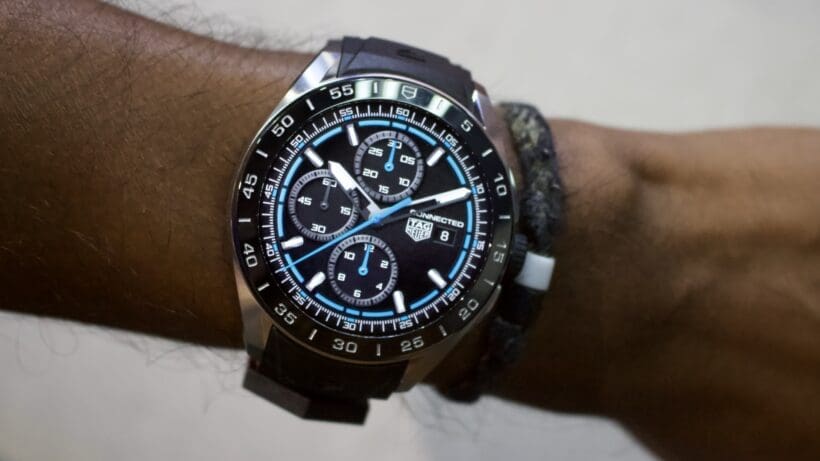
Like the Calibre E4, the E5 comes in two sizes. You’re still getting a 45mm version, and now the smaller model is even more so, dropping from 42mm to a 40mm case. Tag tells us that sales of the Connected sizes comprise 75% opting for the 45mm version and 25% for the smaller one.
They hope that reducing the size even further will make the E5 more attractive to women. Yet, I think many men will find the 40mm option much easier to handle; I personally found it the more comfortable of the two to wear during my initial try-ons.
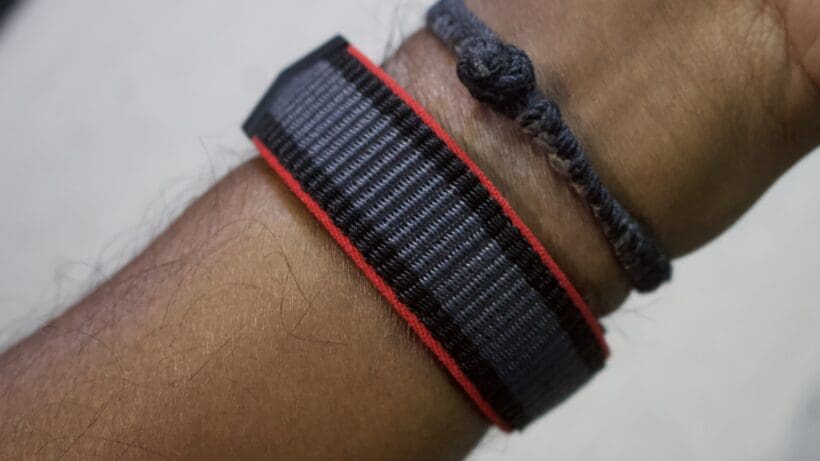
Regarding straps, you have several options. A straightforward button-release mechanism allows you to swap out bands made of rubber, metal, leather, or Velcro. Those are particularly ideal for workouts, and there’s also a New Balance limited edition to consider if you’re planning to use this for consistent outdoor exercise.
One thing that has remained consistent with each iteration of the Connected is Tag Heuer’s ability to create a design that truly feels like a Tag Heuer watch. That doesn’t change with the E5. Whether you choose the more popular stainless steel look or the lighter, more workout-friendly titanium case, this will still feel like you’re wearing a well-constructed timepiece.
Software and smart features: Goodbye to Wear OS
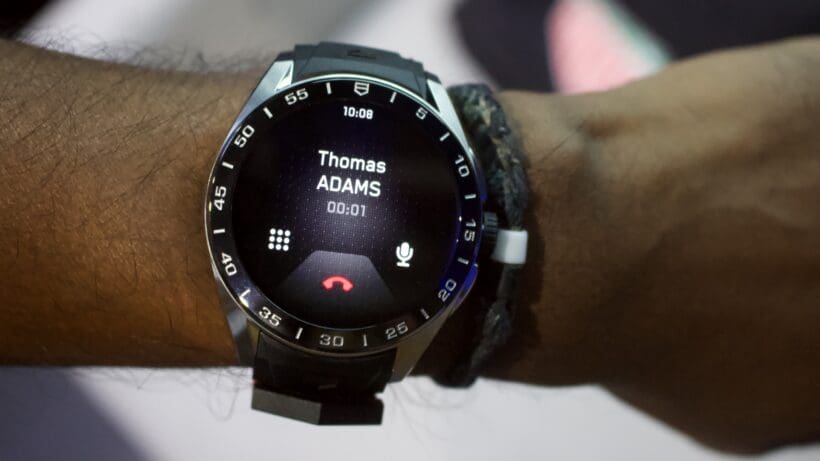
The main update here is the software change—Tag’s watches will now run on the company’s own ‘Tag Heuer OS’ instead of Google’s smartwatch operating system, which they have been using since the initial release I mentioned earlier.
Tag explains that several factors influence this decision. One major concern is phone compatibility, with it noting that 70% of its smartwatch users are on iOS. Moving to its own platform lets it attract a broader range of users it otherwise wouldn’t reach.
Another consideration is a long-standing one: the plan with the Connected line was always to see the watchmaker retain complete control. Now, Tag believes it’s ready to execute that plan fully.
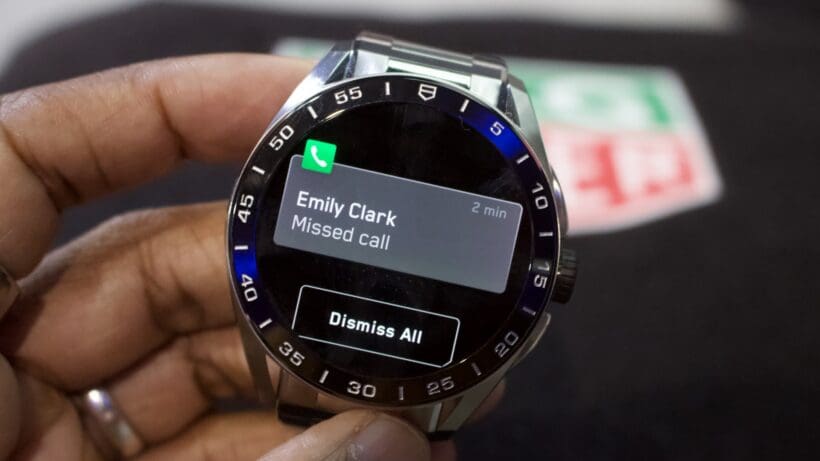
To support the larger share of iOS users, the Calibre E5 is an MFi-certified device, meaning it’s part of Apple’s Made for iPhone program and certified to be compatible with Apple’s smartphones.
The downsides of dropping Google
Yet, it’s not all plain sailing. As a result of that OS change, users will now have to live without things like third-party apps, contactless payments, and a maturing Google operating system that’s finally giving Apple’s watchOS a run for its money.
Unsurprisingly, the Calibre E5’s software has a distinctly different feel compared to previous watches. This doesn’t feel like Wear OS at all.
There’s a screen dedicated to displaying notifications, a feed showing wellness and fitness metrics, and support for Bluetooth calls. Again, though, there’s a compromise: no LTE connectivity.
As you would expect, you can also tinker with the watch faces, with a wide selection of Tag’s iconic designs to enhance the illusion of wearing a traditional Tag timepiece.
Sports tracking: Good news for golfers and runners
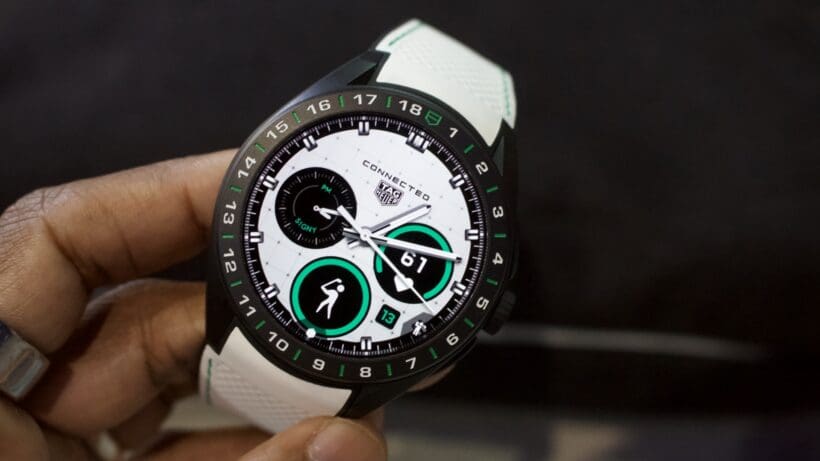
While smarts take a back seat here, there’s still a clear focus on serving those who want to track their health and fitness.
Optical sensors on the case back monitor heart rate and are joined by a new heart rate app to analyze the data. Sleep tracking, which will include blood oxygen, breathing rate, and HRV measurements, is scheduled to launch later in 2025, following the release of the E5.
At launch, though, there will be plenty for runners and golfers. Dual-frequency GNSS is also joining the party, along with access to training plans.
One feature in its run-tracking, Tag says, is a gamified training experience. For example, during workouts, one screen will involve the user keeping a large diamond on screen to ensure they’re maintaining the right pace.
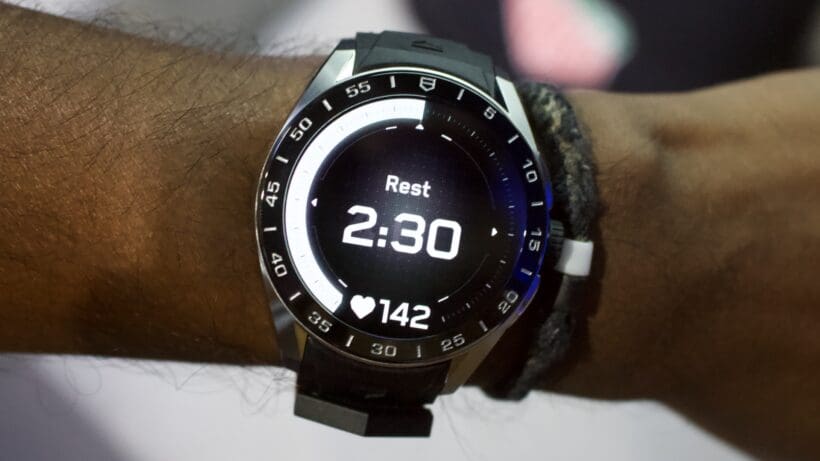
That dual-frequency GPS also provides a tracking boost when playing a round of golf. Tag’s golf features have impressed in the past, and now it’s enhancing features like its hole layout mode.
It has also improved shot detection accuracy and will generally perform better at recording shots during a round, Tag claims. In addition to having over 39,000 maps of courses loaded onto the device, the brand also told us that users can contact its Paris-based team to add their local course if it’s not already included in the database.
Tag’s companion app, as expected, is the place where most of the data is stored. And although third-party apps are no longer accessible, you can still share data with Strava, Apple Health, and Google Health.
Battery life: Enough staying power to last a marathon
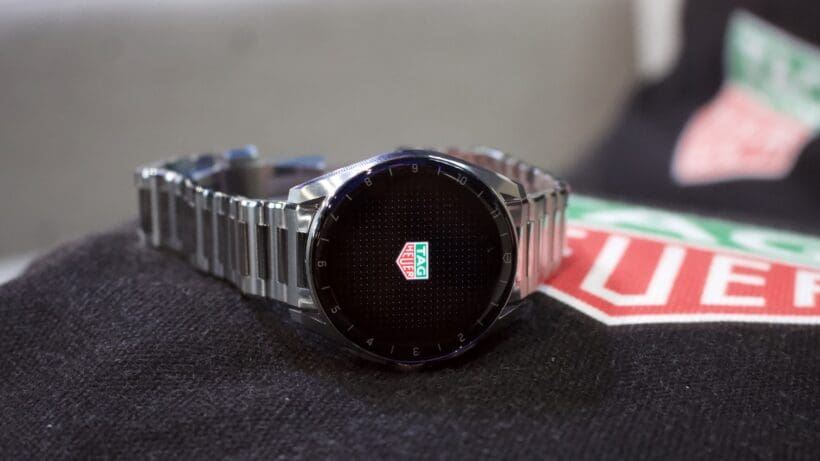
If we judge things by Tag’s own estimates, shifting away from Wear OS appears to have helped the brand improve the battery life of its latest smartwatch.
It claims the 45mm version can last two days, with a low power mode extending that to three days. The 40mm model can last 1.5 days or up to two days when you enable low power mode.
In testing, we found that the Calibre E4 typically lasted a day. Progress has been made, then, even if this latest generation doesn’t deliver true multi-day battery. There’s also a fast charge mode that can provide a full day of use after just a 30-minute charge.
With run tracking a big focus for this generation, Tag is keen to highlight its GPS battery numbers, too. On paper, the E5 is capable of 17 hours of GPS battery on the 45mm model and 12 hours for the 40mm. That should be more than enough to get you through a marathon or two.
However, as ever, we’ll be putting those figures to the test in our extended testing over the coming weeks and months.
Tag Heuer Connected Calibre E5: Initial verdict
Tag Heuer’s ability to create a smartwatch that looks and feels like a luxury device has been a primary reason why it’s been easier to overlook the quirks of previous Wear OS versions.
In that sense, it’s easy to see why it feels the time is right to step out on its own and fully control the direction its Connected smartwatches take next.
However, you only need to look at the limited nature of other smartwatches running proprietary software—from companies like Xiaomi and Huawei—to understand what a big gamble this is. Lacking core smartwatch functions can often lead to an incredibly bare experience, and it’s certainly not ideal at this price point.
Ultimately, they’ve been ousted in favor of what Tag Heuer believes its users want most. And if the brand is right about needing to serve iOS users (and its in-house tracking can hold up), it will no doubt continue to hold onto its explosive niche as the go-to premium smartwatch.
Only time will tell if this was the right move. Tag Heuer has played its part in helping shape the smartwatch landscape, and I hope this decision doesn’t come back to haunt it.