
A budget beauty with fatal flaws
The Xiaomi Watch S4 41mm is a triumph of design in the budget space, offering a stunning, premium look and a vibrant AMOLED display that punches well above its price. Its heart rate tracking is surprisingly reliable, making it a solid companion for the gym and lighter sessions. However, this style comes at a significant cost to substance. The GPS performance is flawed, while the smart features are extremely basic. It’s a great-looking accessory for casual users, but those seeking a proper fitness tracking partner should consider other options.
Pros
- Fashionable, eye-catching design
- Solid heart rate monitoring accuracy
- Bright and vibrant AMOLED display
Cons
- Design isn't workout-friendly
- Sleep tracking analysis is mixed
- GPS tracking isn’t up to standard
Aiming to strike a balance between style and substance, the Xiaomi Watch S4 is unlike most budget-friendly smartwatches we get in for testing.
After releasing the standard-sized S4 at the start of this year—one which features fun, swappable bezels—the brand is back with a similarly accessible 41mm edition. It has all the hallmarks of a Xiaomi smartwatch: a low-cost option that meets the essential requirements expected of it without overloading on smart features.
The S4 41mm still packs many of the features you’ll find on the regular S4, but does so in a more compact and fashion-focused look. As such, it’s a much more palatable pick for women seeking an alternative to the higher-priced options from Apple, Samsung, and Google.
Yet, at this price, there are always compromises. The S4 41mm is a superb-looking smartwatch; however, we fear it lacks the smartwatch features and fitness tracking functions to make it a standout pick compared to other, similarly priced rivals. Here’s our full take.
Design and display
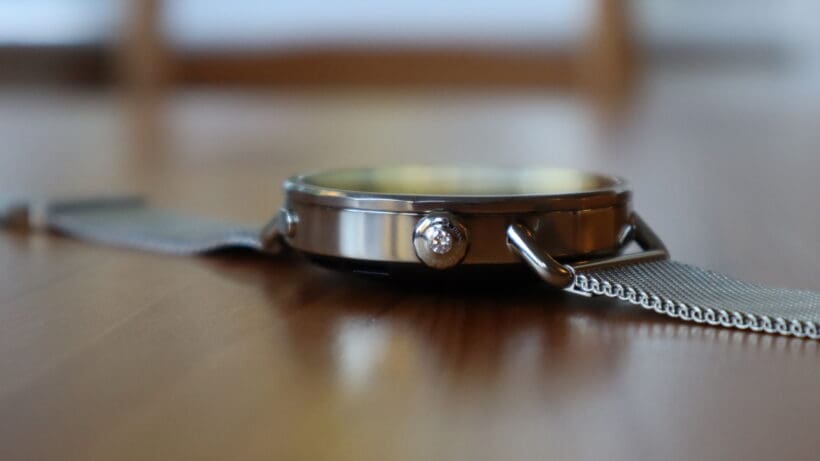
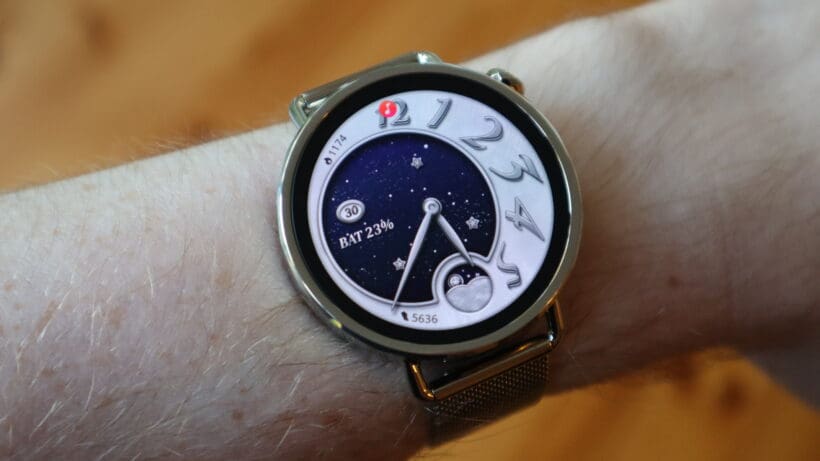
Style is always going to be a subjective concept, but we don’t really think it’s possible to look at the S4 41mm without seeing it as a stylish little wareable. The ‘Sunset Gold’ model we have for review pairs perfectly with a swanky evening outfit. Even the standard option, thanks to the silver rims of the watch’s chassis, is more eye-catching than most smartwatches.
Xiaomi has put together something quite impressive here. The fact that each colorway (there are four in total) only comes in at 41mm makes them better suited than the standard S4 (shown below) for smaller wrists. If you’re looking for a smartwatch that dazzles, then this is it.
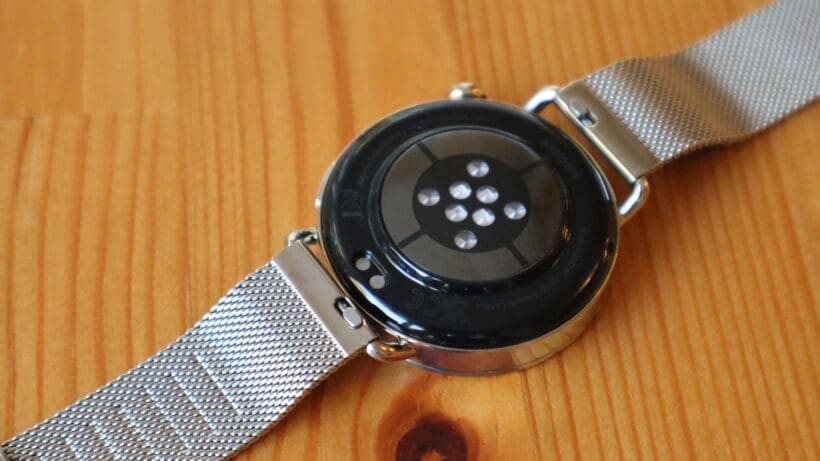
It wasn’t hard to see why we received the Sunset Gold version of the watch, as it’s arguably the sleekest option in the lineup. It comes standard with a Milanese loop that feels very refined against the skin, and while the main push button barely protrudes from the chassis, the rotating crown features a lab-grown diamond at its center. This version costs a bit more (at £189.99), admittedly, but it’s not hard to see why once you’ve strapped it on.
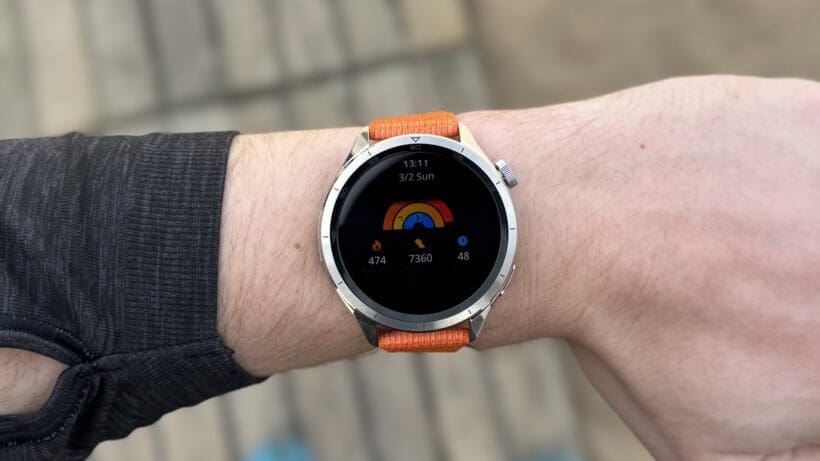
The main issue is that, after examining this particular SKU of the S4, it becomes clear that it’s not ideal for exercising. While the main chassis offers 5ATM water resistance, making it suitable for swimming, the Milanese loop can feel harsh during workouts and offers limited breathability when you start to sweat.
Choose your fighter
Thankfully, this issue mainly affects the ‘Sunset Gold’ and ‘White’ variants (with the latter featuring a leather strap), as the ‘Black’ and ‘Mint Green’ colors come with a fluororubber band straight from the box. You could always choose a more gym-friendly watch strap for the more expensive models, but that adds extra cost beyond the initial purchase. Therefore, it’s important to consider how you plan to use the watch before making your choice.
Regardless of which version you prefer, you’ll gain access to one of the nicest displays found on a smartwatch at this price and case size. The 1.32-inch display boasts an impressive peak brightness of 1500 nits, making it very easy to read outdoors. When we took the watch along for a lunchtime walk, there were no issues catching a glance at the time even as the sun beat down.
Given that it was only a few years ago that Apple’s mainline Series device could only muster 1,000 nits of peak brightness, it’s incredible to see that you can now get an even brighter display for a fraction of the price.
Although the Xiaomi Watch S4 has a smaller display than the spacious 1.43-inch on the watch, using the 41mm model never feels cramped. The display is just large enough to prevent accidental mistouches.
Smart features
Like other similarly priced wearables such as the CMF Watch 3 Pro and the Huawei Watch Fit 4, the S4 41mm uses its own proprietary software. This also means that a platform like Google’s Wear OS isn’t available to provide access to third-party apps, as seen on older Xiaomi smartwatches.
If you prefer using Google Pay without your phone or checking Google Maps directions on your wrist (which is safer than holding out your phone at arm’s length), then this isn’t the watch for you. However, given the price point, we think it’s a fair deal.
For a more feature-rich smartwatch, you’ll need to pay much more at checkout. Even previous-generation Galaxy Watches, which usually drop in price after a successor is announced, tend to cost around £200/$200. In comparison, you’re still getting all the essential features you’d want in a smartwatch but for much less.
The smart features you do get with the S4
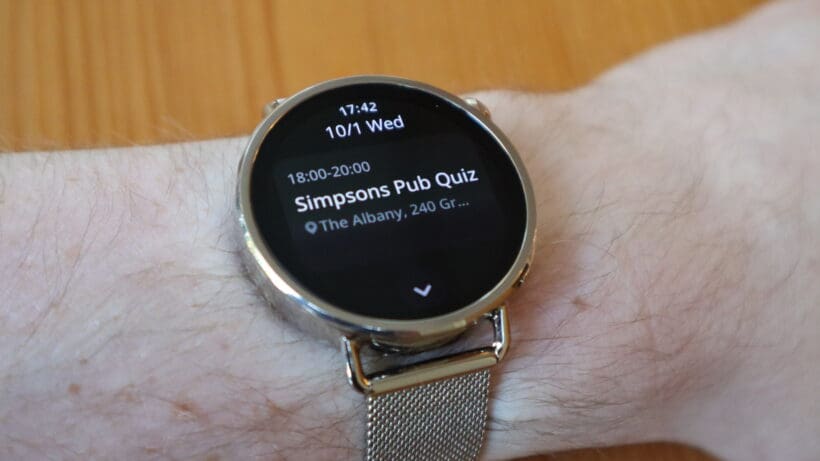
You can access your phone’s calendar to view upcoming events for the week or even use music controls to skip songs quickly without needing to fish out your phone.
It’s all useful features to have, and, surprisingly, the watch can even support NFC payments, but it’s limited. As of now, only two UK banks are compatible with this feature, making it a more limited version of even something like Garmin Pay, which in turn is less functional than Google’s Wallet.
Strangely, there are many banks that offer compatibility in Poland, so if you do live within the country, there’s a good chance you’ll find this feature useful.
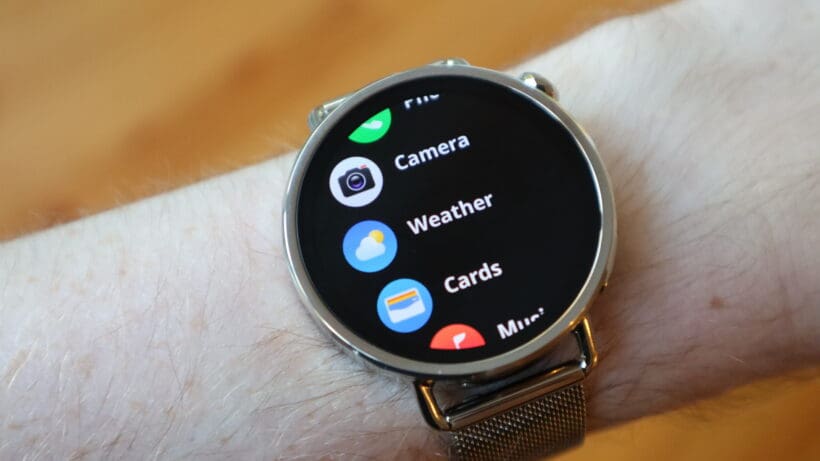
What works in the S4 41mm’s favor, however, is Xiaomi’s incredibly smooth HyperOS UI, which makes using the watch day-to-day a very pleasant experience. All of the key apps have colorful icons, and swiping up from the home screen allows you to quickly view essential information cards, including your daily exertion, a weather report, and your sleep duration. Everything functions well, but what really impressed us was the wide variety of watch faces installed on the device.
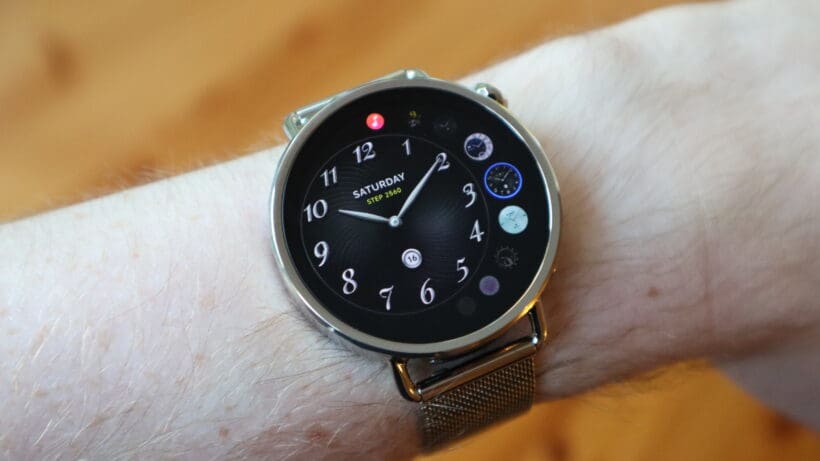
To its credit, Xiaomi has created some truly eye-catching watch faces, mostly in the two-hand style, that enhance the overall look of the watch. Being able to quickly switch between them with a simple swipe left on the home screen is also a convenient feature, and it encouraged us to cycle through the options more often.
Activity/sports tracking
Although the Sunset Gold option isn’t ideal for workouts, and we strongly suggest replacing the Milanese loop with something more gym-friendly, the S4 41mm still offers plenty of workouts built into the operating system. It includes everything from pilates to pole dancing—so, if you have a more niche workout you enjoy, there’s a good chance Xiaomi’s watch can track it.
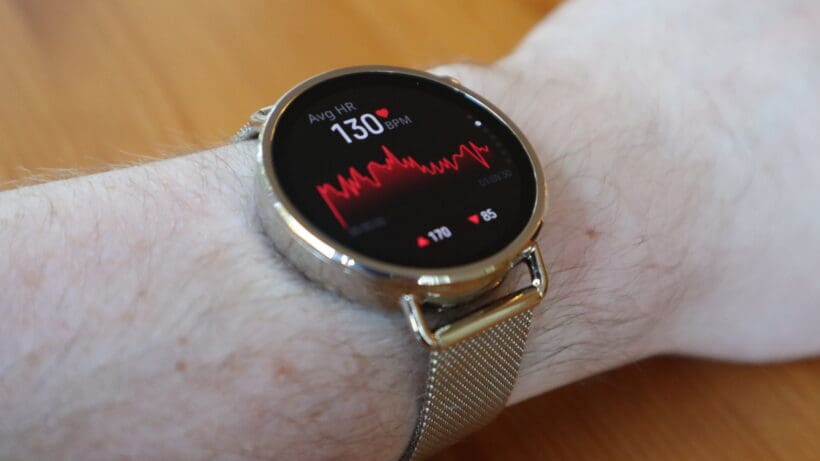
In the lower market segment, smartwatches are generally expected to have less accurate heart rate data than premium models. However, the upgraded sensors in the S4 41mm perform quite well. When paired with a chest-worn Garmin HRM 600, the heart rate readings from both devices were remarkably similar.
During a 30-minute stint on an elliptical machine, the HRM 600 registered a high of 174bpm and an average of 134bpm. By comparison, the S4 picked up a 175bpm high and a 133bpm average.
It was quite similar when testing both again on an indoor cycling machine, with only a 1 bpm difference in the peak and average rates recorded. For a watch that costs a fraction of the most well-known wearables, we commend Xiaomi for keeping up with the competition and providing reliable heart rate tracking on a budget.
Struggles in GPS tracking
While we loved the heart rate monitoring, the same can’t be said for the watch’s GPS capabilities. Since the watch has dual-frequency GNSS, we assumed accuracy wouldn’t be an issue, but it ended up causing us more trouble than any other watch we’ve tested recently.
This was actually a similar story when we tested the brand’s first interpretation of the gold-standard tracking tech with the Xiaomi Watch Pro 2 back in 2023, so it’s a shame to see things haven’t progressed much since.
Initially, the GPS refused to connect at our usual starting point for tracking walks and runs, something that hasn’t been an issue with any other watch in quite some time as technology has improved. Moving around the street didn’t seem to help much either, and it wasn’t until a few minutes later that a weak signal was finally established.
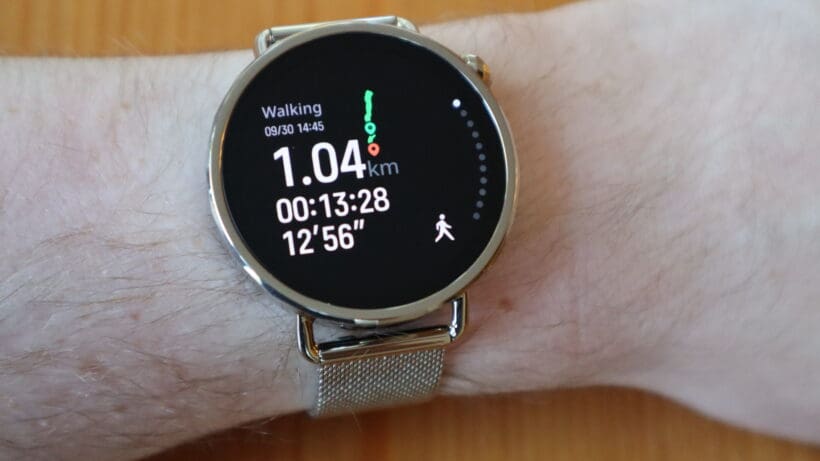
To ensure this wasn’t a fluke, we then took the watch to a more open area of a nearby park to see if that might help. While it did take a bit longer than expected (12 seconds) to establish a connection, it at least stayed in place for the rest of the walk.
When we reviewed the route afterward in the Mi Fitness app, the tracking was somewhat inconsistent and often deviated significantly from the actual path we took. This is disappointing because it feels like an unnecessary flaw in an area where the watch should perform well.
Training analysis trickles down
On a more positive note, we did appreciate the watch’s ability to provide trend analysis via the Training State app.
Not only can you see your VO2 max score here, but the watch also informs you if you’ve been undertraining or overtraining in the past seven days, and how much longer you need to recover before your body is ready for a more intense workout.
It’s great to see this tech, which was once reserved for premium sports watches, trickle down to the budget end of the market.
Health and sleep tracking
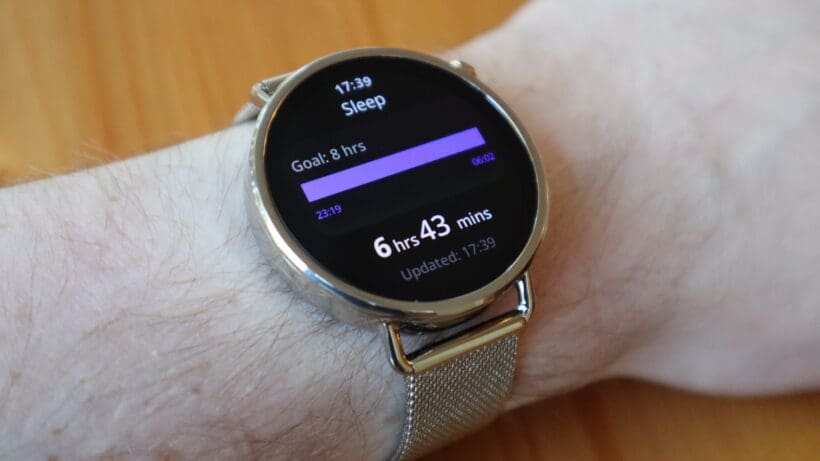
Much like the BioActive sensor on the Samsung Galaxy Watch 8, which lets you take a quick snapshot of your overall health, the S4 lets you do a similar thing with its ‘Checkup’ app.
Once initiated, the app will take multiple readings over a minute and inform you if any of your key metrics, such as stress or blood oxygen levels, are out of sync and may be cause for concern. While each of these can be monitored individually, it’s convenient to have them all recorded at once.
The main sleep tracking function is reliable, and, when worn overnight with a Whoop 5.0, the devices closely matched in measuring light and REM sleep. Overall, considering it’s a budget smartwatch, this performance is certainly solid enough.
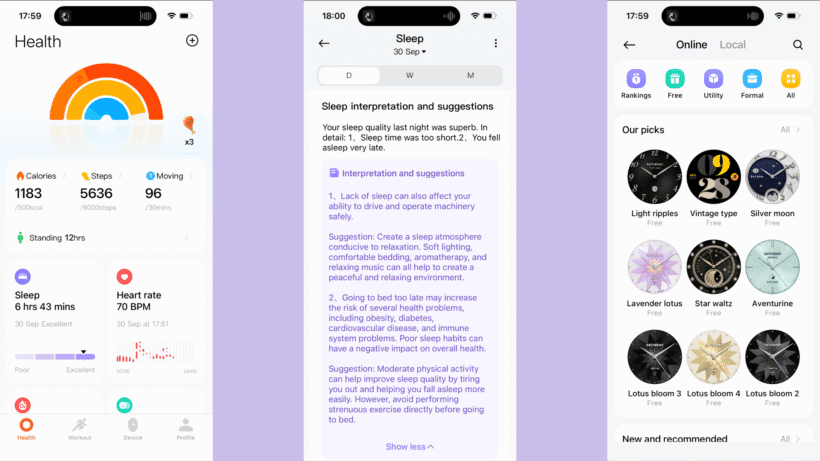
When you open the Mi Fitness app, you’ll see a helpful sleep score indicating whether you’ve had enough rest for the day. Similar to Samsung’s approach, the app also assigns you a ‘Sleep Animal’ after several days of use. This provides a fun, easy-to-understand way of analyzing your sleep habits, although the same cannot be said for the detailed ‘Sleep interpretation and suggestions’ section.
Quoting the analysis verbatim, this is what the app had to say after one particular night: “Your sleep quality last night was superb. In detail: 1. Sleep time was too short. 2. You fell asleep very late.”
We understand that a shorter sleep cycle can still be restorative, but the wording here feels awkward, as if two AI programs wrote it without communicating. However, the detailed explanation that follows about how late nights can affect your sleep, along with tips for improvement, is much more helpful.
Battery life and charging
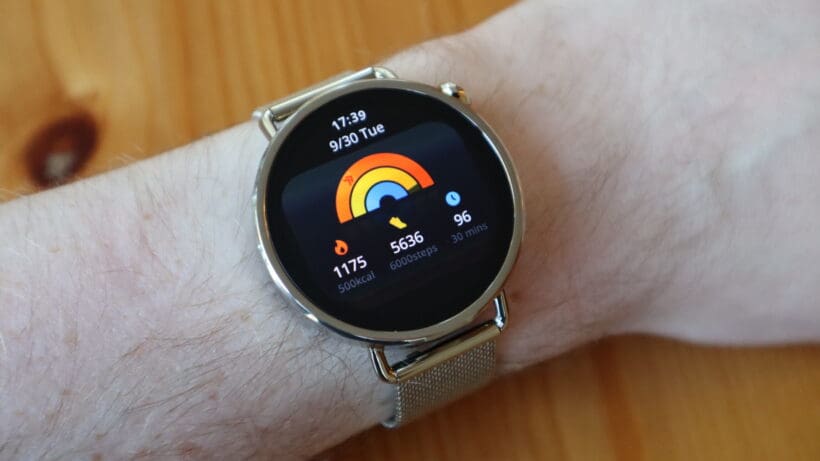
Despite its small stature, Xiaomi states that you can get up to eight days of use from the 41mm model, as long as you’re not pushing the watch too hard. After taking the watch for a spin on our own terms, Xiaomi’s claim does feel like it’s on the money.
When taking the watch off charge around 9:20am on a Saturday, we were able to track several workouts, including two GPS-tracked walks, receive plenty of notifications, and even toggle advanced sleep tracking on Monday evening, before the watch’s battery finally died around 8am on Wednesday.
To get about four days of use over a fairly workout-heavy period isn’t too shabby. And if you’re only tracking the occasional fitness class or run, then you’ll definitely be able to go even longer between charges.
Speaking of which, topping up the watch is quite quick when needed. It took just an hour to charge the battery from 0 to 100%, but if you’re short on time, you’ll be glad to know that a 30-minute charge restored 75%. Even just 10 minutes left the battery at 28%, enough to last a day under the right conditions.
Summary: Should you buy the Xiaomi Watch S4?
Despite its flaws, there’s definitely an audience out there who will value the S4 41mm for what it is.
If all you want is an affordable smartwatch that offers basic features like quick access to notifications and music controls, and also doubles as a stylish fashion accessory, then you’ll love what Xiaomi has put together here.
The problem is that fitness tracking and sleep tracking are too inconsistent to recommend the watch to most people, and the Sunset Gold and White options aren’t really designed to let skin breathe during intensive exercise.
If you’re looking to make changes toward a healthier lifestyle while keeping the same budget, then the Huawei Watch Fit 4 is our top choice.