
The annual report also highlights a massive boom in racket sports and strength training, while global sleep scores struggle to improve
Garmin has released its annual Connect Fitness Report for 2025, diving into the data of tens of millions of users worldwide to reveal the year’s biggest fitness trends.
While the headline statistic is that Garmin users are more active than ever—logging 8% more activities in 2025 than the previous year—the report also sheds fascinating light on wellbeing.
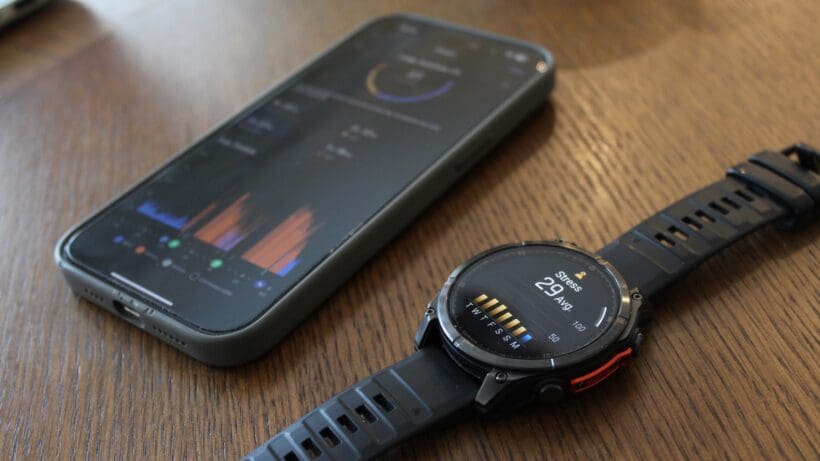
According to the data, users in the Netherlands recorded the lowest average stress scores globally. This metric, derived from heart rate variability (HRV) readings captured by Garmin wearables throughout the day, placed the Dutch population as the most physiologically “relaxed” on the planet, followed closely by Belgium and Portugal.
While running and cycling remain staples for Garmin users, 2025 also saw a shift toward variety. The fastest-growing activities were racket sports (up 67%), pilates (up 46%), and HIIT (up 45%). Strength training also continued its steady rise, increasing by 29%, marking the fourth consecutive year of 20%+ growth.
Demographically, users aged 18-29 dominated outdoor running, while users aged 50-59 led indoor cycling. Interestingly, golfers over 70 also logged the most time on the course.
Key sleep and stress insights
Garmin’s user base data also revealed some key insights into recovery. The global average Sleep Score was 71—only a marginal 1% improvement over 2024. In terms of stress demographics, women recorded lower average stress scores than men (by 3%).
The brand’s Body Battery feature was also dug into, revealing that younger users (18-29) averaged a higher daily energy peak (75) than older users (70+), who averaged 64. However, the younger demographic also experienced lower lows, indicating that they expended significantly more energy throughout the day than older generations.
The Wareable take
This report reinforces the trend we noted in Strava’s Year in Sport: the modern athlete is becoming a hybrid one.
The massive spike in racket sports and HIIT suggests Garmin users are looking beyond pure endurance and embracing variety and intensity. Plus, the ongoing rise in strength training confirms that users are increasingly viewing resistance training as a core pillar of fitness, not just an afterthought.
The recovery data is also telling. An average Sleep Score of 71 suggests that, while users are active, many are still just getting by in terms of rest.
Still, there are a few reasons why that might improve in future reports.
Not only has the wider wearables industry seen an explosion of interest in recovery-focused insights via smart rings and non-watch wearables, but Garmin also appears to be shifting its focus towards form factors that encourage this.
We’ve found the Garmin Index Sleep Monitor to be relatively transformative since its launch earlier this year, and rumors persist of a Whoop competitor from Garmin in 2026.
For now, at least, we’re off to try and lower our stress score to Netherlands levels.