
Serious intent with uneven execution
The Huawei Watch GT Runner 2 is a significant hardware leap over its 2022 predecessor, but its styling means it feels like just another Huawei smartwatch rather than a pure running watch. Its lightweight titanium build and 3,000-nit display are excellent, and the marathon-specific software tools show genuine promise. However, inconsistent GPS tracking in dense urban areas and occasional heart-rate wobbles undermine the device's core. At this price, it faces incredibly stiff competition from Garmin and Coros. So while it's a great-looking running companion with some nice tools, purists are better off looking elsewhere.
Pros
- Titanium build is light and comfortable
- Marathon mode shows promise
- Plenty of non-running features included
Cons
- UI and design makes it feels just like another Huawei smartwatch
- The companion app is far too busy
- GPS and heart rate struggles
Plenty has happened in the running scene since the debut of the Huawei Watch GT Runner in 2022. Run clubs are the new social hubs, major marathon ballots are twice as crowded, and the demand for data-rich running watches has exploded.
When Huawei launched the line, it introduced a repackaged GT Watch, highlighting accurate GPS with a new antenna design. But our results when testing the GT Runner were mixed. We could see there was something for Huawei to work with, but it lacked the accuracy of the industry’s very best dedicated running watches.
Now, it’s back. The GT Runner 2 features a new 3D floating antenna design, a titanium alloy chassis, and a software suite explicitly tuned for 26.2-mile goals—all with the goal of once again disrupting a corner of the industry with a high barrier to entry.
After racing through the streets of London and Madrid, it’s clear that this still isn’t a running watch that will have the established players worried. But Huawei has got plenty right with its return to the race.
Price and competition
Unsurprisingly, the Huawei Watch GT Runner 2 isn’t officially launching in the US due to current trade restrictions. If you live in Europe, though, you can get it—and, in the UK, you can expect to pay £349.99 (roughly $470) for it. That’s a sizeable markup on the launch price of the first GT Runner (£260/$350).
It puts it firmly in mid-range running watch territory, competing with the likes of the Forerunner 165 and (depending on retailer deals) the Forerunner 265 in Garmin watch terms. You could also throw the Garmin Forerunner 570 into the mix, which has come down from its lofty launch price at some retailers.
It’s also sitting alongside watches like the Coros Pace 4, Polar Vantage M3, Suunto Run, and Suunto Race—all devices we’ve rated well over the last year or so.
So, the bottom line is: the GT Runner 2 isn’t short of competition.
Design and display
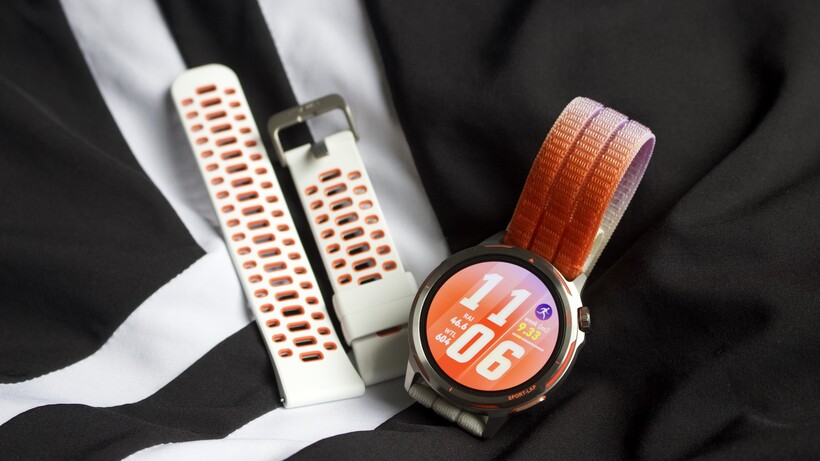
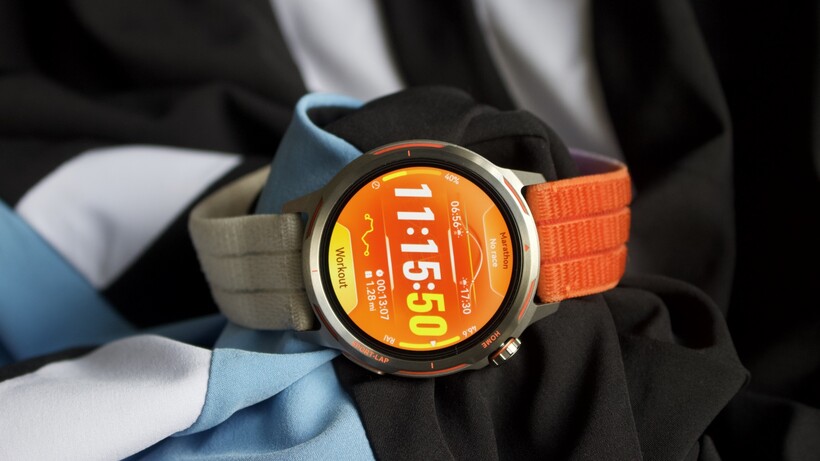
The GT Runner 2’s design ticks a lot of the key boxes we look for in a great running watch. It’s been very comfortable to wear both on and off the road, comes with two strap options, and has a nice, bright screen.
It comes in just a single 43mm case size, giving it a similar stature to the excellent Coros Pace 4 and the Garmin Forerunner 165. It’s also a titanium alloy case, though, so you get the combination of something a bit more premium-looking than a big polymer circle without the weight gain. At 43.5g, it’s about as light as the Pace 4.
It’s nice to see you have strap options, too. There’s a pretty standard (albeit good-quality) fluoroelastomer one, and a woven kind we’ve been drawn to more. We’ve run, raced, and even kept it on for swims and in the shower, and it does dry quickly.
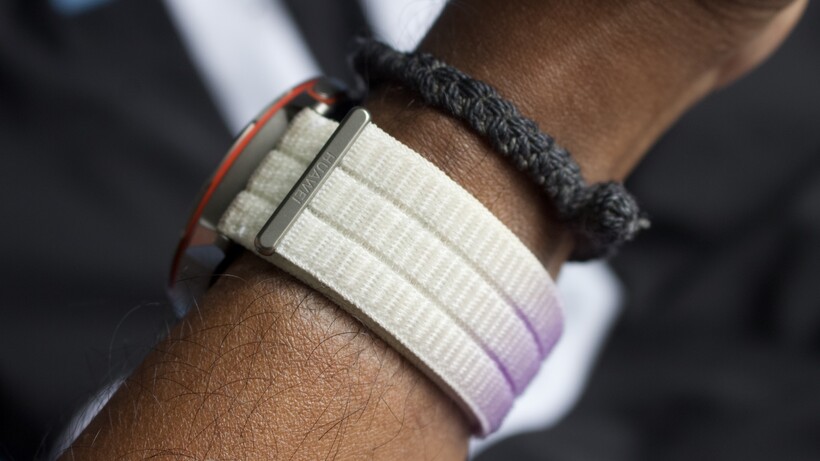
Retaining the smartwatch aesthetic
Huawei sticks to just two physical buttons with the design here, which isn’t the norm for traditional running watches. The top one functions like a watch crown, letting you scroll through menus and data screens.
We would’ve taken more physical buttons for that more familiar running-watch feel, but it’s a difference we can live with. Ultimately, it just means a greater reliance on the touchscreen display, which is in keeping with the quality of display we’ve seen on other Huawei devices.
It’s one that’s sharp, can go very bright (up to 3,000 nits), and is nicely responsive to swipes and taps on the screen. There’s some screen protection on top as well, with Huawei employing a second-generation version of its own-developed Kunlun glass.
This is glass that’s featured on its smartphones previously and promises strong drop resistance, with a thinner, lighter formulation than sapphire glass. And, thankfully, we haven’t had any issues to report with it during testing.
Running features
Hardware upgrades aside—we’ll deal with those later—Huawei is sort of throwing the kitchen sink at this department. While justifiable and a positive in many cases, it’s also an accurate way to describe the delivery of some of those features. Despite the moniker, there’s a bit of a thrown-together feel here, rather than a complete focus on running.
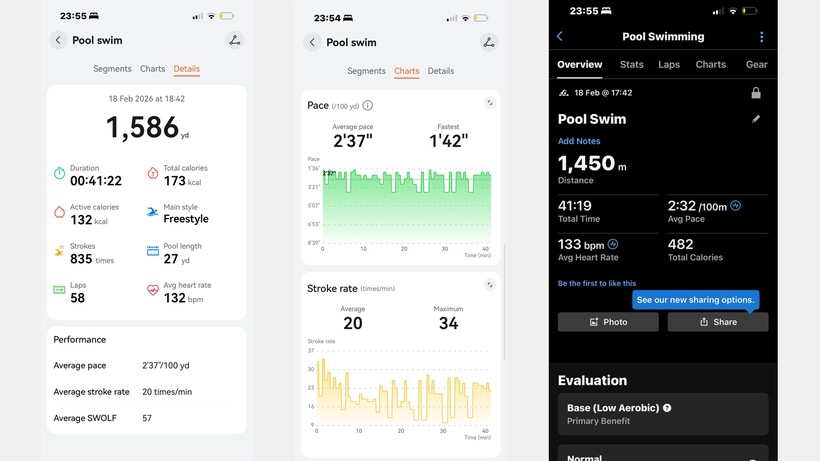
Outside of running, there’s a strong lineup of sports modes, along with health and fitness tracking features you’d already expect from Huawei smartwatches. With the Runner 2, you can track swims, a round of golf, and track free diving, among other activities.
Marathon mode
For runners, the headline software feature is undoubtedly ‘Marathon mode’.
A bit like Garmin’s ‘Primary Race’ feature, it can technically be used for most race scenarios despite the name suggesting it’s exclusively for the 26.2-miler. The brand told us it was named as such because the marathon distance was where it drew inspiration and feedback from the DSM-Firmenich Pro Running Team to build it.
This professional running team features elite marathon runners like Eliud Kipchoge and Joshua Cheptegei. And, along with offering guidance through training, it also offers dedicated modes for the race itself. So, there’s promised guidance on pacing, and reminders to refuel based on data like temperature and race pace.
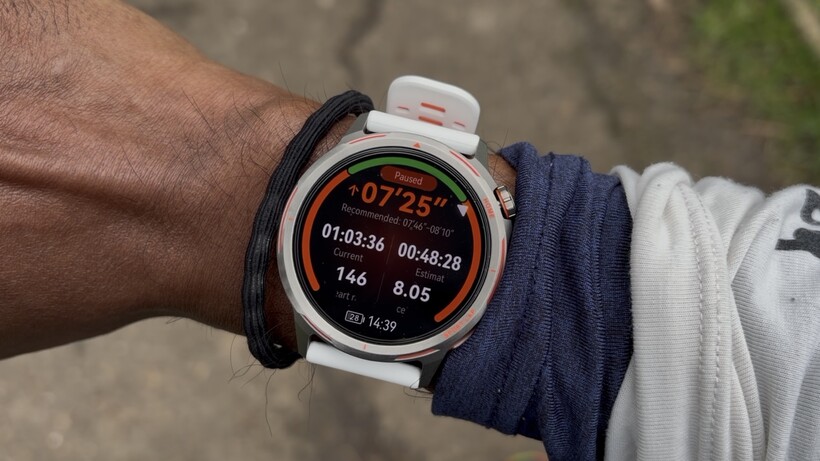
We’ve only had this watch to test for a few weeks, so the idea of squeezing in training and doing a marathon was extremely unlikely. However, you can perform a test run, choose from a preset or custom distances, and gain an idea of the kind of plan you could expect.
When you enter marathon (race) mode, you’ll see a dedicated data screen showing your recommended pace, current pace, and estimated finish time. You can also see a more visual animation to show if you’re behind, ahead, or on track with your pace.
It’s nicely designed, and means you don’t have to squint among the usual sea of numbers on a data screen to take in typical metrics mid-race.
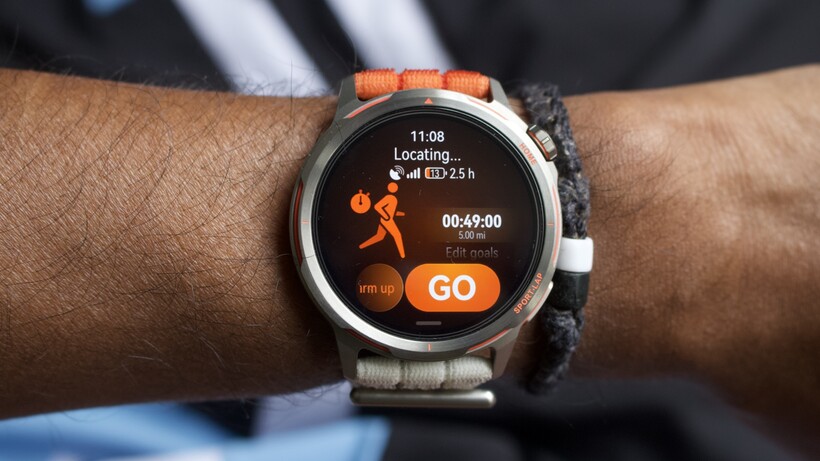
You can also build training plans based on upcoming races, with those plans adaptable based on metrics like heart rate, heart rate variability, sleep among other metrics.
Whether you want to run 3km or get fit for a 10km run, these plans perform a fitness assessment based on runs already tracked.
Teething issues
The first problem we discovered when searching the database of races is that it seems to currently cover mostly high-profile marathons and half marathon races. There was no sign of shorter distance race, or popular and well-known half and full marathon races.
On the whole, those plans pull together well and offer the kind of sessions typical of a training plan. They certainly feel like they’ve had input from runners on what these sessions should look like, and are reminiscent of the kind of training week you would have suggested by Garmin Coach.
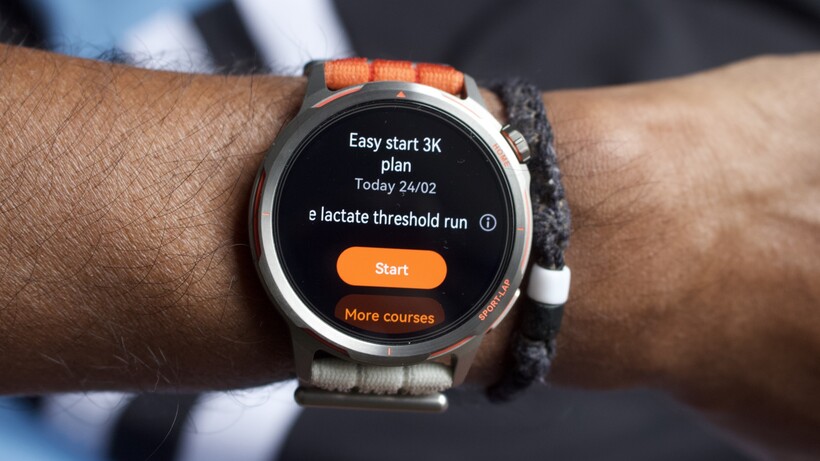
However, the presentation of it—both on the watch and in the app—feels like it could use a little cleanup to make it more inviting. Compared to the leading UI in coaching platforms like Runna—or companion apps from Whoop and Oura—the Huawei Health app is stuck in the past. But if it could overhaul it—and bring the GT Runner 2 along for the ride—it has the makings of a seriously engaging tool here.
We should also note that Runner 2 provides access to Huawei’s running power metrics, and also has the ability to detect your lactate threshold for more advanced running insights. It’s all good stuff on paper—but, again, we can’t help but feel like Huawei lost sight of the bigger picture here.
It’s tried to offer all its features instead of nailing the basics of a modern running watch, such as predicted times. After running a 10km race test with the watch, we found that our predicted time for the distance was now slower. That kind of says it all, really.
Heart rate performance and GPS accuracy
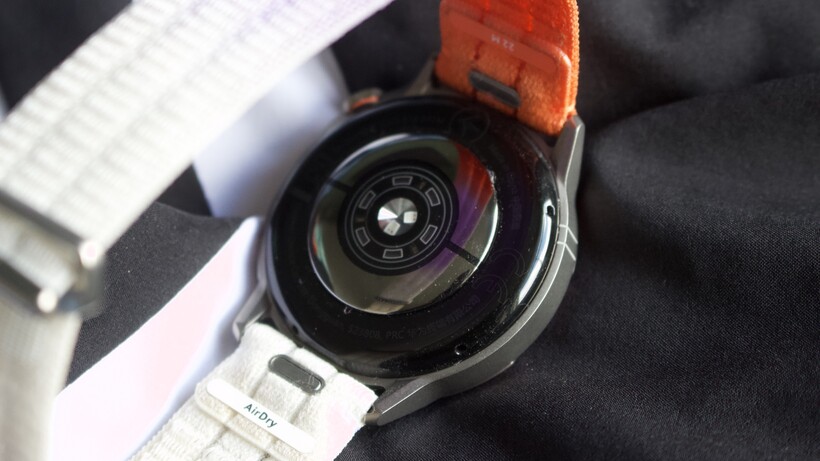
Positioning on Huawei’s smartwatches has generally been solid in the last few versions of its major smartwatches, which is why it’s interesting to see the brand experiment with a new 3D floating antenna design for the Runner 2. This design features a bezel that separates the bezel from the titanium case, allowing both elements to serve as antennas.
The brand claims this results in a 3.5 times improvement in GPS performance compared to the original Runner, which, as we know, had less-than-ideal performance.
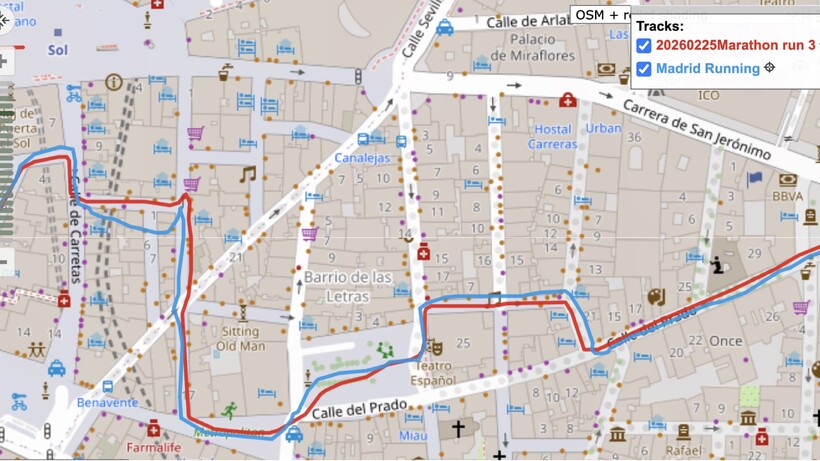
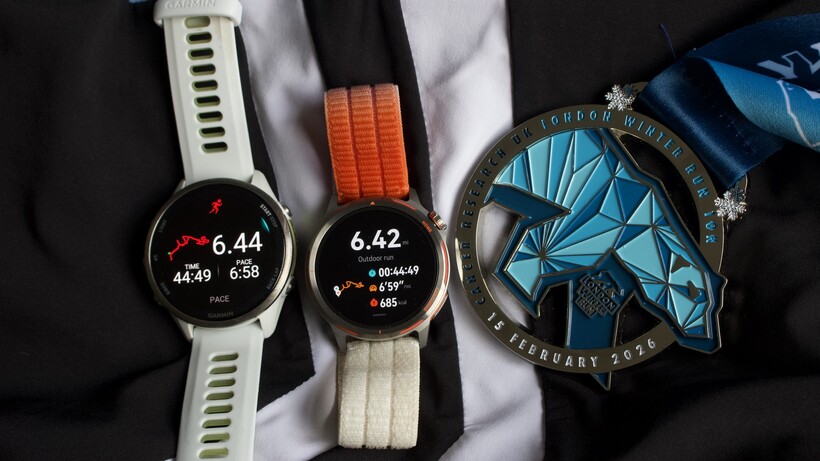
We used the Runner 2 for various runs and intensities, such as a 10km race and a track session. And based on GPS data, it tracked distances accurately for most runs when compared to Garmin’s Forerunner 970. You can see a glimpse of this in the example above, in which the two watches stayed very closely aligned during a gentle spin around Madrid.
The city race test
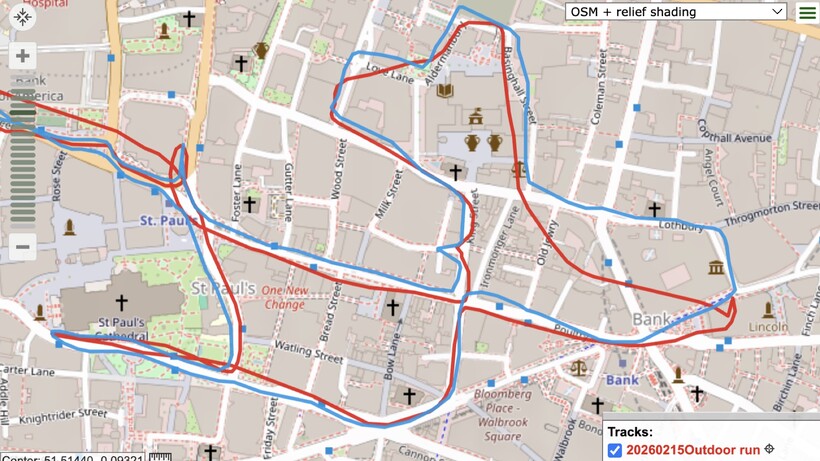
However, a closer look at the tracks on some of the tougher tests exposed the problems—especially for that aforementioned 10km race around central London.
The distance tracking actually matched Garmin’s 970 at the end of the race, but the GPS tracks tell a very different story of how the watch actually performed in real-time.
As shown on the red tracking worm below, the GT Runner 2 jumped over big sections of the course—and would often misinterpret the nuance of tighter corners or turns. This isn’t uncommon, of course, and even Apple and Garmin’s gold-standard GPS can have its off days in these challenging environments (often cities with plenty of high-rise, double-sided streets).
However, if the GT Runner 2 were our only watch (and we didn’t have experience with this kind of issue) during this race, it would have potentially caused major issues with things like pacing strategies.
Heart rate tracking performance
Heart rate tracking had some off moments during testing, particularly during intensity increases. It’s a similar story to other recent Huawei performances in our tests, where huge anomalies spoil what is otherwise a sensor that can hang with the best in interval sessions, steady-state workouts, and everything in between.
Unfortunately, the sensor also produced inaccurate data in both directions during our testing—not just underreporting by a couple of beats compared to a rival device on every workout. This is illustrated below, where the Runner 2 was essentially never in the right ballpark compared to Garmin (or our real-world effort).
Whether this was due to the rainy weather affecting the fit—who knows—but it was miles off. And, again, we have noticed this kind of performance on other devices in the last couple of years.
This also occurred on a couple of steady training runs in the last few weeks, which we wouldn’t expect from a watch at this price.
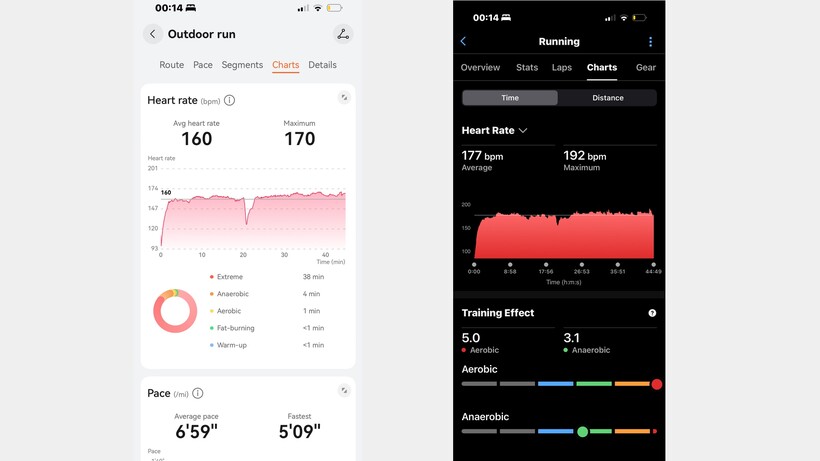
But it tended to match rival heart rate monitors’ average and maximum readings very closely when it started off on the right footing. Really, it just seemed to have occasions that it never got to grips with tracking our HR closely.
Compared to the original GT Runner, it’s still an overall improvement in these core tracking areas. However, the leaps forward and consistency the brand has found in other models over the last few years mean it’s a shame the performance doesn’t translate (for whatever reason) to its new-gen running watch.
And when you compare it to dedicated rivals, it’s still pretty far from the top.
Smartwatch features
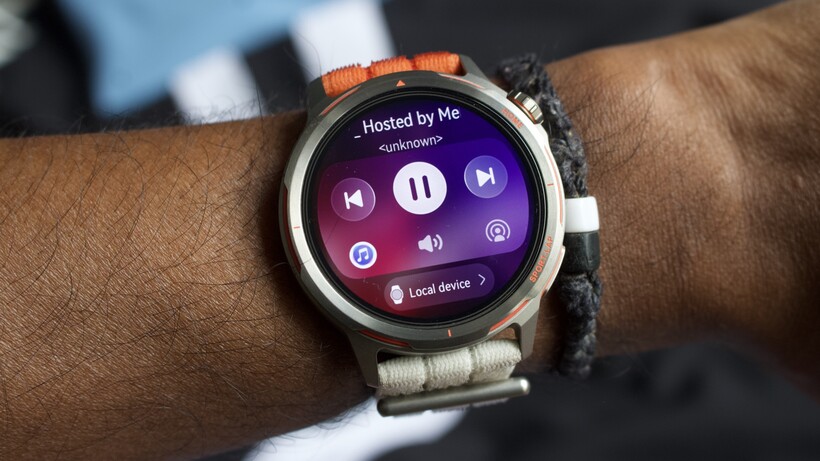
The Runner 2—like others in the GT lineup—runs on Huawei’s Harmony OS operating system, and that means you have a device that’s compatible with both Android and iOS devices.
We were somewhat disappointed that Huawei’s user interface doesn’t differentiate the watch as a dedicated running device, though. It uses the same skin as the brand’s other smartwatches, which makes it feel like you’re using a standard device with added running features, rather than a specialized running watch.
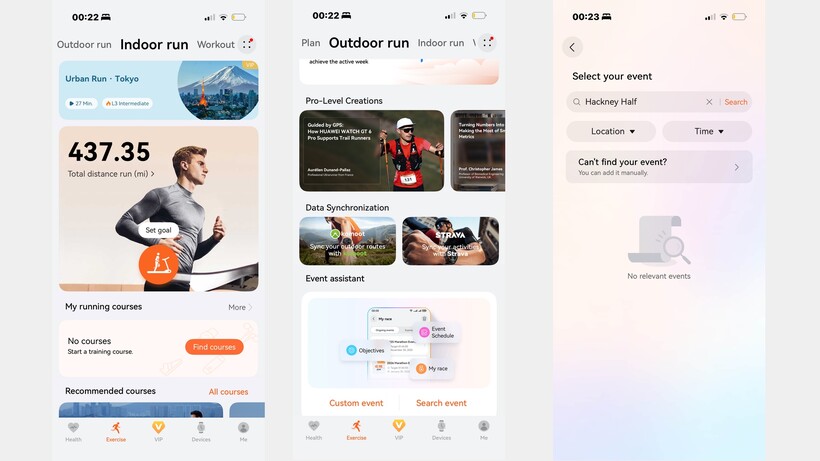
That software does at least run slick, but it’s just a shame that it’s not in any way unique—and certainly not one we would take over a totally run-focused watch to power our training.
Elsewhere, as you would expect, there’s everything from Bluetooth phone calls, good notification support, access to Huawei’s AppGallery, an easy-to-use music player, and good quality offline maps.
Do all of these features rival some of the best smartwatches you can own? No. As far as giving you the best Huawei has to offer on this front, the Runner 2 does do that. But, simply, it’s not up to Apple watchOS or Wear OS levels of smartwatch support.
For runners, though, there is at least support for apps like Strava and Komoot (and Intervals.icu as an alternative to the unsupported TrainingPeaks) to share your data with.
Battery life
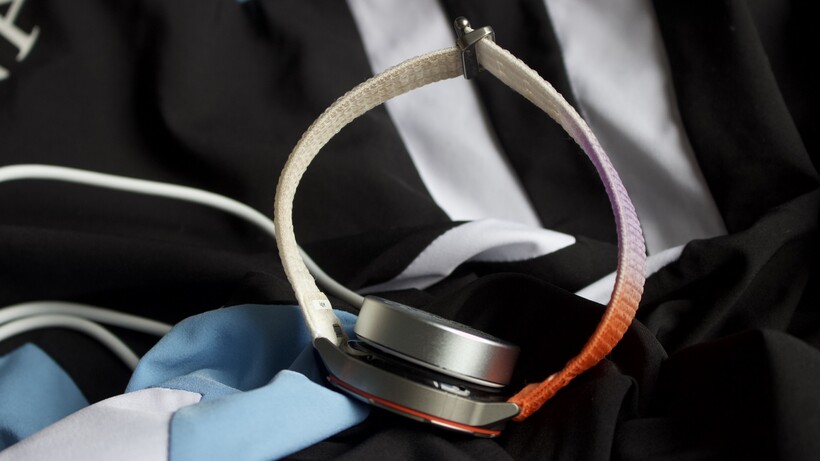
Huawei’s watches rarely disappoint when it comes to battery performance, so the GT Runner 2 perfectly aligns with what the typical runner would expect from a watch in this sense.
Huawei states that the Runner 2 can last up to 14 days with lighter use, but does not specify battery life under heavy use. Meanwhile, the GPS mode can last up to 32 hours, which is comparable to other watches in the same category.
We used the Runner 2 with a mix of using the raise-to-wake display mode and keeping the screen set to always on. In lighter use, the daily battery drop averaged 10%. For an hour of running, the drop was 2%. That was similar to the drop in other dual-band GPS watches.
In reality, with regular GPS use and the smartwatch’s available features, this watch can easily handle a week’s worth of training and has the potential to last even longer. And that means the battery performance is likely to satisfy most runners.