
The lightweight, display-free AI glasses promise open AI support, prescription lenses, and a lower entry price than rivals.
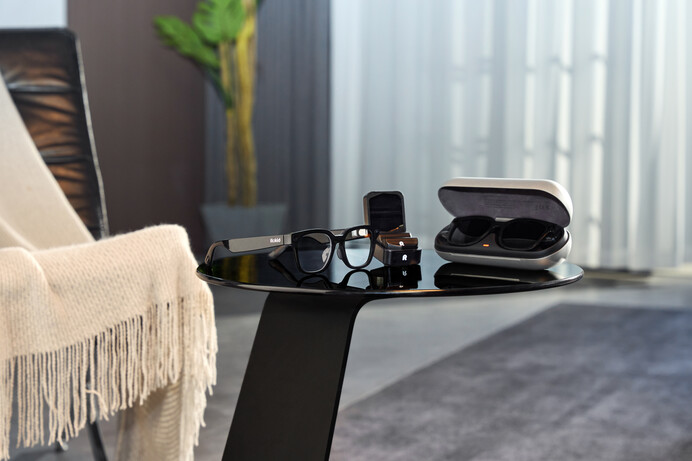
Rokid has officially announced global availability plans for its long-awaited AI Glasses Style, with the Meta-competing smart eyewear set to go on sale later this month following its debut back at IFA 2025.
Priced from $299, the Rokid AI Glasses Style positions itself as a more accessible alternative to products like the Meta Ray-Ban Smart Glasses, focusing on voice-first AI interactions rather than displays. At just 38.5g, it’s also significantly lighter than most current smart glasses, reinforcing Rokid’s aim to make the device something users can comfortably wear all day.
One of Rokid’s biggest differentiators is its open AI ecosystem. Unlike many competitors that lock users into a single assistant, the AI Glasses Style supports multiple models, including ChatGPT, Qwen, and DeepSeek, alongside global services such as Google Maps and AI-powered translation tools.
Rokid says this openness is central to its vision of AI glasses as a mainstream computing platform, rather than a tightly controlled accessory. The company has also launched an AI Agent Store in China, allowing third-party AI services to run natively on its glasses, with plans to expand this ecosystem internationally.
Rather than treating prescription lenses as an afterthought, Rokid has made them core to the product. The glasses support prescriptions up to ±15.00D, including progressive, photochromic, polarised, and blue-light filtering lenses. Users can upload prescriptions online and receive custom lenses within 7–10 days, addressing one of the biggest adoption barriers for smart eyewear.
Hardware-wise, the glasses use a dual-chip architecture, pairing a low-power processor for always-on tasks with a Qualcomm AR chip for AI and imaging. Rokid claims this enables up to 12 hours of typical daily use, with over 24 hours on standby.
The AI Glasses Style also includes a 12MP camera, open-ear audio, and support for multiple video formats designed for social platforms — an area where Meta’s Ray-Ban glasses currently dominate. Continuous recording of up to 10 minutes further underlines Rokid’s creator ambitions.
Reservations are already open, with a global launch scheduled for January 19, 2026. If Rokid can deliver on comfort, openness, and price, these could be one of the most credible alternatives yet to Meta’s vision for everyday AI glasses.