
Our full post-testing recommendations for those choosing between these similarly-priced Garmin running watches.
The Garmin Forerunner 570, released in June 2025, features a premium redesign and a price tag that positions it in the highly competitive mid-range of the running watch market. While it’s technically the successor to the 265, its price puts it in direct competition with Garmin’s own 2023 superstar flagship, the discounted Forerunner 965.
This creates a classic head-versus-heart dilemma for runners. Do you opt for the newer, sleeker Forerunner 570, which features the brand’s latest sensor technology and modern smartwatch capabilities? Or do you opt for the older Forerunner 965, which offers true flagship features like offline mapping, ample storage, and exceptional battery life, for roughly the same cost?
It’s a battle of future-proofed convenience against raw, adventure-ready power. We’ve logged hundreds of miles with both watches—here’s how they compare in all the key areas.
The quick verdict
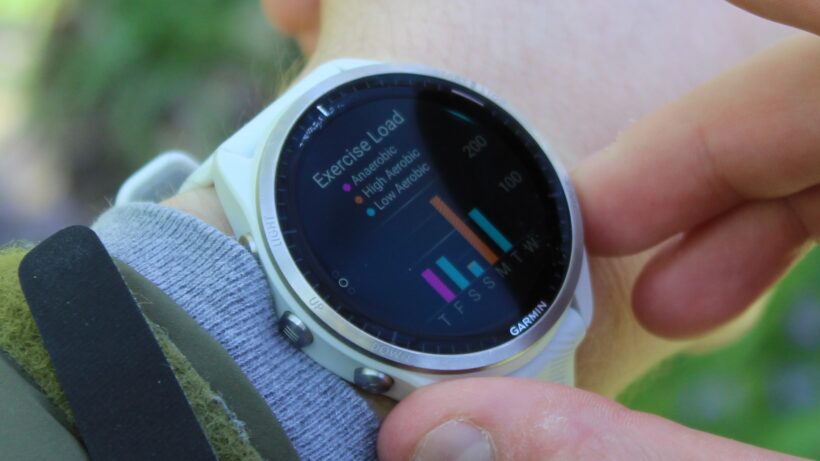
This is one of the toughest choices in the Garmin lineup right now, but the decision hinges on one key feature. Here’s the short version.
Choose the Garmin Forerunner 970 if… you absolutely, positively need full offline topographic maps. This, combined with its vastly superior battery life and larger storage for music, makes it a better pure sports watch for serious runners, triathletes, and adventurers, despite its age. If you can find it for the same price as the 570 (or less), it offers more powerful core features for your money.
Choose the Garmin Forerunner 570 if… you prioritize modern conveniences and the latest hardware. If taking calls from your wrist and having the newest, most accurate heart rate sensor are more important to you than maps, the 570 is the right pick. You are also buying into a current-generation device that is guaranteed to receive software updates, unlike the 965.
Garmin Forerunner 570 vs 965: Price
This comparison exists because of the market’s shift towards offering better features at the mid-range—and Garmin’s price increases between generations.
The Forerunner 570 launches at $550/£460. Meanwhile, the Forerunner 965, which launched at $600/£500, is now widely available from third-party retailers at or below the 570’s price.
SQUIRREL_PLAYLIST_10207701
This means that for the same investment, you are choosing between two very different feature sets. It’s not about which is ‘better’, but about which set of compromises you’re willing to make, and where you see the most value.
Design, display, and hardware
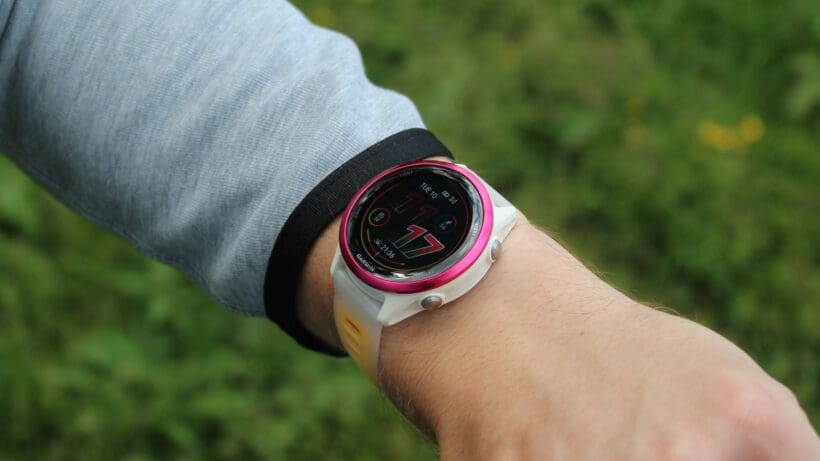
On the surface, the 965 appears to be the more premium device, boasting a titanium bezel compared to the 570’s aluminum.
However, our long-term testing tells a more nuanced story. The 965’s titanium bezel, while technically a higher-grade material, proved frustratingly prone to minor scratches from daily wear and tear. This issue has also not been entirely resolved for the Forerunner 970, its successor, based on our use over the last couple of months.
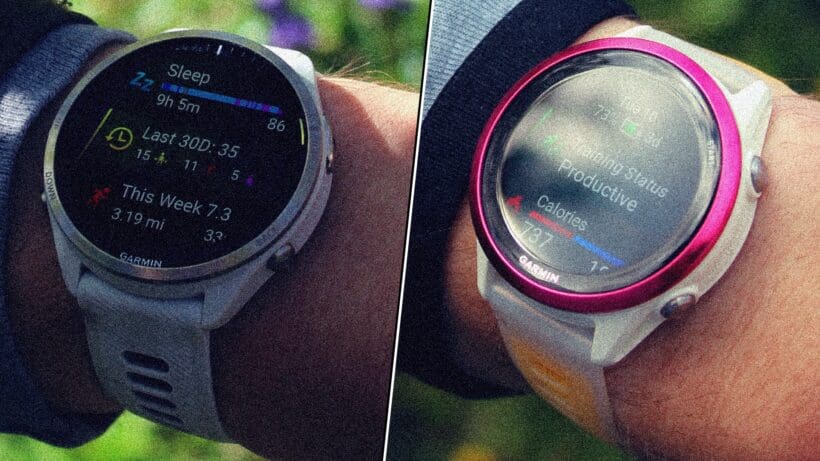
When we initially tested the 965’s Gorilla Glass screen, it also picked up a noticeable graze from a minor scrape in the gym. The 570 features the same screen, so it’s technically no more resistant to scratches. However, we found the aluminum bezel on the 570 remained pristine after a month of tough testing, which was a pleasant surprise. As a side note, it’s also much more fun to look at—on our 42mm pink/orange/translucent test unit, at least.
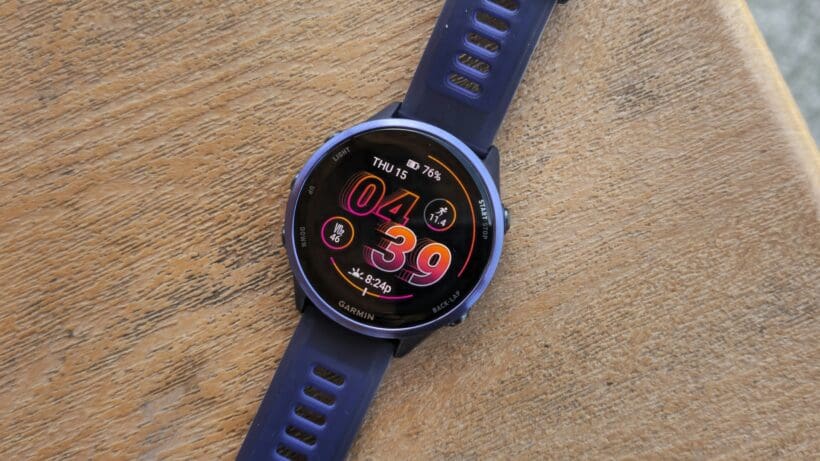
Both watches feature stunning 1.4-inch AMOLED displays (on the larger 47mm 570 model, which we’ve pictured above) that are bright, colourful, and a joy to use. The core difference is in the hardware they power.
The newer 570 features a microphone and speaker, enabling on-wrist calls and voice assistant functionality. It also contains the latest Elevate Gen 5 heart rate sensor and a skin temperature sensor, which we’ll detail more below.
The Forerunner 965 lacks all of these features. However, it counters with a mammoth 32GB of internal storage for music and maps, dwarfing the likely 8GB in the 570. For runners who love to load up hours of playlists, this is a significant advantage.
The killer feature: Mapping
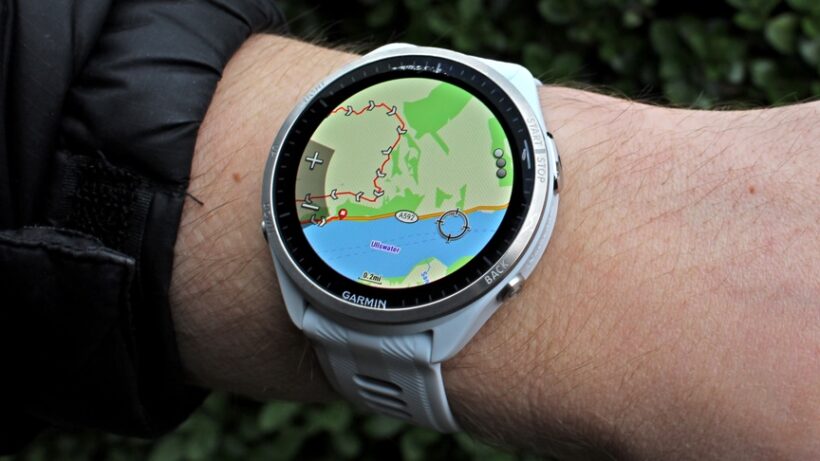
This is the single biggest point of difference and, for many, the deciding factor.
The 965 is a true navigation powerhouse, featuring full-color, routable topographic maps pre-loaded on the watch. In our testing, this was a completely different and superior experience, turning the watch into a genuinely useful tool for trail runs, hikes, and exploring new areas.
The detail afforded by the AMOLED display makes it a joy to use (if you can keep it scratch-free, that is, which we obviously didn’t manage to do).
The Forerunner 570, in a baffling decision for its price point, does not have maps.
It is limited to basic breadcrumb navigation—a simple line on a black screen. It gets the job done for following a pre-loaded course, but it’s a world away from the rich, contextual navigation offered by the 965. If you ever run on trails or like to explore, this omission on the 570 is hard to overlook.
Sports tracking and software
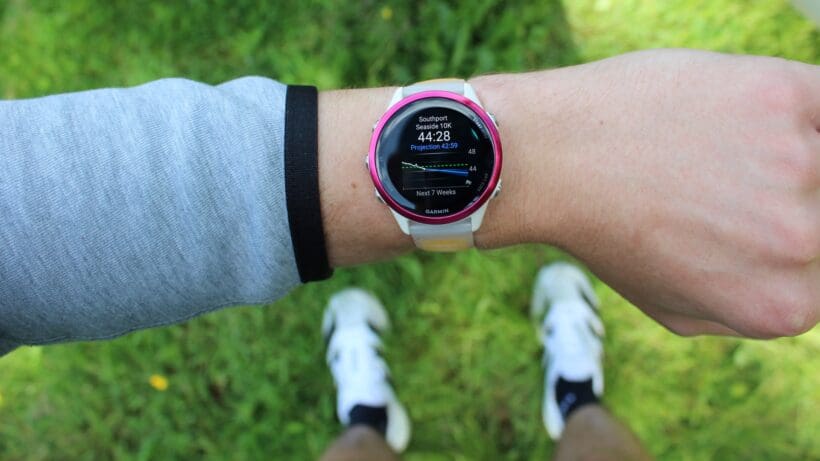
Beyond mapping, the core sports tracking experience is excellent on both watches.
They both feature top-tier Multi-Band GPS, providing flawless accuracy. They also share the foundational Garmin training suite, including Training Readiness, HRV Status, and wrist-based Running Dynamics. You will get the same deep level of post-run analysis from either device.
The trade-off here is in the underlying technology and its future. The 570 has the newer Elevate Gen 5 sensor, which offers incremental improvements in heart rate accuracy. More importantly, as a current-generation watch, the 570 will receive software updates with new features and improvements.
The 965 is probably (though not officially) at the end of its feature life. While it will receive bug fixes, the powerful training tool you buy today is likely to remain the same in two years. You’re trading future innovation for current power—and that means features like Running Tolerance will remain exclusive to the current generation.
Smartwatch features
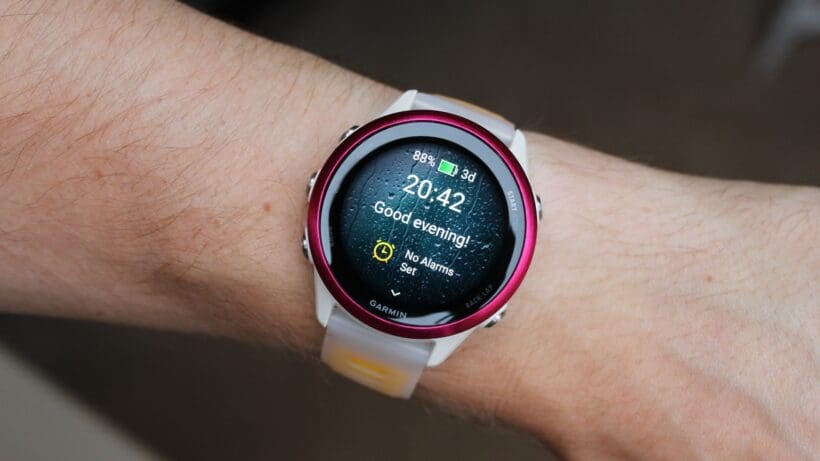
If the watch’s utility outside of running is important to you, this is an easy win for the 570. As mentioned, the inclusion of a microphone and speaker is a significant upgrade.
Being able to take a quick call when your phone is in your bag, use your voice assistant to begin a workout, or play music from Spotify out loud when your headphones run out of power adds a layer of convenience that the 965 can’t match.
The 570 also benefits from the latest Garmin software interface, including the new Evening Report, which provides a thoughtful summary of your day before you go to bed. The 965 is a powerful sports watch capable of the basics like weather, calendar, and notification syncing, but the 570 is a much better all-around smartwatch.
Battery life
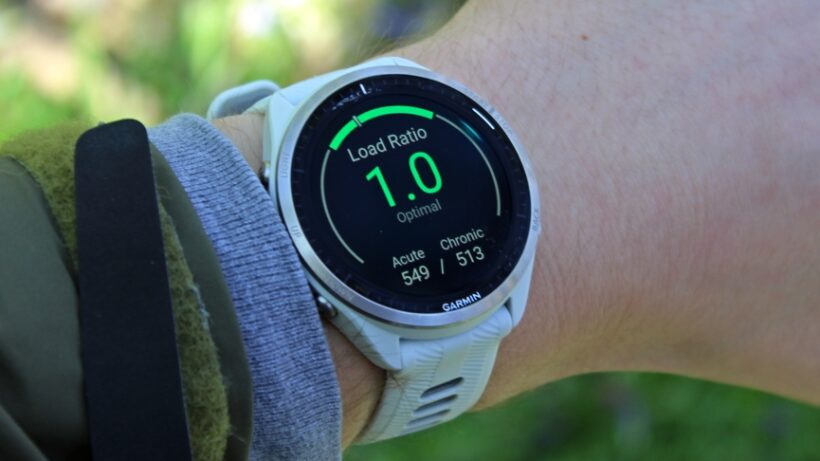
This is another area where the older flagship demonstrates its superior pedigree. The difference in battery life isn’t just noticeable; it’s enormous.
In our real-world testing with the always-on display active and daily GPS workouts, the 965 consistently delivered six days of use on a single charge. It is a true ‘charge-once-a-week’ device, which is remarkable for a watch with such a vibrant AMOLED screen.
The smaller version of the 570, under similar conditions, lasted just three days. While comparing our test units isn’t necessarily fair, given their size difference, let’s add some context to the discussion.
While Garmin doesn’t outline AOD battery life for either watch generation, it does suggest that users will receive 10 days of ‘smartwatch battery life’ (i.e, AOD disabled) for the 42mm edition and 11 days for the 47mm 570. That means you’re likely to get maybe 3-4 days of AOD time, but it’s still significantly less than on the 965, whose ‘smartwatch’ battery is a lofty 23 days.
Reaching for the charger twice as often is a significant drawback, and the single biggest hardware disappointment of the new 570. If you value endurance and hate charging your watch, the 965 is in a completely different class.