
Find out which of these entry-level Garmin running watches is best for you
Garmin’s release of the Forerunner 165 in early 2024 added a much-needed budget option to its lineup; however, the Forerunner 55 remains the most affordable way to get a running watch from the brand.
The problem? The latter was released in 2021 and is now outdated in most areas. We expected it to be refreshed last year, but there are still no indications that a new model will even arrive in 2025.
That means those operating on a budget of around $150-300 now have a tough decision to make when choosing a new Garmin running watch.
In this comparison guide, we’ll cross-examine all the key areas you should consider before buying one of these two running watches. Let’s dive in.
Our in-depth reviews:
Price and versions
- Garmin Forerunner 165: $249 / £249 (standard) | $299 / £289 (Music)
- Garmin Forerunner 55: £199 (standard)
While the 55 has just one version, there are two to choose from when looking at the 165: the standard model and a slightly pricier 165 Music.
There are no differences between the 165 pair other than support for music storage and offline playback for services like Spotify, Amazon Music, and Deezer.
Currently, we believe the standard 165 offers the best value. It’s definitely worth upgrading by $50/£40 for the screen tech alone – and it also has plenty more features than the 55.
However, if you choose the Music edition, prices start to increase, so consider upgrading to the Forerunner 265. The 55 is also frequently found on sale, which tends to bring the price closer to $150. This, again, complicates the decision.
Design and display
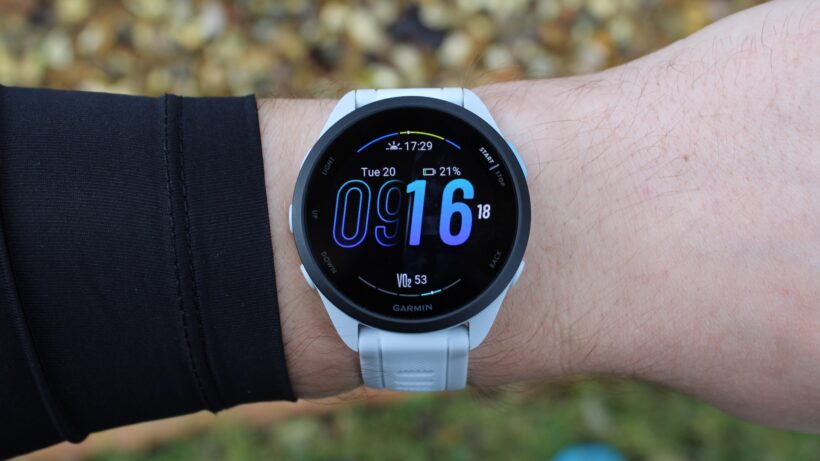
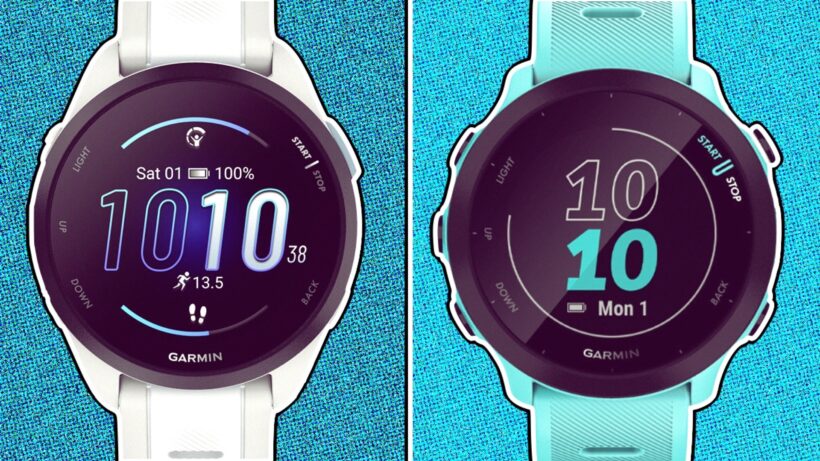
- Forerunner 165: Plastic case, 1.2-inch AMOLED display
- Forerunner 55: Plastic case, 1.04-inch transflective MIP display
Both of these running watch models are lightweight and designed to feel unobtrusive on the wrist, and they feel quite similar during daily wear and runs.
The 55 weighs 37g, while the 165 is slightly heavier at 39g. This difference is hardly noticeable, and you really can’t go wrong with the slightly larger 165 (43 x 43 x 11.6mm) or the 55 (42 x 42 x 11.6 mm) in terms of size.
Garmin does offer different case sizes for some of its pricier watches—like the Fenix 7 Pro, Epix Pro, or Fenix 8—but that’s not an option you have with either of these lines.
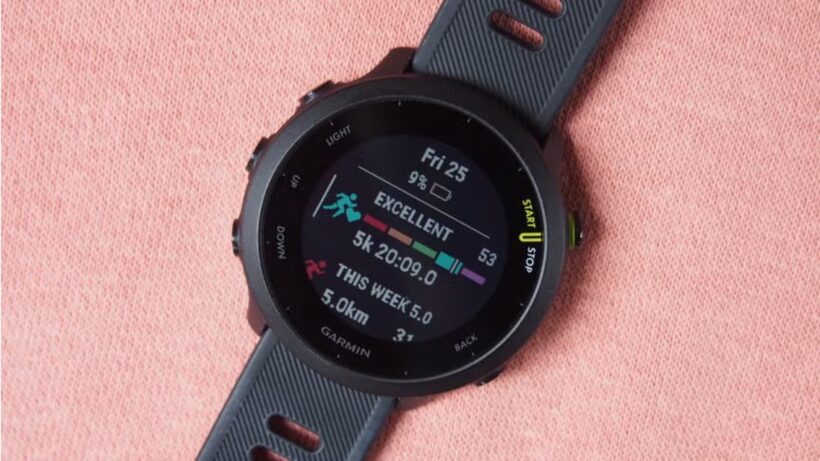
Thankfully, the 42mm/43mm case size is quite unisex, although it tends to fit small and average wrists better. Ultimately, the main difference between the two is not in the design shell; rather, it lies in the display technology.
The 165 features a larger, vibrant AMOLED display that delivers exceptional clarity even in sunlight, while the 55 has a smaller, monochrome transflective memory-in-pixel (MIP) display, which is more efficient.
As we just mentioned, we believe the AMOLED display is far superior to MIP screens and deserves an upgrade in itself. It isn’t as battery efficient (more on that below), but it’s worthwhile.
Running features
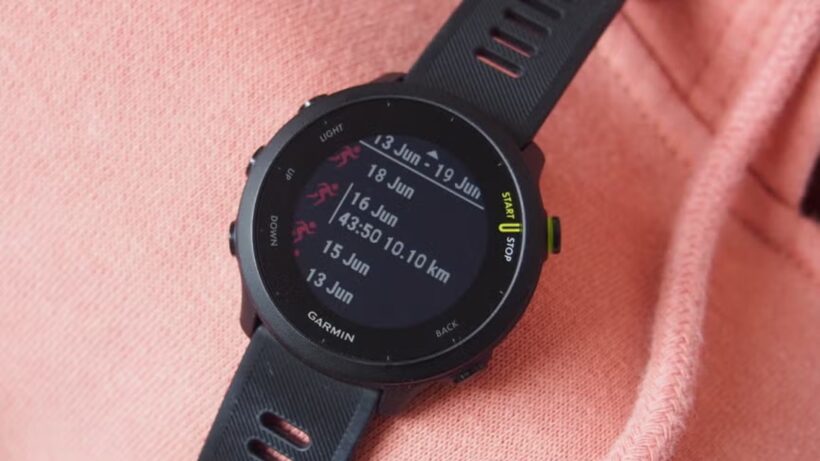
- Forerunner 165: GPS, HR monitoring, Garmin Coach, PacePro, Race Widget, Daily Suggested Workouts, Running Dynamics, VO2 Max, Training Effect, HRV Status
- Forerunner 55: GPS, HR monitoring, Garmin Coach, PacePro, Race Predictor, Daily Suggested Workouts
Garmin takes great care in spacing out the features available on its running watches. Overall, everything comes together to ensure you always receive a bit more functionality for your money, while maintaining value across the various Forerunner models.
Since these two models are at the bottom of the chain, you can expect them to have the most basic feature sets, with the 165 having a slight edge in features for runners.
We would say, though, that these are two very run-focused watches. Unlike pricier models such as the Forerunner 965, these two aren’t designed to be full-time training companions for triathletes—and that means tools like Training Status, Training Readiness, Endurance Score, and Hill Score aren’t available.
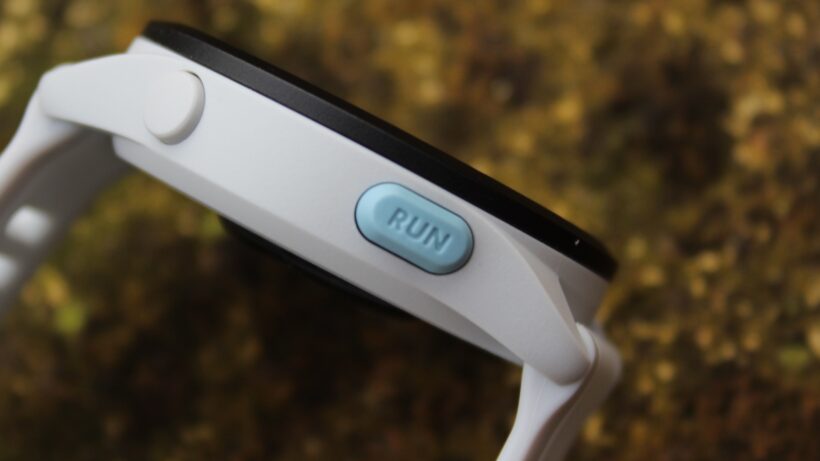
Instead, both the 165 and 55 concentrate on the fundamentals. They feature single-frequency GPS tracking, which provides excellent accuracy, even though it isn’t top-tier, and heart rate tracking from Garmin’s Elevate V4 sensor.
This sensor utilizes last-gen technology, but it remains as effective as most optical heart rate sensors on the market, including those featured in the 265 and 965.
This is where things split off, however. While the 165 has room for Training Effect (the measurement of which cardiovascular system your workout developed), the Race Widget (and its adaptive training suggestions), and Garmin’s Running Dynamics analysis, the 55 instead sticks to support for Garmin Coach plans and post-run analysis.
Again, we think the upgrades are worth it for most people. However, those who want a very basic start-stop tracker that accurately logs distance and HR will find it with the 55.
Health, sleep and smart features
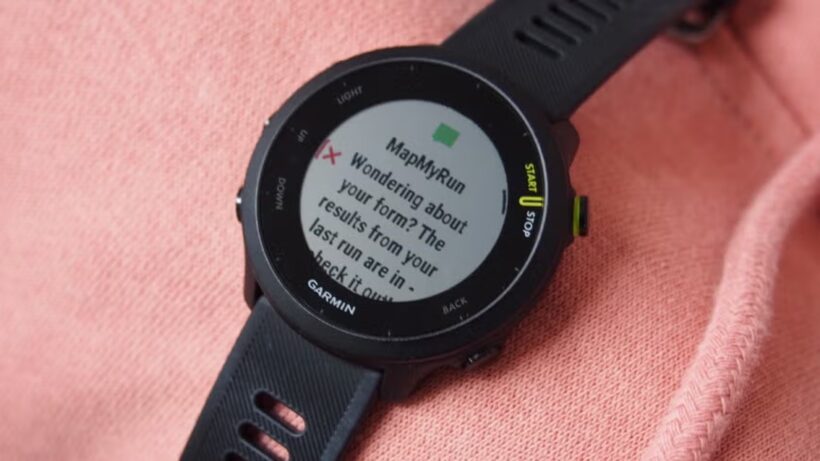
- Forerunner 165: Sleep tracking (advanced), nap detection, stress monitoring, Body Battery (advanced), smartphone notifications, music support, Pulse Ox
- Forerunner 55: Sleep tracking (basic), stress monitoring, Body Battery (basic), smartphone notifications
Although these two appear quite similar in this regard, there are a few subtle differences, and the advantage naturally goes to the newer 165 in this respect.
This is particularly prevalent in areas like sleep tracking and Body Battery energy monitoring, as they’ve been given a bit of an update in presentation (both on-watch and in Garmin Connect) and what’s tracked.
While the 165 provides sleep scores and detects naps, the 55 only logs your hours and evaluates your sleep stages. The more expensive model gives you that extra feature.
Both watches feature Body Battery, but the 165 now displays a breakdown of how specific activities, rest periods, and sleep tracking have impacted your score, complete with a neat little graph.
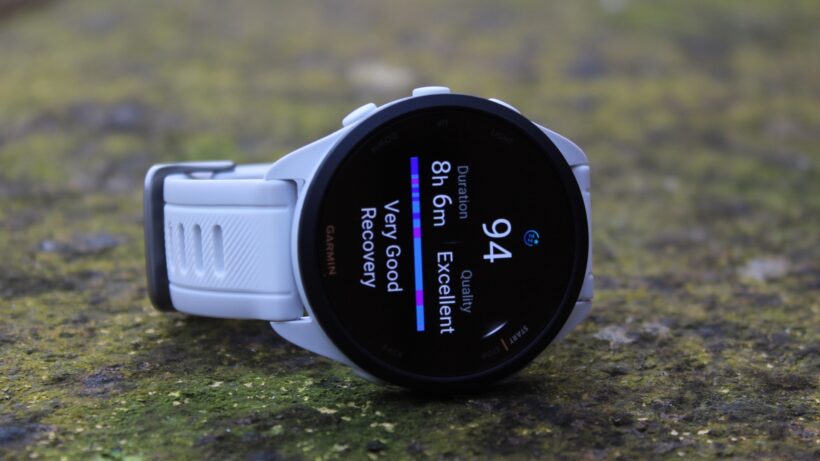
Neither is particularly comprehensive regarding smart features or health tracking, which is to be expected from two devices primarily designed for running.
Again, the 165 is slightly more advanced. It boasts Garmin’s SpO2 Pulse Ox technology, allowing you to take spot readings or set up background monitoring during sleep (or throughout the day, if you don’t mind the battery drain this causes). However, this is about the extent of its health features.
As we’ve mentioned, it also offers music storage for a premium, whereas the 55 is limited to media control only when connected to an iOS or Android device.
Battery life
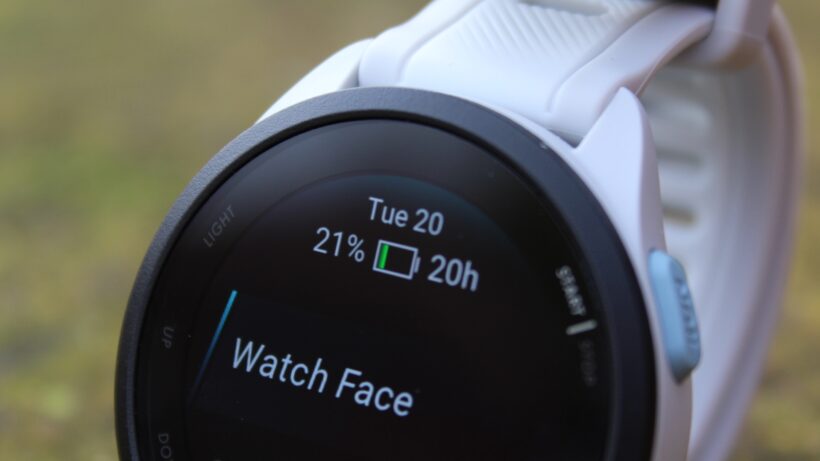
- Forerunner 165: 11 days (watch mode), 19 hours (GPS)
- Forerunner 55: 14 days (watch mode), 20 hours (GPS)
The 55’s only victory is in the battery life department. However, this is merely a win on paper.
It might last a few more days than the 165, but the trade-offs—primarily the AMOLED display and the onboard features—aren’t worth it.
The 11 days is still more than enough for a running watch – and there’s also a negligible difference when it comes to efficiency when tracking via GPS.
We should say that having the 165 in ‘watch mode’ will ensure the always-on display is off, however. And, in our testing, we’ve found that turning this display mode on (alongside max brightness) will see the battery life dip down to around a week.
Still very respectable, even at half of the 55’s capacity in AOD mode.
Verdict: Which is best?
Knowing which is the best option for you is all about understanding your budget and needs. With that in mind, we recommend the following.
Choose the Forerunner 165 if:
- You want a colorful and detailed display
- You need slightly more running metrics
- You value music storage and offline playback
- Your budget can stretch closer to $300/£300
Choose the Forerunner 55 if:
- You want better battery life
- You don’t value run-tracking insights
- You want the most budget-friendly Garmin running watch
Ultimately, both of these watches are very capable and reliable running companions. The 165 offers a bit more for intermediates or advanced beginners, while the 55 provides excellent value for those just starting. Select the watch that best aligns with your priorities and budget.