
Meta's latest announcement have altered the glasses and AR landscape—stay up to date with this buyer's guide
The smart glasses landscape has exploded in 2025. What was once a niche, experimental corner of the wearables world has become one of its most exciting frontiers, with new devices launching at a blistering pace. From AI-powered overlays to glasses that act as a personal cinema, the next generation of smart eyewear is here.
The most significant developments in 2025 have come from Meta. Continuing its partnership with EssilorLuxottica, four new smart glass models were recently unveiled: the next-generation Ray-Ban Meta Gen 2, the athlete-focused Oakley Meta Vanguard, the everyday Oakley Meta HSTN, and the intriguing Ray-Ban Meta Display glasses. This signals a massive investment in the space and sets the stage for a fascinating battle for your face.
This rapid evolution, though, also makes it a tricky time to buy. Our top recommendation, the original Ray-Ban Meta, remains an excellent product. However, with the Gen 2 model just announced, we advise waiting until our full review is published before making a purchase.
As well as providing essential context around the current releases and different sub-categories of smart glasses, this guide reflects our in-depth testing of the market. So, let’s dive in.
In for testing: Meta’s 2025 glasses & more

The pace of innovation in smart eyewear is relentless, and our team is currently testing the latest and greatest devices. Our complete verdicts and an updated ranking will be published over the next couple of months, but here are the key devices currently in our testing labs:
Meta’s 2025 collection
This includes the direct sequel to our top pick, the Ray-Ban Meta Gen 2, the high-end Oakley Meta Vanguard glasses, the more affordable Oakley Meta HSTN lifestyle frames, and the innovative Ray-Ban Meta Display glasses, which feature a small heads-up display. We’ll be posting our verdicts on all four as a priority over the coming month or so.
Xreal One Pro
A leading name in display-focused glasses, the One Pro aims to be the ultimate portable screen for productivity and entertainment. Xreal (formerly Nreal) has plenty of pedigree in the industry, and this flagship effort is very likely to come recommended following our full test.
Rokid AR Max 2
Another major player in the AR space, the Max 2 promises a refined virtual display experience and acts as a key competitor to Xreal. We’ve had plenty of hands-on time with previous Rokid glasses and have been thoroughly impressed. We’ll deliver our complete verdict on the brand’s latest effort soon.
Rayneo Air 3s Pro
Although billed as AR glasses, these are more focused on providing a private viewing screen, and we’re testing them to see how they compare to the competition.
Julbo Evad 2 Spectron
Classic Wareable territory, these sports-focused glasses aim to overlay real-time performance metrics for cyclists and runners, with integrations for platforms like Strava.
Brilliant Labs Halo
Following up on their Frame glasses, Brilliant Labs is back with Halo, a single-lens projector designed to bring contextual AI information directly into your line of sight.
Quick overview: The best smart glasses we’ve tested
Here at Wareable, we’re at the forefront of this new wave and have been covering the smart glasses space for nearly a decade. Our team is currently testing all the major new releases, from Meta’s latest lineup to the most promising AR glasses from Xreal, Rokid, and Rayneo. However, the following are the options we’ve completed testing on and recommend considering.
- Ray-Ban Meta (Gen 1)
- Xreal Air 2 Ultra
- Nuance Audio
- Solos AirGo V
- Nuance Audio
What are the different types of smart glasses?
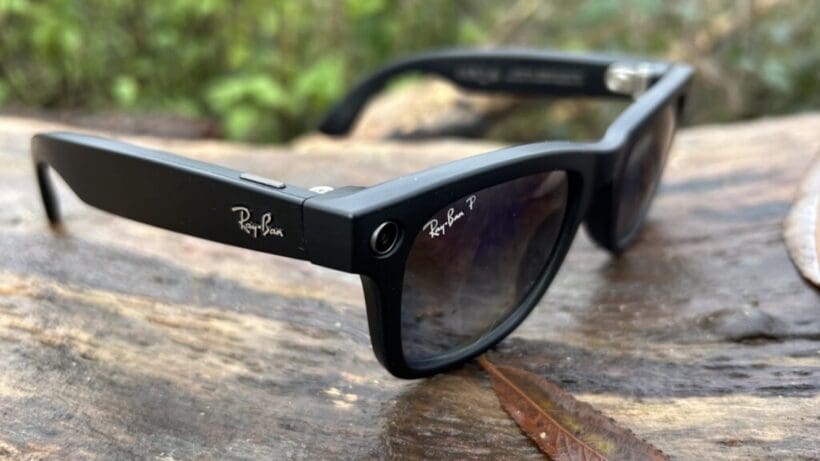
As the market evolves, smart glasses are being divided into two distinct categories. Understanding the difference is key to choosing the right pair for you.
Audio, AI, and camera glasses
These are the most common and consumer-friendly type of smart glasses right now. Think of them as super-powered headphones and a camera that you wear on your face.
Their primary functions include playing music and podcasts via open-ear speakers, taking phone calls, using a voice assistant (such as Meta AI or Alexa), and capturing photos and videos from a first-person perspective. They connect wirelessly to your smartphone to function.
- Examples: Ray-Ban Meta Smart Glasses, Amazon Echo Frames
Augmented reality (AR) & display glasses
This category is more advanced and diverse, with fewer options ready for consumer use. These glasses project digital information onto the lenses, overlaying it on the real world. This can range from simple text notifications to creating a vast, virtual cinema screen for watching movies.
Some are ‘AR-lite’, focusing on projecting a virtual display from a connected device (like a laptop or phone). Others are ‘proper’ AR glasses, using cameras and sensors to understand your environment and place digital objects within it. This category also includes AI glasses that utilize a display to display information from an assistant.
- Examples: Xreal Air 2 Ultra, Brilliant Labs Frame, Rokid Max 2
Ray-Ban Meta (Gen 1)

Note: Meta has just announced the Ray-Ban Meta Gen 2, which promises an improved camera, better audio, and a lighter design. While the original remains a fantastic product and will likely see price drops, we strongly recommend holding off on buying this model until our full Gen 2 review is published in October.
The original Ray-Ban Meta glasses are the product that finally made smart eyewear mainstream. By embedding technology into the iconic Wayfarer frames (and other styles), Meta and EssilorLuxottica created a device that you actually want to wear.
Let’s be clear: there’s no augmented reality here. These glasses have two core functions: capturing first-person photos and videos, and acting as a pair of high-quality open-ear headphones for music and calls. And they excel at both.
The dual cameras capture surprisingly good content, perfect for social media, while the speakers deliver rich audio without isolating you from your surroundings. A small LED light illuminates to let people know when you’re recording, addressing some privacy concerns. All this tech adds just 5g compared to a standard pair of Wayfarers, and they can be fitted with prescription lenses.
They aren’t for every occasion, and the ‘smart’ features are relatively basic. However, by focusing on doing a few things extremely well in a stylish and desirable package, the Ray-Ban Meta glasses set the standard for the entire category.
- Check out our full Ray-Ban Meta (Gen 1) review
Pros
- Great photo and video quality
- Lovely audio
- Just a classic pair of Ray-Bans
- Charging case is lush
Cons
- Wearing face cameras can be awks
- Few connectivity niggles
Xreal Air 2 Ultra

If you want a glimpse of the ‘spatial computing’ future that Apple’s Vision Pro promises in a much more accessible form factor, the Xreal Air 2 Ultra is your best bet. These wired glasses don’t offer true, world-altering AR. Instead, they excel at creating a massive, high-quality virtual screen that appears to float in front of you.
Plugged into a compatible smartphone, laptop, or gaming console, the Air 2 Ultra can simulate a display of 100 inches or larger. The clarity is superb, making it a game-changer for watching movies on a plane, enjoying a private and expansive monitor for work, or immersive gaming.
While Xreal’s Nebula platform offers spatial computing features and hand tracking, the core strength of the Air 2 Ultra is its function as a top-tier portable display. They are more technically ambitious than audio glasses, but they also serve a very different purpose. For frequent travellers or anyone craving a bigger screen on the go, they are a powerful and impressive piece of kit.
Nuance Audio

A collaboration between EssilorLuxottica and Nuance Audio, these smart glasses address a distinct issue: hearing loss. Disguised within a stylish pair of frames, this device is essentially a sophisticated hearing aid designed to make conversations more straightforward in noisy environments.
Using beamforming technology and an array of hidden microphones, the glasses can identify the person you’re speaking to and amplify their voice while filtering out background noise. The idea is to provide a solution for individuals with mild to moderate hearing loss who may not require or prefer a traditional, behind-the-ear hearing aid.
By integrating the technology into a familiar and fashionable object, Nuance Audio aims to remove the stigma associated with hearing assistance devices. They don’t require fitting by an audiologist and offer an unobtrusive way to enhance social interactions. It’s a powerful example of how smart glasses can provide genuine, life-improving utility beyond notifications and photos.
Solos AirGo V

The Solos AirGo V aims to challenge the Ray-Ban Meta. The key feature is ChatGPT-4 integration, enabling them to visually analyze the world through their onboard cameras.
At its core, the AirGo V are a solid pair of audio glasses. The open-ear sound quality is good for music and calls, featuring live translation and a ‘Whisper Message’ mode for reading incoming texts. The new AI integration allows you to snap a photo of a landmark or meal and ask ChatGPT-4 for details, showcasing the potential of contextual AI.
However, the hardware struggles to keep up with these ambitions. The dual 5MP cameras only capture still images, and the quality is inferior to competitors, especially in poor light. The modular design with bulky, removable arms lacks the refined appeal of the Ray-Bans at the same $299 price.
Its key advantage is battery life, which, at over 10 hours of use, far surpasses most rivals. If you prioritize longevity and are intrigued by experimenting with visual AI, the AirGo V is a compelling choice. For most people craving a polished camera and audio experience, however, the Ray-Ban Meta remains the better pick.
- Check out our full Solos AirGo V review
Pros
- Features removable arms and lenses
- Solid open-ear sound quality
- ChatGPT-4o support is neat
Cons
- The arms still feel too bulky
- Camera quality isn't great
- We're still not entirely won over by overall design
Vuzix Z100/Ultralite/Ultralite Pro
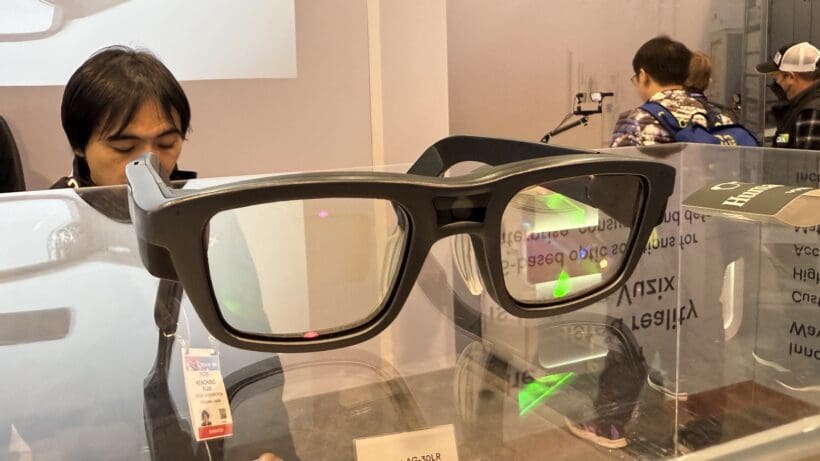
Vuzix’s Z100 glasses are based on the company’s Ultralite reference platform for OEMs. They’re pretty lightweight, with a large display that, as ever, will offer translation, turn-by-turn directions, and AI answers. We tried the translation, and it was extremely quick. However, you have to open an app on your smartphone during it, and that somewhat takes the shine off.
The Ultralite Pro–another reference design–packs in visuals that feel enormous and overlays them onto the real world. It didn’t just display text, but large cards of information that were layered and featured 3D elements. The text felt easy to read, and I wasn’t squinting to make them out.
The issue with the Ultralite Pro is that, while visually superior to anything else at CES 2025, the glasses represent a return to huge, silly specs that, frankly, nobody would wear. However, despite this drawback, it’s a great example of what’s possible in the realm of design and technology.
Brilliant Labs Frame
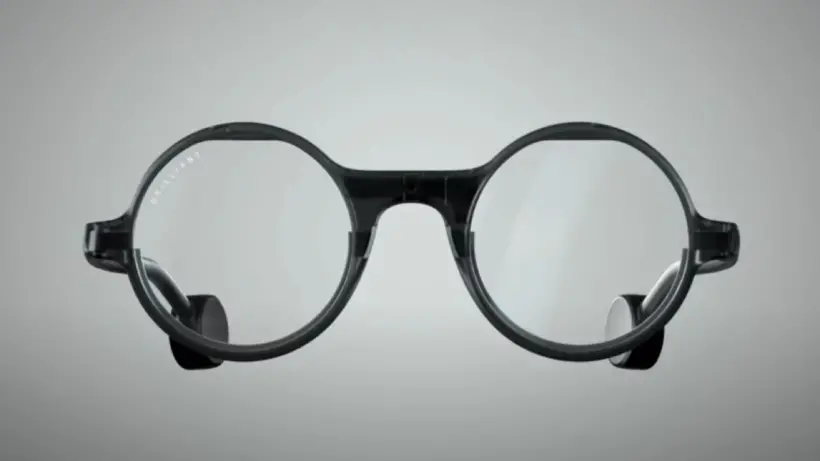
While Meta’s early iterations focus on capturing the present, Brilliant Labs wants to augment it with AI. The Frame glasses are a fascinating, open-source device for those who want to be on the cutting edge of AI hardware.
Weighing just 39g, these glasses use a small projector to display text and simple graphics in your field of view. The magic happens when paired with the companion AI assistant, Noa. You can ask Noa questions and have it translate conversations in real-time. Alternatively, you can utilize its multimodal capabilities to identify objects in view and retrieve information about them.
As an open-source platform, developers can build their own applications, making the Frame a playground for AI innovation. The experience isn’t as polished as a consumer product from Meta, and the visuals are basic. However, the Brilliant Labs Frame is one of the most exciting and forward-thinking devices on the market. We’re eager to test the company’s new Halo glasses, announced in August 2025.