
CEO Will Ahmed is shipping Whoop Body apparel to Melbourne to keep sensors on the court
The ongoing battle between Whoop and the Australian Open is escalating into a game of high-stakes hide-and-seek.
Following the high-profile removal of the screenless wearable from the wrists of world No. 1s Carlos Alcaraz and Aryna Sabalenka—and defending champion Jannik Sinner—Whoop CEO and founder Will Ahmed has announced a tactical shift to keep his sensors on the court.
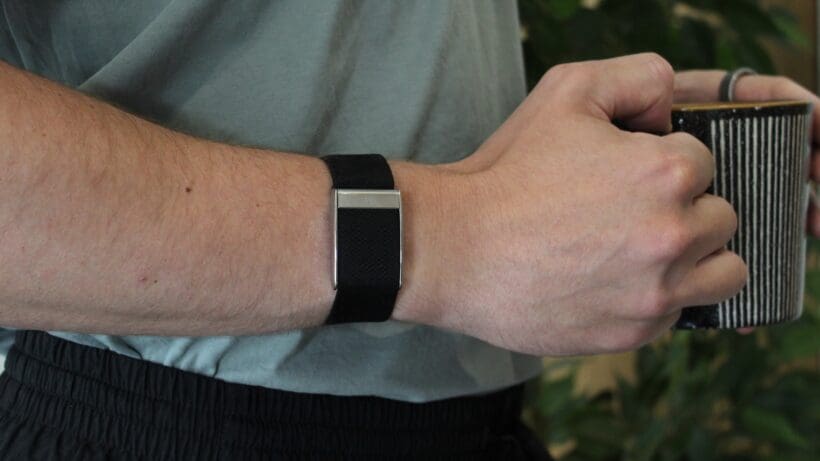
In a video posted to social media, Ahmed confirmed the company is overnighting Whoop Body apparel to top players in Melbourne, allowing them to wear the trackers discreetly inside bras, boxers, and waistbands where they are invisible to chair umpires.
Ahmed characterized the ban as an “enormous scandal,” pointing out that the restriction directly contradicts the International Tennis Federation’s (ITF) guidelines, which approve Whoop as a safe Player Analysis Technology.
“It’s going to take a strip search to keep Whoop off the court,” he said, doubling down on the company’s stance that athletes have a fundamental right to access their own health and performance data during competition.
Sinner and Sabalenka also both expressed confusion over why a device used throughout the WTA and ATP tours is suddenly prohibited at Grand Slams.
What happens next?
Tournament organizers at Tennis Australia have defended the policy, noting that while they are in “ongoing discussions” about future changes, players currently have access to extensive external data through the Bolt 6 tracking system.
For the athletes, however, external metrics like ball speed don’t replace the internal load data—such as heart rate and recovery—that they rely on for post-match analysis.
Sinner, who had attempted to hide his device under a sweatband before being caught by an umpire, noted that while “rules are rules,” alternative options, such as sensor vests, are often too uncomfortable for elite play.
As Whoop’s undergarments begin to arrive at players’ hotels, the tension between traditional Grand Slam regulations and the modern athlete’s demand for biometric autonomy is only set to tighten.
This incident is a clear signal that as sensors become smaller and more integrated into the very fabric of athletic gear, the debate over wearables in elite sport is far from over.
With Wimbledon, Roland-Garros, and the US Open operating independently, policies around wearables remain fragmented. But as smart rings, glasses, and sensors become more embedded in elite sport, the Australian Open incident may prove less like a one-off and more like an early sign of a broader shift the Grand Slams will eventually have to address.