
It's not a health or fitness tracker—it's a bullet journal that lives on your finger
Pebble has officially entered the smart ring arena—yet, in true Pebble fashion, the company is completely ignoring the rules set by the likes of Oura, Samsung, and Ultrahuman.
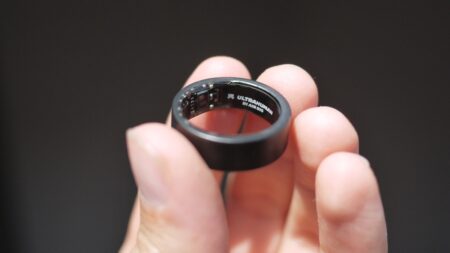
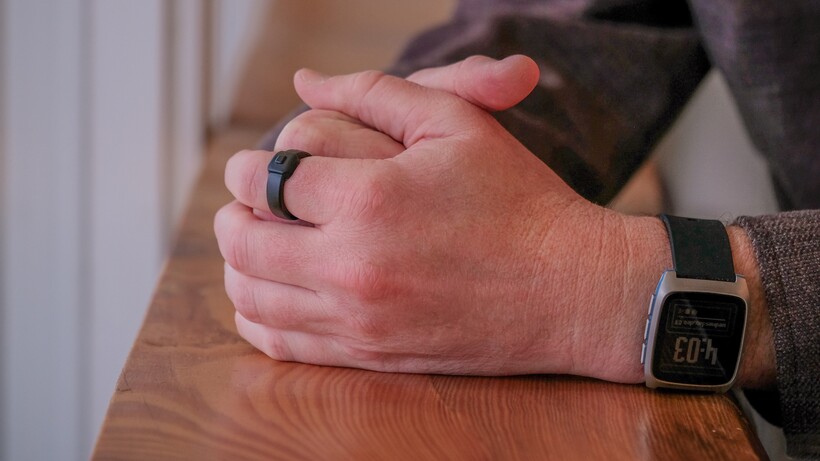
The Pebble Index 01 is a ring that subverts every current trend in the category. It isn’t a health tracker; it has no heart rate sensors, no sleep monitoring, and no scores. Instead, the Index 01 is a dedicated, screenless tool for capturing the thoughts that pass through your brain throughout the day—a digital bullet journal that lives on your finger.
It’s also available for pre-order now for just $75, with the price rising to $99 later, and shipping begins in March 2026. As we’ve seen from the brand’s return to smartwatches this year via the Pebble 2 Duo and Pebble Time 2, there’s every reason to believe that its debut smart ring will roll out with minimal fuss.
Subverting the category
At first glance, the concept of the Index is refreshingly simple.
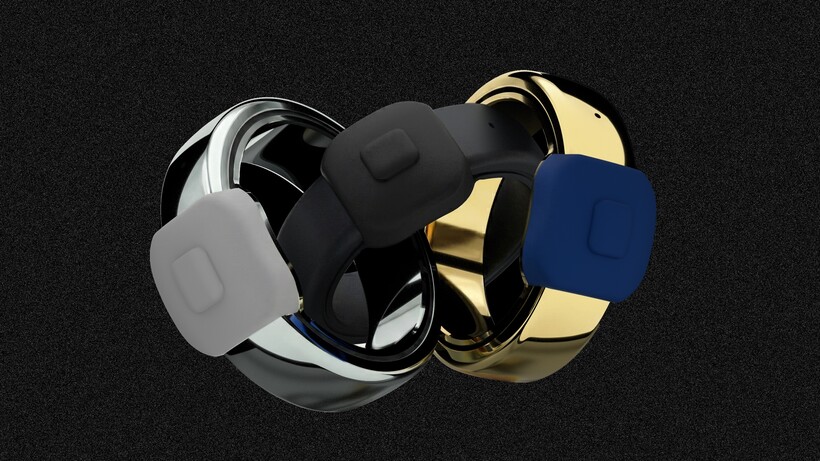
It features a single physical button (made of liquid silicone rubber for a tactile ‘click’) and a microphone. When an idea strikes—whether you’re running, working at your desk, or anything else—you press the button, speak, and the audio is instantly transcribed and sent to the Pebble app via Bluetooth.
From there, the on-device AI classifies it as a note, a reminder, or a calendar entry. So, you can say something like, “Remind me to call the doctors at 8am,” or “Add yoghurt to the grocery list,” and it routes the text to the correct place (whether that’s your calendar or an app like Notion).
If your phone is out of range, the ring also stores up to five minutes of audio locally for syncing. It even supports over 99 languages for speech-to-text, and when transcription fails due to wind or noise, you can always play back the raw audio in the app.
True to its roots
Perhaps the most “Pebble” decision of all is the power source. The Index doesn’t have a rechargeable battery. Instead, it runs on replaceable silver-oxide hearing aid batteries.
Pebble claims this setup provides roughly two years of battery life based on average use (about 20 interactions a day). This eliminates the charging anxiety that still plagues most wearables—particularly high-powered smartwatches. However, once the battery is dead, it’s dead—and Pebble encourages users to return the ring for recycling.

As you would expect, the Index can also be hacked and customized. Built on open-source software, it lets users configure button clicks (single or double) that trigger custom actions such as smart home routines.
The hardware itself, meanwhile, is made from 316 stainless steel and is water-resistant enough for hand washing and showering (though Pebble recommends avoiding swimming). It also comes in three colors—Polished Silver, Polished Gold, and Matte Black—and in US ring sizes 6 through 13.
The Wareable take
This is classic Pebble: ignoring the mainstream race to focus on doing specific things exceptionally well.
In an era when almost every wearable aims to be medical-grade, a pensieve-like, always-there device for your brain is a refreshing pivot.
It also solves a genuine friction point: the time it takes to pull out a phone to jot down a thought, without actually trying to replace your smartphone entirely. It’s the same reason we always rave about Garmin’s flashlight feature in reviews—it’s always there, which makes it much easier than the phone to incorporate into your daily rhythms.
It won’t replace or challenge the Oura Ring 4, obviously. In fact, if you don’t mind wearing multiple rings, there’s an argument that it could be the perfect accomplice. Yet, at $75, it’s an impulse buy that could become an indispensable productivity tool.
We’re looking forward to spending time testing this one in early 2026—stay tuned for more.