

Supply chain rumors suggest OpenAI is moving production to Vietnam for a mass-market audio device
OpenAI appears to be accelerating its hardware ambitions, with new supply chain leaks pointing to a dedicated audio wearable currently in development under the codename ‘Sweetpea’.
According to leaker Smart Pikachu, the device eschews the traditional in-ear bud design for a behind-the-ear form factor. Seemingly, the bulk of the hardware sits behind the outer ear, with smaller components—likely the speaker driver or sensor array—detaching from the main unit.
This differentiates it from the overcrowded TWS market, making it more closely aligned in form with some modern hearing aids than with a pair of AirPods.
If the final design resembles this current rumor, it could also solve some of the engineering headaches inherent to AI wearables. Moving the battery and processor behind the ear allows for a larger capacity cell and better thermal management—both crucial for a device intended to run complex AI models and listen for voice commands all day.

It also frees up the ear canal, making the device more comfortable for continuous use, a prerequisite for any serious AI assistant.
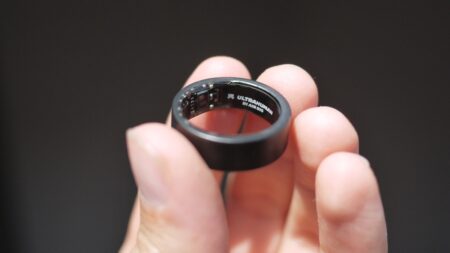
The leaked image of the internal component layout, shared above, includes references to an ‘ultrasonic transmitter’ and signal pickup sensors. This suggests ‘Sweetpea’ could offer environmental sensing or contextual awareness, rather than just acting as a passive Bluetooth receiver for ChatGPT.
When could the ‘Sweetpea’ AI wearable launch?
Perhaps the most telling detail in this latest leak is the movement of the supply chain. The report claims OpenAI has shifted its manufacturing partner from Luxshare to Foxconn, with production slated to take place in Vietnam.
In the world of hardware, moving from a smaller ODM to a mass-manufacturing giant like Foxconn usually signals that a project has graduated from the prototyping phase to a planned consumer release. That means a release in late 2026 is most likely, as Smart Pikachu also referenced.
And while OpenAI has yet to acknowledge the device, the move aligns with the broader industry pivot toward AI-first hardware in a range of different form factors—something that was very clear at CES 2026.
While the likes of the Rabbit R1 and Humane AI Pin failed, a purpose-built audio wearable from the creators of ChatGPT could be one that finally cuts through. Only time will tell.