
The system and research shows how sweat tracking could unlock friendlier hormone monitoring
New research has shown a potential breakthrough in non-invasive cortisol monitoring that could impact future health-tracking wearables.
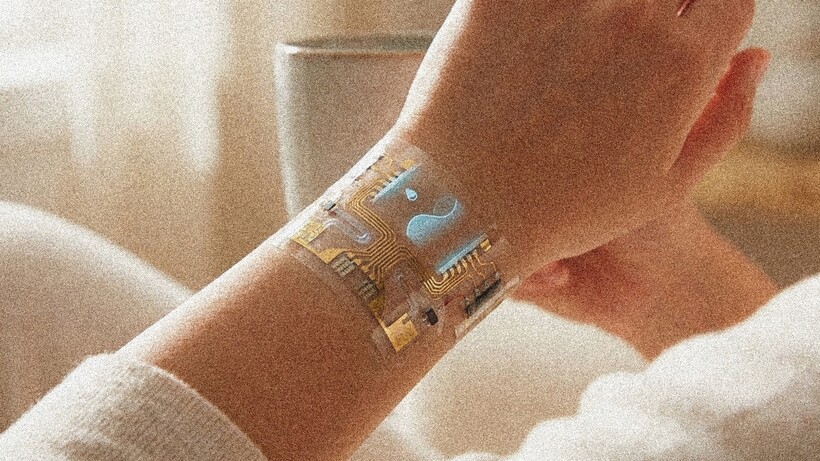
Developed by researchers at Tsinghua and Peking Universities, the skin-mounted prototype system enables the continuous monitoring of the body’s primary stress hormone via eccrine sweat.
The device is a flexible, paper-based platform that uses a lateral flow assay (LFA)—similar to a pregnancy test—to sample sweat in time-sequenced intervals.
This allows the system to align with the body’s circadian cortisol rhythms and detect sharp spikes from acute stress (or disruptors like jet lag).
Why this is an important advancement
Currently, this is typically only measured through blood draws or saliva samples—methods that are invasive, inconvenient, and poorly suited to continuous tracking.
This newly-described system is very technical. But, in essence, it can trigger sweat production in a more controlled, non-invasive manner.
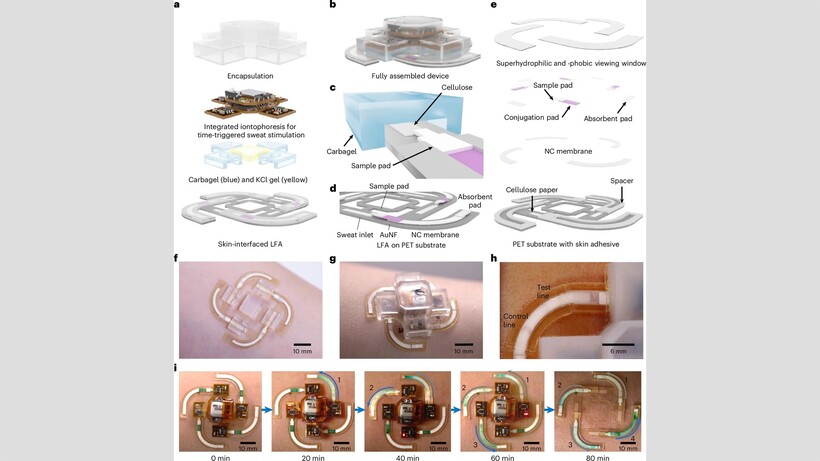
The wearable employs mild iontophoresis to deliver sweat through multiple channels, each linked to its own assay. These assays rely on plasmonic gold nanoflowers, which enhance sensitivity and enable cortisol detection despite its extremely low concentration in sweat.
Some versions of the device use electronic timers, while others rely on passive, self-powered electrochromic indicators—pointing to a future where hormone tracking might not require bulky electronics.
Research results—and what comes next
In human trials, the system resolved circadian cortisol rhythms and detected spikes during acute stress tests. Importantly, sweat-based measurements also closely matched results from traditional saliva and blood assays—and that strengthens the case for sweat as a viable alternative biofluid for hormone monitoring.
Although this remains a research prototype, the implications are significant. Most consumer wearables today focus on movement, heart rate, and recovery metrics like HRV.
However, a reliable method for monitoring hormones such as cortisol could significantly expand the use of wearables—opening the door to more personalised stress management, sleep optimisation, and mental health support.
The study also reflects a broader shift in wearable research, in which sweat sensing is increasingly regarded as a window into deeper physiological signals, not merely hydration or exercise performance. It’s a topic we covered in depth last year with Lume Health co-founder Vicki Powell.
There’s no indication yet of when—or if—this specific technology might make its way into commercial devices. Nevertheless, it offers a compelling glimpse of where next-generation health wearables could be headed.